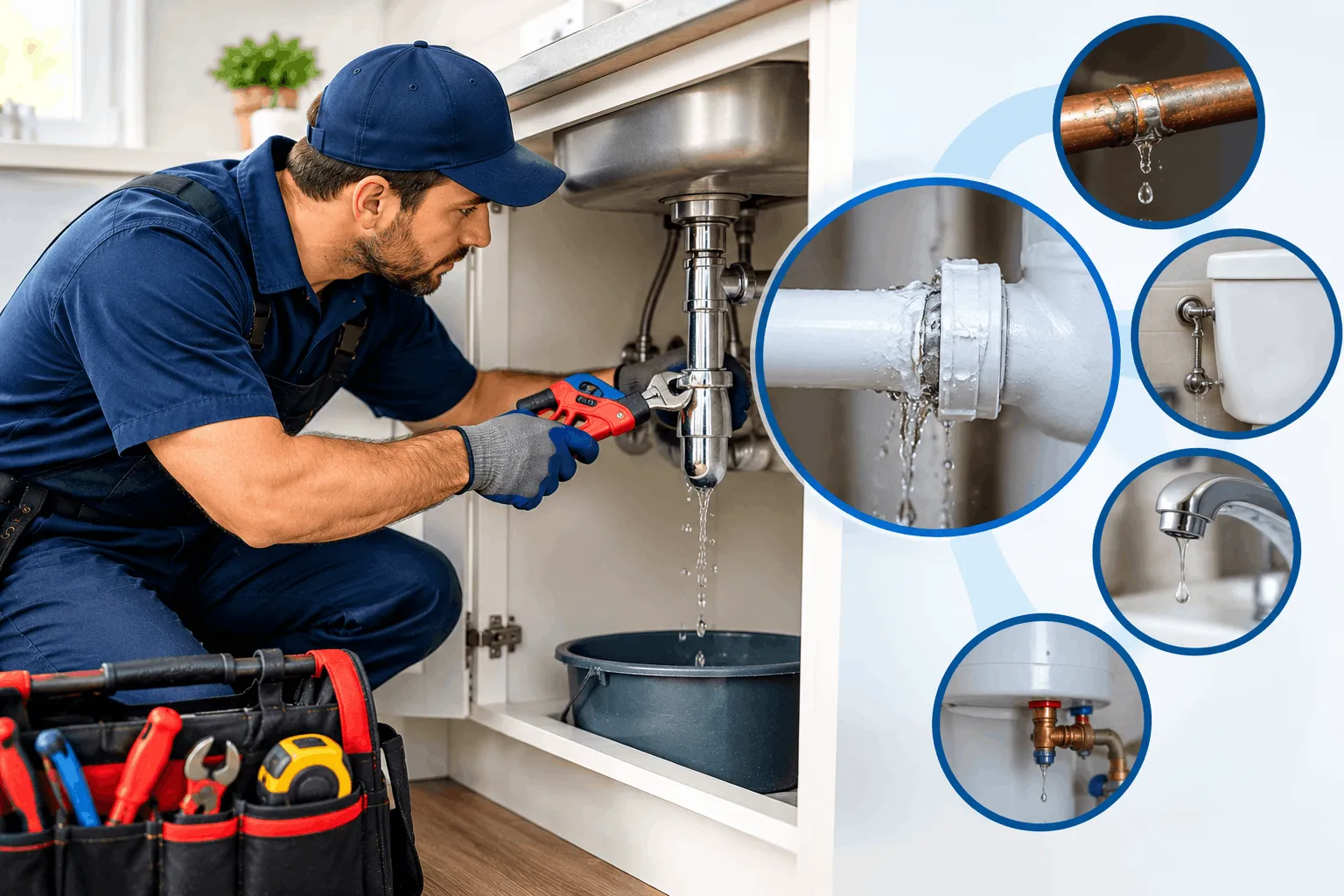

Quick, think about the last plumbing leak you dealt with. Chances are it was something small and unglamorous: a faucet that just wouldn't stop dripping, or maybe a little puddle under the sink you noticed while grabbing dish soap. Turns out, that's not a coincidence. Faucet and fixture leaks are consistently the most common type of plumbing leak homeowners deal with, by a wide margin.
They're not usually dramatic. There's no flooding, no dramatic ceiling stain, just a persistent little drip that's easy to ignore for way longer than it should be. Let's talk about why this specific leak is so common, what else tends to show up frequently, and how proper leak detection catches the sneakier ones before they turn into a real problem.
The Short Answer: Faucet and Fixture Leaks Top the List
If you had to bet on which leak is happening in a random house right now, faucet drips would be the safe wager. They're mechanically simple, which means there's less that can go wrong, but that simplicity also means the small parts inside wear out steadily with regular use. Every time you turn a faucet handle, tiny components inside are working, and like anything used constantly, they eventually give out.
Why Faucet Leaks Happen So Often
The reasons behind this are honestly pretty mundane, which is exactly why they're so common.
1. Worn Washers and O-Rings**
Inside most faucets sits a small rubber washer or O-ring that creates a seal, stopping water from flowing when the handle's off. Constant use gradually wears this rubber down, and once it loses its shape or gets even slightly damaged, water starts sneaking past it. This is genuinely one of the simplest, cheapest repairs in all of plumbing, yet it remains one of the most frequent complaints simply because these parts wear naturally over years of daily use.
2. Corroded Valve Seats
The valve seat connects the faucet spout to the actual valve, and over time, mineral deposits in your water can cause it to corrode. Once that happens, the seal around the spout weakens, and you start noticing drips right around that connection point. Areas with harder, mineral-heavy water tend to see this particular issue more frequently than others.
Other Leaks That Show Up Frequently
While faucets top the list, a few other leaks aren't far behind.
1. Supply Line Leaks Under Sinks
The flexible supply lines connecting your water source to sinks and toilets can develop small cracks or loose connections over time, especially in older homes. These leaks are sneaky because they're tucked away in a cabinet, easy to miss until you happen to look closely or notice water damage on the cabinet floor.
2. Toilet Tank and Base Leaks
A worn wax ring at the base of a toilet, or a faulty seal inside the tank, can both lead to slow leaking that's easy to overlook. A little water pooling around the base of your toilet, or a tank that seems to refill more often than it should, are both worth investigating rather than ignoring.
Why Small Leaks Deserve Big Attention
Here's the thing about small leaks: they rarely stay small in terms of their overall impact. A dripping faucet wasting even a small amount of water per minute adds up to a genuinely significant amount over a year, and that shows up directly on your water bill. Beyond the cost, consistent moisture anywhere in your home creates conditions for mold growth and can gradually damage cabinetry, flooring, or drywall nearby. A few important points worth keeping in mind:
- Even minor leaks contribute to noticeably higher water bills over time
- Persistent moisture is one of the leading causes of household mold growth
- Small leaks often indicate a part that's due for replacement anyway
- Fixing them early is almost always cheaper than waiting
How Water Leak Detection Catches What You Can't See
Not every leak announces itself with a visible drip. Some hide behind walls, under flooring, or beneath a concrete slab, which is exactly where water leak detection becomes essential rather than optional. Professionals use specialized listening equipment to pick up the sound of escaping water, along with thermal imaging that spots temperature differences caused by hidden moisture. This kind of leak detection is particularly valuable for leaks you can't just casually spot on a Tuesday afternoon while doing dishes, the kind that quietly run up your bill for weeks before anyone notices anything's wrong.
For visible leaks like a dripping faucet, you obviously don't need specialized equipment. But when your water bill spikes and nothing seems visibly wrong anywhere in the house, that's precisely the situation where professional water leak detection earns its cost many times over.
Simple Habits That Catch Leaks Early
You don't need to be a plumber to catch most common leaks before they become expensive. Check under sinks every month or so, just a quick glance and feel for dampness. Keep an eye on your water bill for unexplained jumps. Listen for dripping sounds when the house is quiet at night. And if you ever notice a faucet handle feeling looser than it used to, or water pooling anywhere it shouldn't, don't just wait and see. Small leaks are far easier and cheaper to fix while they're still small.
Conclusion
Faucet and fixture leaks remain the most common plumbing leak simply because the parts involved wear out steadily through everyday use, and they're often the easiest to ignore since the damage builds slowly rather than all at once. But common doesn't mean harmless; even a small, steady drip adds up in cost and potential damage over time. Whether it's a leaky faucet you can see or a hidden leak requiring proper water leak detection to locate, catching these issues early is always the smarter, cheaper path forward. Pay attention to the small drips, and you'll avoid the big headaches they eventually turn into.
FAQs
1. Why do faucets leak more than other fixtures?
Their internal parts wear down from constant daily use over time.
2. Can a small faucet leak really raise my water bill much?
Yes, even minor drips add up significantly over weeks and months.
3. How do I know if I need professional leak detection?
An unexplained water bill spike with no visible leak is a strong sign.
4. Are toilet leaks as common as faucet leaks?
They're common too, though slightly less frequent than faucet drips.
5. Is fixing a faucet leak usually expensive?
No, it's typically one of the cheapest plumbing repairs available.

























Sign in to leave a comment.