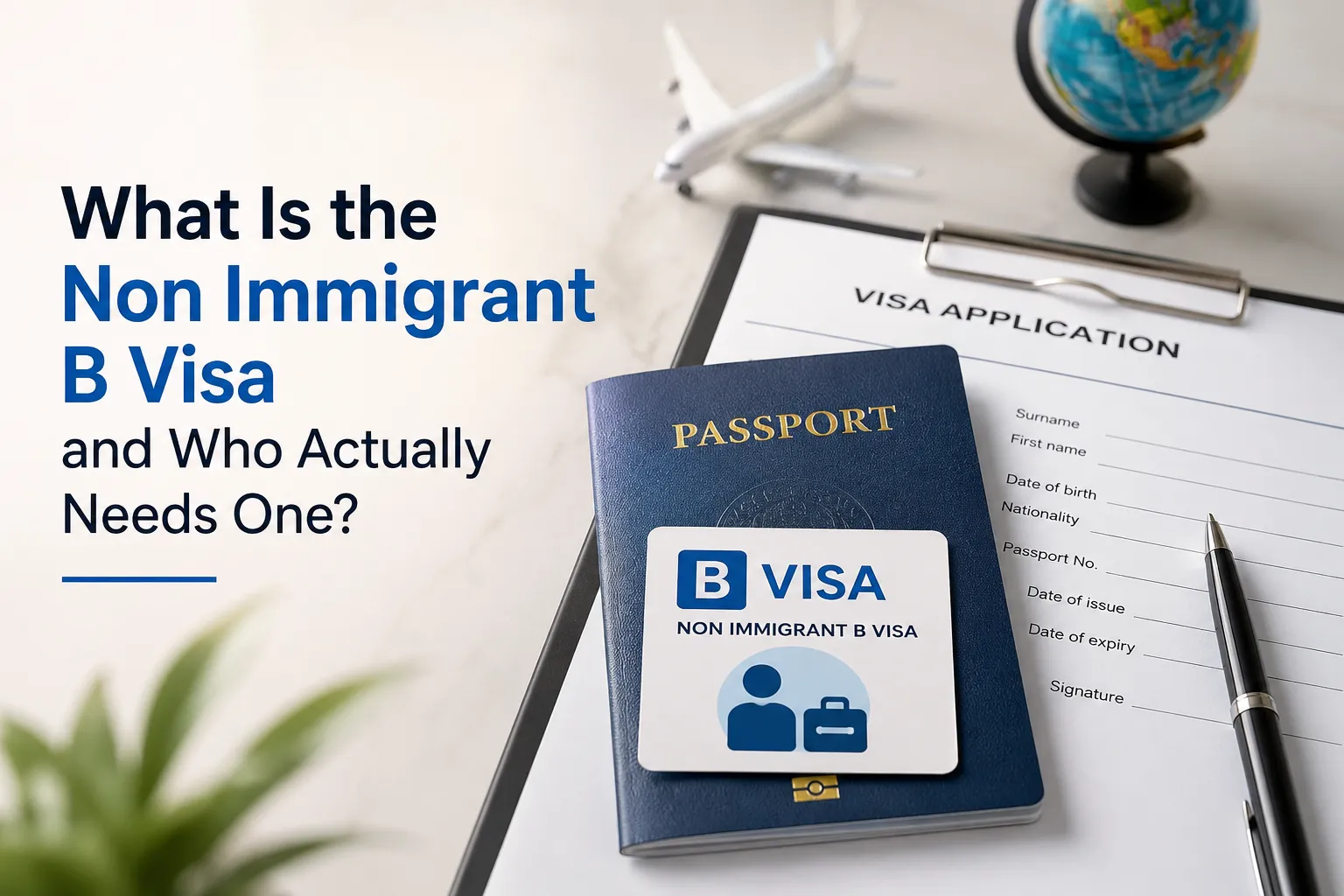

Most foreigners working legally in Thailand go through the same route: the standard corporate business visa paired with a work permit. This is the visa employers typically sponsor for new hires, and it's worth understanding properly before you apply, since the process depends on more than just the employee's own paperwork being in order.
The Non Immigrant B visa is the standard path for anyone employed by a Thai registered company. It isn't a work permit itself, but it's the visa category that allows the holder to then apply for one. Without it, working legally for a Thai employer isn't possible, regardless of what other visa status someone might already hold. This distinction confuses a lot of first-time applicants, who sometimes assume the visa and the work permit are the same thing, or that having one automatically grants the other.
The Application Depends on the Employer, Not Just the Employee
Approval for a Non Immigrant B visa isn't solely about whether the individual applicant has their documents in order. It depends heavily on the sponsoring company meeting its own set of requirements. Thai businesses need to satisfy specific hiring ratios, generally a set number of Thai staff per foreign employee sponsored, along with minimum registered capital requirements tied to each work permit issued.
Falling short on either of these can delay or block sponsorship entirely, even when the employee's personal documentation, qualifications, and background are completely fine. This is one of the more common reasons applications stall, and it catches both employers and employees off guard when the company's own compliance wasn't properly checked before the process began.
Renewal Timing Matters as Much as the Initial Application
The visa is typically issued for one year at a time and needs to be renewed alongside the work permit, since the two are closely linked in how Thai immigration and labour authorities review them. Missing a renewal window creates risk for both sides of the employment relationship. The employee's legal status in the country is affected, and the employer's ability to continue sponsoring that position, or sponsor future foreign hires, can also come under scrutiny.
Letting company paperwork lapse in the background, even unintentionally, tends to have the same effect. Immigration and labour officers reviewing a renewal often check whether the company's own documentation, filings, and hiring ratios are still current, not just whether the individual's file looks complete.
Other Routes Exist, But Aren't for Everyone
Not every foreign professional needs to go through the standard Non Immigrant B and work permit process. Founders, investors, and certain specialists sometimes qualify for alternative routes instead, such as the LTR Visa for qualifying long-term residents or the BOI Smart Visa for individuals working in specific promoted sectors. These alternatives can offer longer validity periods or different sponsorship requirements, depending on the applicant's specific situation.
That said, these routes come with their own eligibility criteria, and not everyone who assumes they'll qualify actually does. For the vast majority of foreign employees joining a standard Thai company, the Non Immigrant B remains the default starting point, not an exception to work around.
Final Thoughts
The Non Immigrant B visa is straightforward in concept but depends on more moving parts than most applicants expect, from the sponsoring company's compliance status to the timing of annual renewals. Understanding this upfront, rather than assuming the process is purely about the individual's own paperwork, tends to prevent the kind of avoidable delays that catch both new employees and their employers off guard.




























Sign in to leave a comment.