

Real-world asset tokenization is emerging as one of the most significant applications of blockchain technology beyond cryptocurrencies. It involves creating blockchain-based digital representations of ownership or economic rights associated with physical or traditional financial assets such as real estate, government bonds, commodities, private equity, artwork, invoices, funds, and other forms of value.
The concept is important because many traditional assets are difficult to divide, transfer, trade, or access efficiently. Real estate, for example, can require substantial capital and extensive paperwork before an investor can participate. Tokenization can restructure the ownership and transfer process by representing defined rights through blockchain-based tokens, potentially enabling fractional ownership, automated compliance, faster settlement, and more transparent transaction records.
The market opportunity is also attracting major financial institutions. McKinsey estimated that tokenized financial assets could reach approximately $2 trillion in market capitalization by 2030 in its base-case scenario, excluding cryptocurrencies and stablecoins, with an optimistic scenario approaching $4 trillion.
However, tokenization is not simply a matter of creating a token and putting it on a blockchain. A successful project requires legal structuring, asset verification, valuation, custody, compliance, smart-contract development, investor onboarding, issuance, and ongoing administration. Understanding this complete process is essential for businesses considering blockchain-based asset models.
What Does Real-World Asset Tokenization Mean?
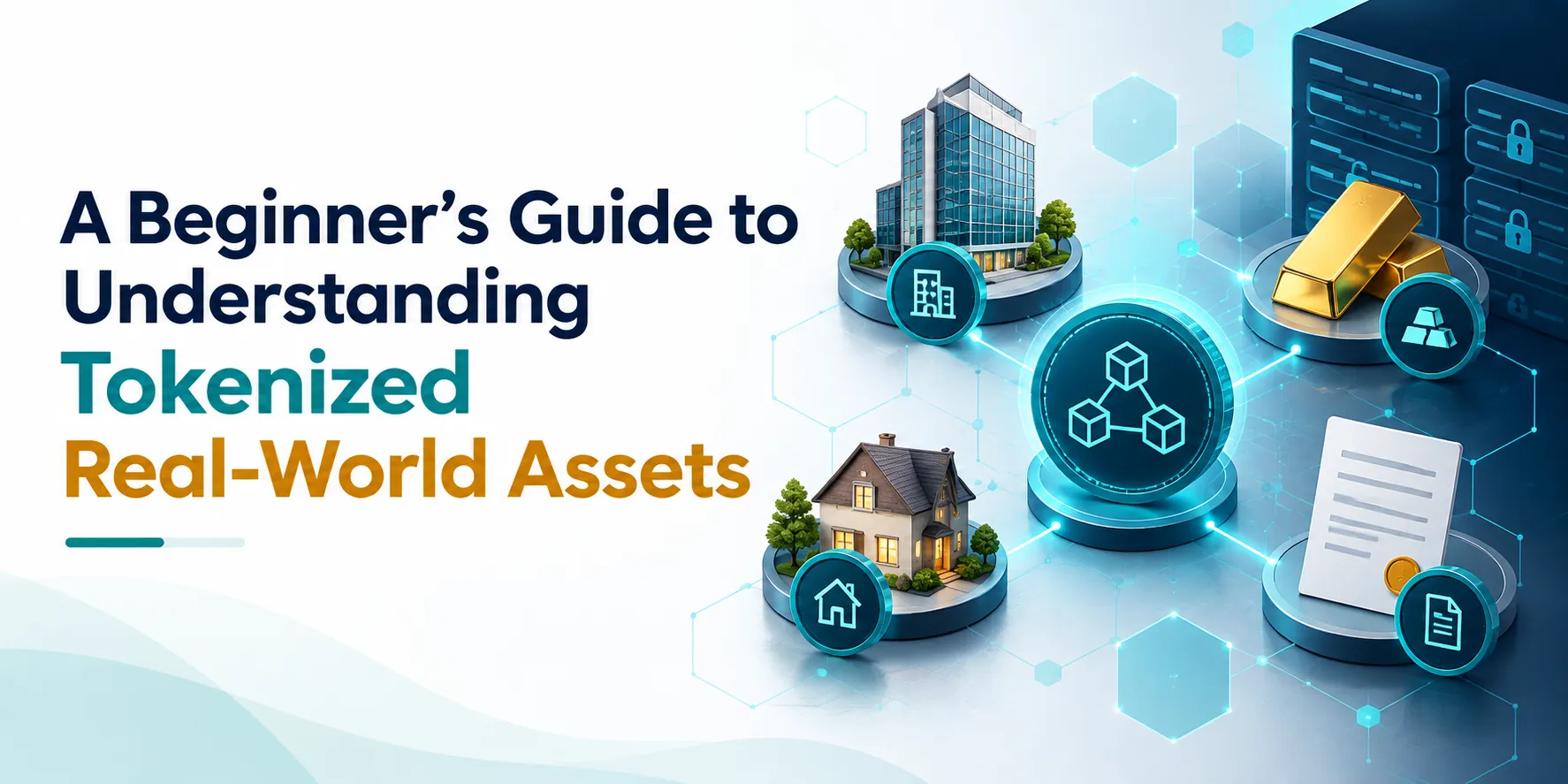
Real-world asset tokenization is the process of representing ownership, economic interests, claims, or other rights associated with an off-chain asset through digital tokens recorded on a blockchain.
The important distinction is that the blockchain token itself does not magically become the underlying asset. Instead, the token represents legally defined rights connected to that asset. For example, a token may represent a fractional interest in a real estate investment vehicle, a claim on a fund, ownership of a commodity, or rights associated with a debt instrument.
This distinction is particularly important for regulated assets. The U.S. Securities and Exchange Commission has emphasized that tokenized securities can remain securities even when their ownership records are maintained partly or entirely through crypto networks. The regulatory classification therefore depends on the underlying economic and legal characteristics rather than simply on the technology used.
Consequently, tokenization should be viewed as an integration of traditional asset infrastructure with blockchain infrastructure rather than as a replacement for legal ownership systems.
Step 1: Identify and Select the Asset
The first stage is determining which asset should be tokenized and what economic problem tokenization is intended to solve.
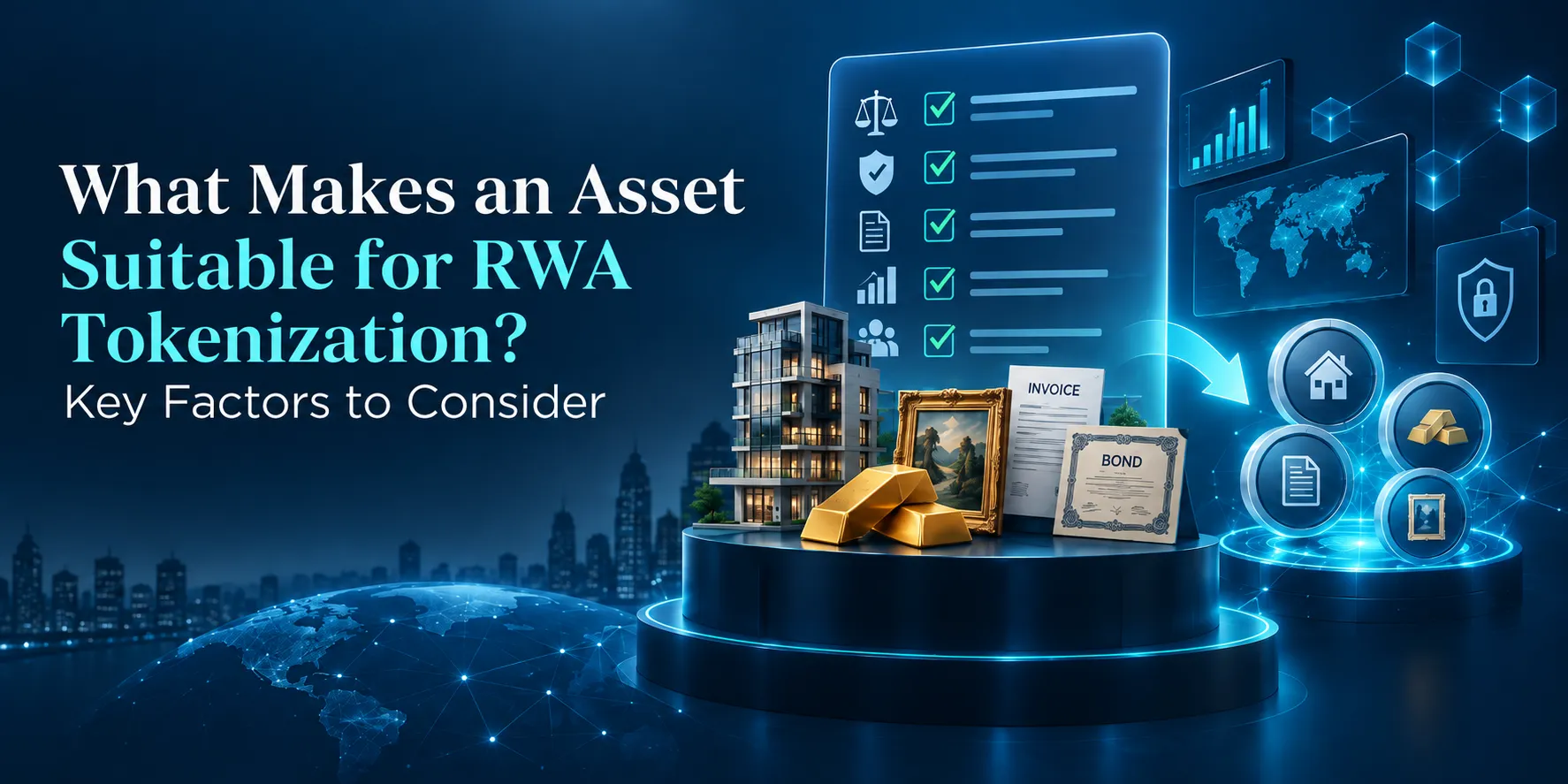
Not every asset is automatically suitable. Businesses generally evaluate factors such as asset value, ownership structure, liquidity, investor demand, legal restrictions, transferability, valuation methodology, and the availability of reliable documentation.
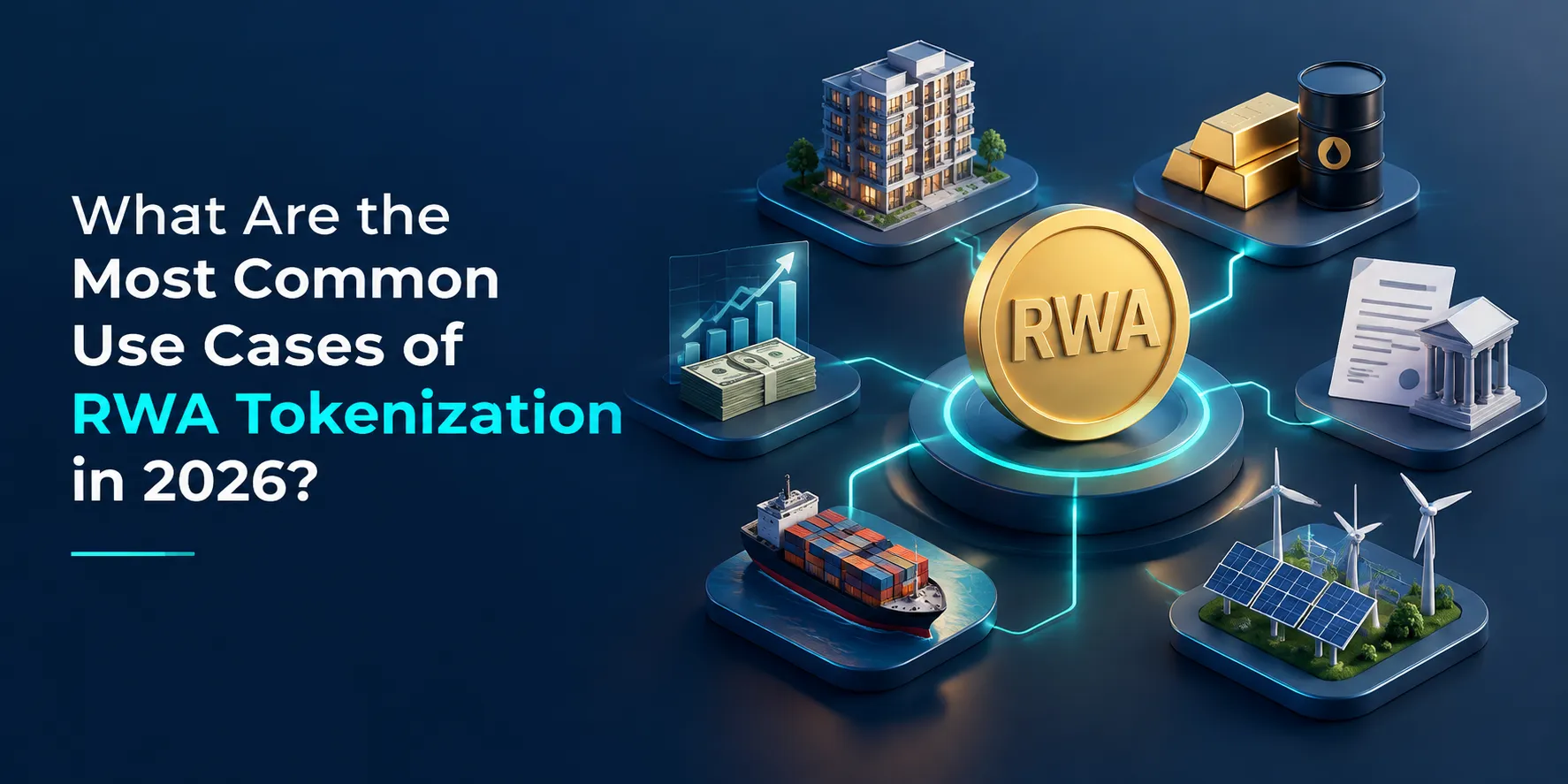
Potential assets include:
- Commercial and residential real estate
- Government bonds and treasury instruments
- Private equity and venture capital interests
- Gold and other commodities
- Investment funds
- Artwork and collectibles
- Private credit and loans
- Trade receivables and invoices
- Infrastructure and renewable-energy projects
For example, a commercial property valued at $10 million could potentially be placed into a legally structured investment vehicle and represented through 100,000 digital units. Each unit could correspond to a defined fractional economic interest, subject to the applicable legal framework.
The objective is not merely to divide an asset digitally. The structure must establish exactly what token holders receive, how income is distributed, how transfers occur, and what happens if the underlying asset is sold or refinanced.
Step 2: Establish Legal Ownership and Regulatory Structure
This is one of the most critical stages of tokenization.
Before technical development begins, the project needs a legal framework connecting the blockchain representation to enforceable rights in the real world. Depending on the asset and jurisdiction, this can involve special-purpose vehicles, trusts, funds, corporations, contractual claims, security arrangements, or other legal structures.
Regulatory classification must also be established. If the token represents a security, securities regulations may apply to issuance, marketing, investor eligibility, trading, custody, and reporting.
The SEC's recent discussions around tokenized securities demonstrate why technology cannot be separated from legal structure. The Commission has distinguished between issuer-sponsored and third-party tokenization models and has emphasized the importance of understanding the underlying legal rights and ownership records.
A robust project therefore answers questions such as:
Who legally owns the underlying asset?
What rights does each token represent?
Can tokens be transferred freely?
Who is eligible to purchase them?
What restrictions apply to secondary trading?
How are income and distributions handled?
What happens to tokens if the underlying asset is sold?
These questions should be resolved before the token is issued.
Step 3: Verify, Value, and Prepare the Asset
Once the legal framework is established, the underlying asset must be verified and appropriately valued.
For physical assets, verification may involve title records, ownership documents, appraisals, inspections, certificates, insurance documents, or third-party audits. For financial assets, verification can include fund records, debt documentation, financial statements, custody information, and transaction histories.
Valuation is equally important because the token supply and pricing mechanism depend on the economic value of the underlying asset.
Consider a property worth $5 million. If the project creates 500,000 tokens, a simplified initial reference value could be $10 per token. But the actual economics may be more complicated if the property generates rental income, carries debt, incurs operating costs, or is held through an investment vehicle.
This is why asset tokenization requires collaboration between legal professionals, financial specialists, asset managers, custodians, and blockchain developers.
Step 4: Choose the Blockchain Infrastructure
After the asset and legal structure have been established, the project can select an appropriate blockchain network.
The choice should not be based purely on transaction fees or popularity. Businesses should consider scalability, transaction finality, security, ecosystem maturity, interoperability, smart-contract capabilities, wallet compatibility, institutional adoption, and regulatory requirements.
Public blockchains can provide transparency and broad interoperability, while permissioned networks can provide greater control over participants and transaction access. Some institutional projects may also adopt multi-chain architectures to expand distribution and interoperability.
The blockchain effectively becomes part of the infrastructure supporting ownership records and asset transfers. Therefore, its technical characteristics can influence the long-term functionality of the tokenized asset.
Step 5: Design the Token Economics
The next stage involves defining what the token represents and how the supply is structured.
Token design can involve decisions concerning:
- Total token supply
- Fractional ownership
- Token price
- Investor eligibility
- Voting rights
- Income distribution
- Redemption mechanisms
- Transfer restrictions
- Lock-up periods
- Secondary-market rules
For example, a tokenized fund might distribute periodic income to eligible token holders. A real estate token could provide exposure to rental income and potential appreciation. A tokenized debt instrument could represent repayment rights and interest payments.
The token's economics must correspond to the legal agreement governing the underlying asset. Otherwise, the blockchain representation could create confusion rather than transparency.
Step 6: Develop and Audit the Smart Contracts
Smart contracts provide the programmable infrastructure for token issuance and management.
Depending on the project, smart contracts can control token creation, transfers, investor restrictions, distributions, redemptions, whitelisting, voting, and other functions.
For regulated assets, compliance logic can be incorporated into the system. For instance, only approved wallet addresses may be permitted to receive certain tokens. Transfer restrictions can also prevent transactions involving unauthorized participants.
This is where a Real-World Asset Tokenization Platform can become particularly valuable. Instead of treating token issuance as an isolated smart contract, a comprehensive platform can integrate asset management, investor onboarding, compliance, token administration, reporting, and transaction management into a broader ecosystem.
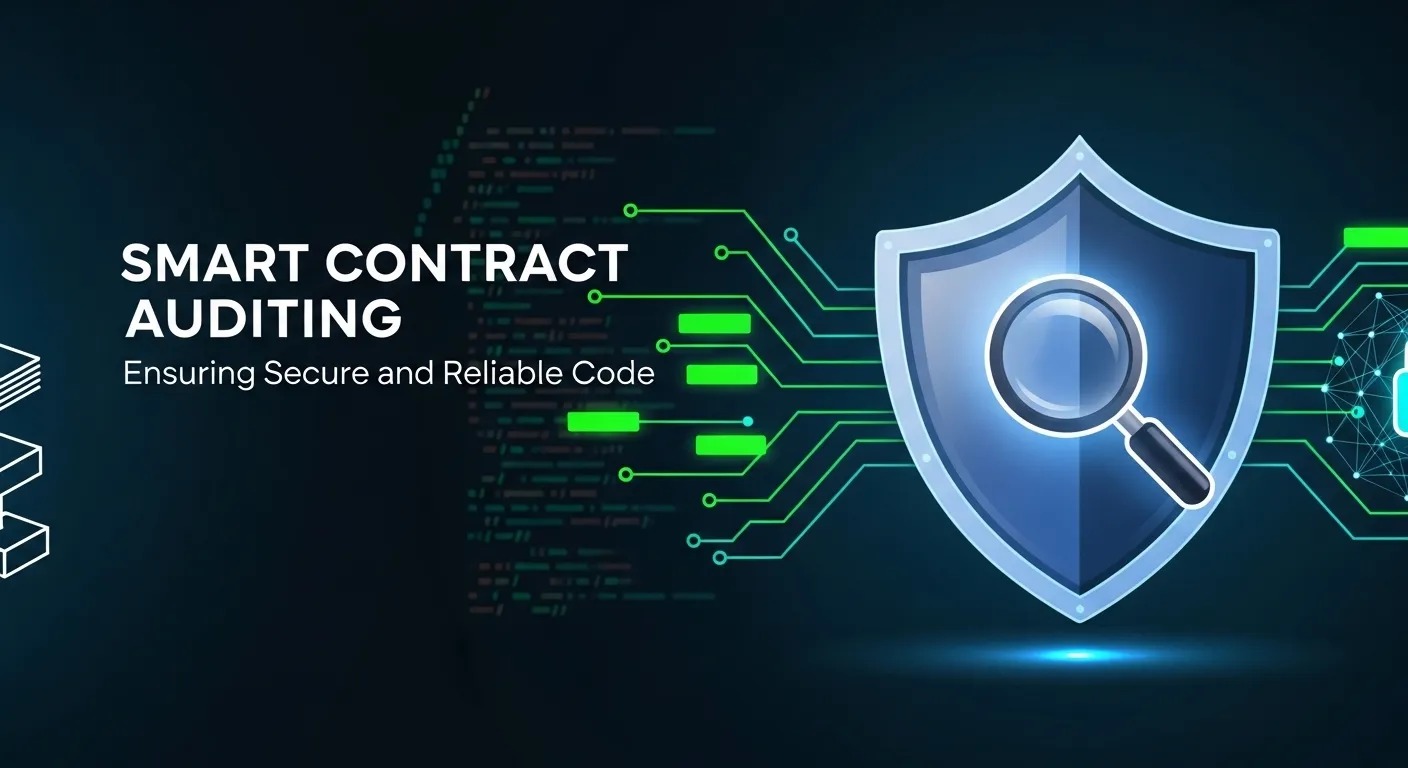
Smart-contract security is especially important because coding errors can potentially create financial and operational risks. Independent audits, extensive testing, access-control reviews, upgrade mechanisms, and monitoring should therefore be considered before production deployment.
Step 7: Connect the Blockchain With Off-Chain Data
A tokenized asset depends on information that may exist outside the blockchain.
For example, a real estate token may depend on property valuations, rental income, occupancy data, ownership records, or legal documents. A tokenized commodity may depend on inventory records and custody information.
Oracles and other data infrastructure can connect relevant external information with blockchain applications. The quality of this connection matters because a blockchain can preserve transaction records immutably, but it cannot independently determine whether an off-chain property actually exists or whether its reported valuation is accurate.
This creates an important principle: blockchain transparency does not eliminate the need for trusted real-world verification.
Successful tokenization therefore combines blockchain records with reliable legal, financial, custody, and data infrastructure.
Step 8: Conduct Investor Onboarding and Compliance Checks
Once the token and platform are ready, investors need a compliant method of participation.
Depending on the jurisdiction and asset class, this can include identity verification, Know Your Customer procedures, Anti-Money Laundering checks, accreditation or eligibility assessments, sanctions screening, investor agreements, and suitability requirements.
A compliant onboarding process can also determine which wallets are authorized to hold or transfer specific tokens.
This stage is particularly important because tokenization should not be interpreted as a way to bypass existing financial regulations. Instead, blockchain can potentially automate and streamline certain compliance processes while preserving the underlying regulatory requirements.
The SEC has noted that blockchain-based tokenization may offer opportunities to improve transparency, reduce transaction friction, and streamline certain compliance functions, while also highlighting the regulatory challenges that arise when traditional securities move on-chain.
Step 9: Mint and Issue the Tokens
After legal, technical, and compliance preparations are complete, tokens can be minted and distributed.
The issuance process establishes the relationship between the token supply and the underlying asset. For example, a project may issue 1 million tokens representing defined economic interests in an asset or investment structure.
The issuance can occur through a controlled platform where eligible investors subscribe using approved payment methods. Depending on the architecture, investors may receive tokens directly into compatible wallets after completing the required checks.
At this point, the blockchain provides a transparent record of token issuance and subsequent transfers, while the legal structure establishes what those tokens represent.
Step 10: Enable Secondary Trading and Ongoing Asset Management
Tokenization becomes significantly more useful when investors can manage or transfer their positions efficiently within the permitted regulatory framework.
A compliant secondary market may allow eligible investors to trade tokenized interests, subject to restrictions. This can potentially improve liquidity compared with traditional private-market structures, although tokenization does not automatically guarantee liquidity.
The BlackRock USD Institutional Digital Liquidity Fund, or BUIDL, provides a useful example of how tokenization can extend beyond simple digital ownership. BlackRock launched the fund on Ethereum in March 2024 with Securitize providing tokenization infrastructure. The fund was designed to provide qualified investors with on-chain access to U.S. dollar yields, blockchain-based ownership records, and faster transfer capabilities.
By March 2025, Securitize reported that BUIDL had surpassed $1 billion in assets under management. The tokenized fund was subsequently integrated into additional financial applications, including use as collateral on trading platforms.
This illustrates an important evolution: tokenized assets can become programmable financial building blocks rather than merely digital certificates.
Step 11: Manage the Asset Throughout Its Lifecycle
Tokenization does not end when tokens are issued.
The underlying asset must continue to be managed, while investors need accurate information about performance and distributions. Depending on the asset, this can include rental payments, interest, dividends, valuation updates, corporate actions, redemptions, reporting, tax documentation, and changes in ownership.
A well-designed system can automate portions of these activities through smart contracts. For example, rental income collected from a property could potentially be distributed to eligible token holders according to predefined rules.
Lifecycle management is therefore where much of the practical value of tokenization can emerge. The blockchain becomes part of an ongoing financial infrastructure rather than a one-time issuance mechanism.
Key Benefits of Tokenizing Real-World Assets
The appeal of tokenization comes from combining programmable blockchain infrastructure with traditional assets.
Fractional ownership can lower the minimum investment threshold for certain assets, depending on the legal structure.
Faster settlement can reduce some of the delays associated with conventional transaction processes.
Greater transparency can give authorized participants a shared record of token movements and transactions.
Programmability allows rules surrounding transfers, distributions, and compliance to be embedded into software.
Improved accessibility can potentially broaden participation in selected markets, subject to jurisdictional and regulatory restrictions.
Composability can allow tokenized assets to interact with other blockchain-based financial applications.
These benefits help explain why institutional interest continues to grow. McKinsey's analysis suggests that tokenization is likely to develop in waves, with asset classes such as funds, bonds, loans, and securitization among the areas where adoption could accelerate because of their potential efficiency gains and technical feasibility.
Major Challenges Businesses Must Consider
Despite its potential, tokenization has several limitations.
The first is regulatory complexity. Laws differ significantly between jurisdictions and asset classes. A structure that works in one country may not be suitable in another.
The second is legal enforceability. The token must be connected to clearly defined rights, and those rights must remain enforceable when ownership changes.
The third is asset verification. Blockchain can make on-chain transactions transparent, but it cannot independently verify off-chain facts.
The fourth is liquidity. Tokenizing an illiquid asset does not automatically create buyers. A functioning marketplace, appropriate investor base, and regulatory framework are still necessary.
The fifth is smart-contract and cybersecurity risk. Vulnerabilities in contracts, wallets, bridges, or platform infrastructure can undermine an otherwise sound tokenization model.
Finally, interoperability remains important. As more tokenized assets appear across different networks, businesses need reliable ways to move information and value between ecosystems without compromising compliance or security.
The Future of RWA Tokenization
The long-term significance of RWA tokenization may come less from replacing traditional finance and more from connecting traditional assets to programmable digital infrastructure.
The development of institutional projects such as BUIDL demonstrates that major financial organizations are experimenting with blockchain-based representations of conventional financial products. At the same time, regulators are increasingly examining how tokenized assets should fit within existing market structures.
As infrastructure matures, tokenization could increasingly support automated settlement, collateral management, fractional investment, cross-platform distribution, and new forms of financial products.
The strongest projects will likely be those that treat tokenization as an end-to-end transformation rather than simply a token launch. Legal architecture, asset servicing, compliance, custody, smart contracts, investor experience, and secondary-market infrastructure all need to work together.
Conclusion
Real-world asset tokenization is a multi-stage process that connects physical or traditional financial assets with blockchain-based ownership and transaction infrastructure. From asset selection and legal structuring to smart-contract development, compliance, issuance, and lifecycle management, every stage influences the reliability and usefulness of the final solution. As institutional adoption grows and blockchain infrastructure becomes more mature, businesses have an opportunity to explore new models for liquidity, accessibility, transparency, and programmable finance. Blockchain App Factory provides best services for businesses seeking to build secure, scalable, and professionally structured blockchain solutions for real-world asset tokenization, helping transform traditional assets into blockchain-enabled financial products.
FAQs
1. What is real-world asset tokenization?
Real-world asset tokenization is the process of representing ownership or economic rights associated with physical or traditional financial assets through blockchain-based digital tokens.
2. Which assets can be tokenized?
Real estate, bonds, commodities, investment funds, private equity, artwork, loans, invoices, and other assets can potentially be tokenized, depending on their legal structure and applicable regulations.
3. Does tokenization automatically make an asset liquid?
No. Tokenization can make assets easier to transfer and potentially broaden their investor base, but actual liquidity depends on market demand, investor eligibility, trading infrastructure, and regulatory conditions.
4. Why are smart contracts important for RWA tokenization?
Smart contracts can automate token issuance, transfers, compliance rules, distributions, redemptions, and other predefined processes while reducing dependence on manual operations.
5. Is RWA tokenization regulated?
In many cases, yes. The regulatory treatment depends on the underlying asset, token structure, jurisdiction, investor type, and rights represented by the token. Tokenization does not automatically remove an asset from existing financial regulations.




















Sign in to leave a comment.