
Enterprise IT environments are becoming increasingly complex as organizations manage virtual machines, private clouds, containers, applications, networking, storage, and security across different infrastructure layers. Managing these components separately can create operational challenges, particularly for IT teams responsible for scalability, security, and cost efficiency.
This is where VMware Cloud Foundation (VCF) comes into the picture. Designed as an integrated cloud infrastructure platform, VMware Cloud Foundation helps enterprises build and operate private and hybrid cloud environments using a unified approach.
But what exactly is VMware Cloud Foundation, how does it work, and when should an enterprise consider using it? This practical guide explains the fundamentals for IT teams evaluating modern infrastructure strategies.
What Is VMware Cloud Foundation?
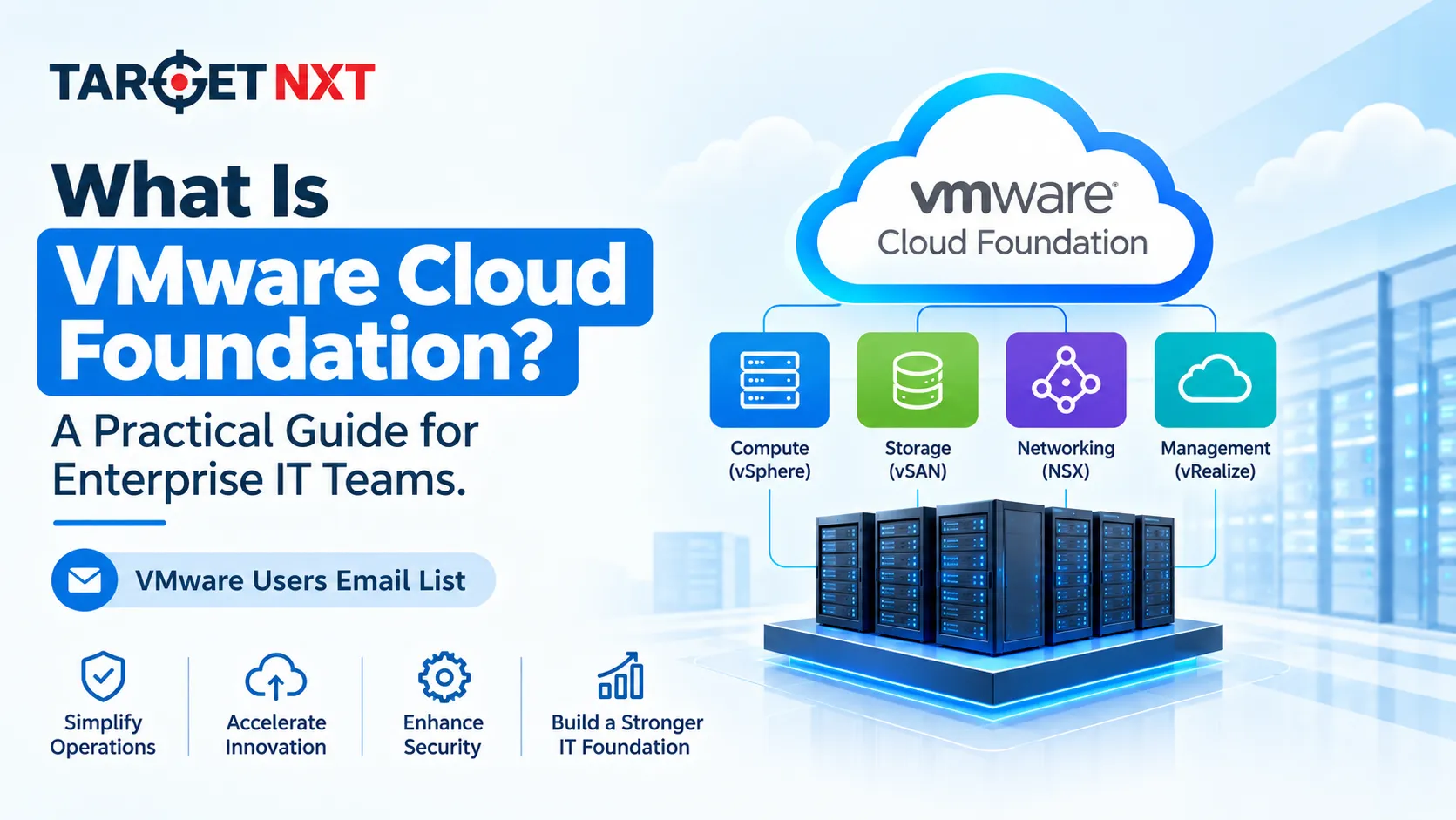
VMware Cloud Foundation is an integrated software platform that combines compute, storage, networking, virtualization, and cloud management capabilities into a unified infrastructure stack.
Rather than requiring IT teams to deploy and manage each infrastructure component independently, VCF provides a standardized framework for building private and hybrid cloud environments.
The platform is particularly relevant for enterprises that already rely on VMware technologies and want to simplify infrastructure operations while supporting modern application workloads.
In practical terms, VCF helps organizations move from traditional virtualization toward a more cloud-like operating model for enterprise infrastructure.
Why Are Enterprises Looking at VMware Cloud Foundation?
Traditional data center environments often involve multiple products, management consoles, configurations, and operational processes. As infrastructure expands, this can increase the workload for IT administrators.
Enterprise teams typically need to address challenges such as:
- Managing infrastructure across multiple environments
- Maintaining consistent configurations
- Scaling workloads efficiently
- Improving infrastructure visibility
- Supporting modern applications and containers
- Strengthening security and governance
- Reducing operational complexity
VMware Cloud Foundation addresses these challenges by bringing key infrastructure capabilities together within a standardized platform.
For organizations pursuing private cloud or hybrid cloud strategies, this integrated approach can make infrastructure management more consistent and predictable.
What Components Make Up VMware Cloud Foundation?
VCF brings together several infrastructure capabilities that work as part of a broader software-defined data center architecture.
1. Compute Virtualization
VMware's virtualization technology allows organizations to run multiple virtual machines on physical servers. This enables better utilization of underlying hardware and provides IT teams with greater flexibility when allocating computing resources.
2. Software-Defined Storage
Storage capabilities allow organizations to manage storage resources through software rather than relying entirely on hardware-level configurations.
This approach can simplify storage administration and help enterprises provide storage resources according to workload requirements.
3. Software-Defined Networking
Networking is another important part of the VCF architecture. Software-defined networking helps IT teams create and manage network connectivity, segmentation, and security policies across virtualized environments.
4. Cloud Management and Operations
VCF also incorporates management capabilities designed to help administrators monitor, operate, and manage infrastructure more efficiently.
Together, these components create a unified foundation for enterprise cloud infrastructure.
How Does VMware Cloud Foundation Work?
At a high level, VMware Cloud Foundation uses an integrated software-defined architecture to create a private cloud environment on enterprise infrastructure.
The process generally involves deploying the required infrastructure components on compatible hardware and configuring them through a standardized framework. Once deployed, IT teams can provision workloads, manage resources, apply policies, and monitor infrastructure through centralized management capabilities.
The objective is to make infrastructure operate more like a cloud service while maintaining control over the underlying enterprise environment.
This can be especially useful for organizations that need the flexibility of cloud-style infrastructure but have workloads that must remain within their own data centers or controlled environments.
Key Benefits of VMware Cloud Foundation
The value of VCF extends beyond virtualization alone. Its broader objective is to simplify how organizations build and operate enterprise infrastructure.
Simplified Infrastructure Management
Instead of managing multiple infrastructure layers independently, IT teams can use an integrated platform and standardized operational model.
Greater Scalability
Organizations can expand infrastructure as workload requirements grow, making the platform suitable for environments with changing resource demands.
Consistent Operations
Standardized infrastructure configurations can help enterprises maintain consistency across environments and reduce configuration differences between systems.
Support for Modern Applications
Modern enterprises increasingly operate virtual machines alongside containers and cloud-native applications. An integrated infrastructure platform can help IT teams support these different workload requirements.
Improved Resource Utilization
Virtualization and software-defined infrastructure allow organizations to allocate computing, storage, and networking resources more dynamically according to workload requirements.
VMware Cloud Foundation and Hybrid Cloud
Hybrid cloud strategies combine private infrastructure with public cloud resources. For many enterprises, this approach provides a balance between control and flexibility.
VMware Cloud Foundation can serve as a foundation for organizations that want to modernize their private infrastructure while maintaining connectivity with broader cloud environments.
For example, an enterprise might keep sensitive or business-critical workloads within its private infrastructure while using public cloud resources for specific applications, development environments, or additional capacity.
The exact architecture depends on workload requirements, compliance considerations, existing infrastructure, and the organization's cloud strategy.
Who Can Benefit From VMware Cloud Foundation?
VCF is primarily relevant to organizations with substantial infrastructure requirements and dedicated IT operations teams.
It may be particularly suitable for:
- Large enterprises with complex data centers
- Organizations standardizing VMware-based infrastructure
- Businesses pursuing private cloud initiatives
- IT teams managing hybrid environments
- Organizations modernizing legacy data center infrastructure
- Enterprises supporting diverse application workloads
However, VCF may not be necessary for every organization. Smaller businesses with relatively simple workloads may find a traditional virtualization environment or public cloud services more appropriate.
The decision should therefore be based on infrastructure scale, workload requirements, operational capabilities, and long-term cloud strategy.
What Should IT Teams Consider Before Adopting VCF?
Before implementing VMware Cloud Foundation, enterprise IT teams should evaluate several factors.
Infrastructure compatibility is one of the first considerations. Organizations need to determine whether their existing hardware and infrastructure architecture can support the intended deployment.
Teams should also evaluate workload requirements, including performance, availability, storage, networking, and application dependencies.
Operational skills are equally important. VCF environments require teams to understand virtualization, networking, storage, cloud management, and related technologies.
Finally, enterprises should consider total cost of ownership, licensing, infrastructure investments, training, support, and ongoing administration rather than evaluating the platform solely on its feature set.
Understanding the VMware User Ecosystem
As VMware technologies continue to play a role in enterprise infrastructure, understanding the organizations and professionals working with VMware solutions can be valuable for technology companies, IT service providers, software vendors, and infrastructure businesses.
For organizations conducting market research, audience segmentation, or B2B outreach within this technology ecosystem, a VMware Users Email List can provide a focused way to identify professionals and organizations associated with VMware technologies.
The relevance of such an audience depends on the specific campaign, target job roles, industry, company size, and technology requirements. Responsible B2B outreach should also account for applicable privacy, data protection, and email marketing requirements.
Final Thoughts
VMware Cloud Foundation represents a broader approach to enterprise infrastructure management, bringing virtualization, storage, networking, and cloud management capabilities together within an integrated platform.
For enterprise IT teams, its biggest potential value lies in creating a more standardized and cloud-oriented operating model for private and hybrid infrastructure.
However, adopting VCF is a strategic infrastructure decision rather than simply a technology upgrade. Organizations should evaluate their existing environment, workload requirements, technical expertise, costs, and long-term cloud objectives before moving forward.
For enterprises already invested in VMware technologies, understanding VMware Cloud Foundation is an important step toward evaluating how traditional data center infrastructure can evolve into a more flexible, standardized, and cloud-like operating environment.






















Sign in to leave a comment.