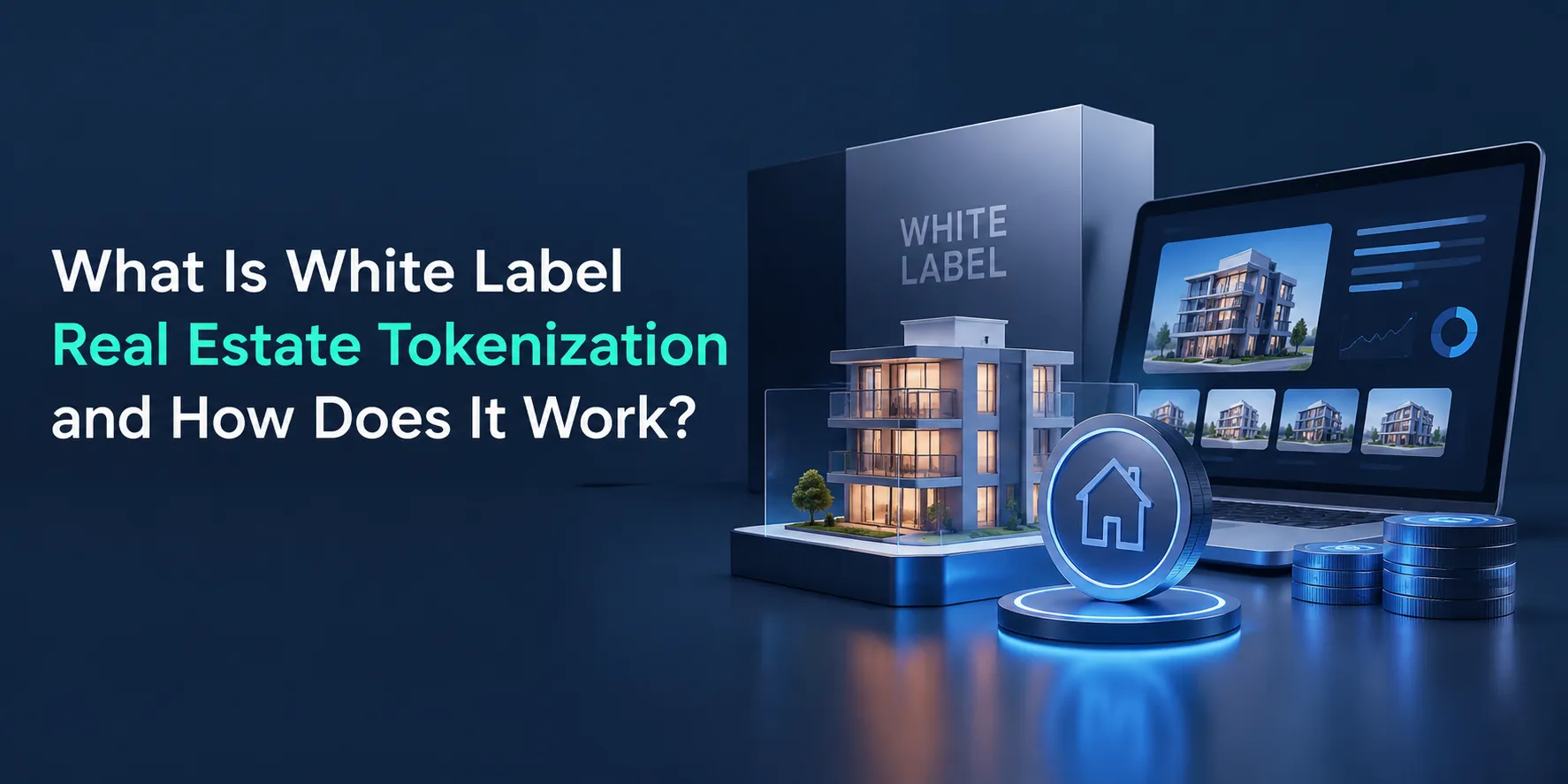

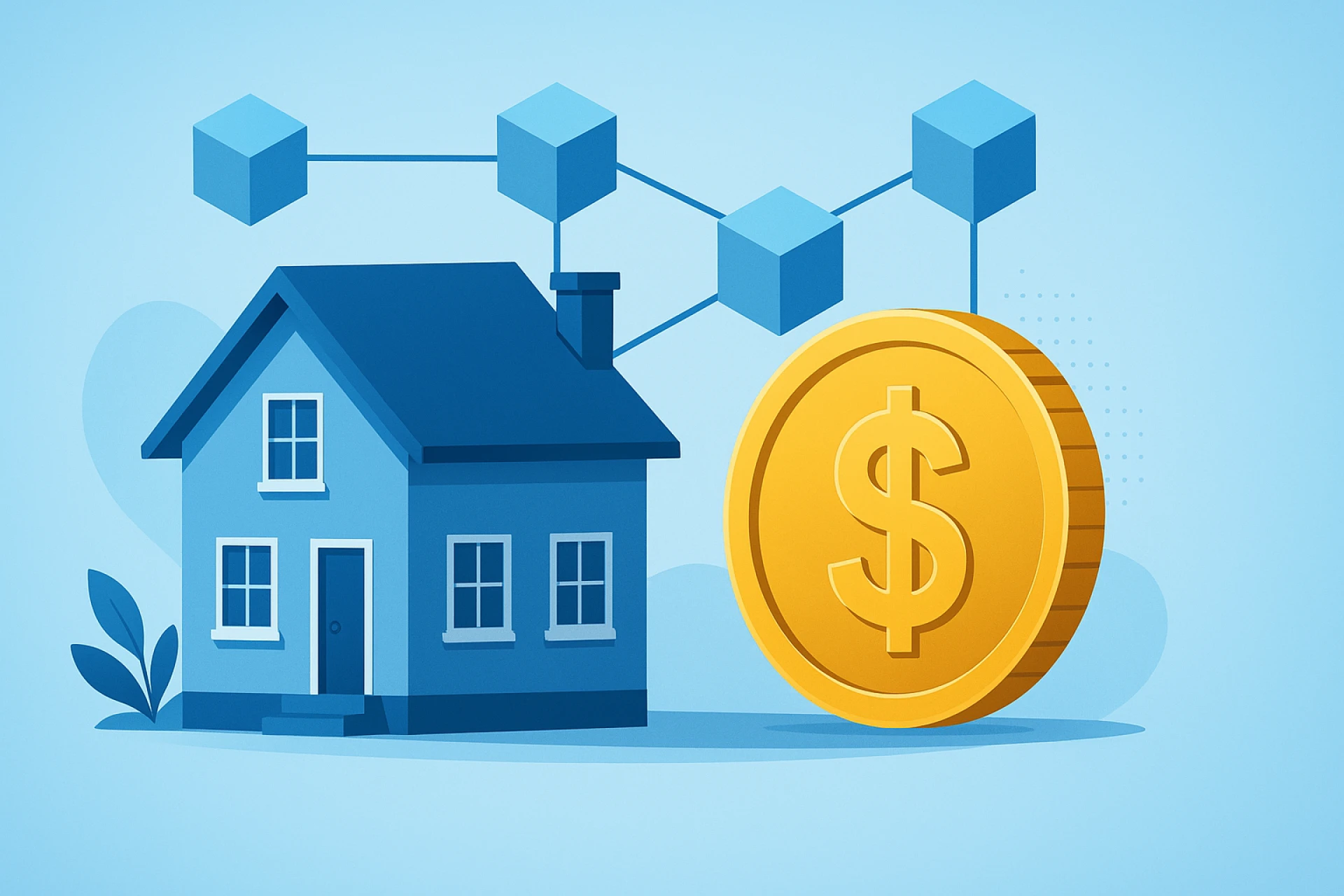
Real estate has always been viewed as a valuable asset class, but traditional property investment comes with significant barriers. High capital requirements, lengthy transactions, complex paperwork, limited liquidity, and geographic restrictions can make property ownership difficult for many investors. Blockchain technology is introducing a different approach through real estate tokenization.
White label real estate tokenization takes this concept one step further. Instead of building an entire blockchain-based property investment platform from the ground up, a business can use an existing tokenization infrastructure, customize its branding and features, and launch it as its own platform.
The model is becoming increasingly relevant as financial institutions, property companies, investment firms, and technology businesses explore blockchain-based ownership and investment models. Deloitte estimates that the value of tokenized real estate could reach $4 trillion by 2035, compared with less than $0.3 trillion in 2024.
What Is White Label Real Estate Tokenization?
White label real estate tokenization refers to the process of launching a branded platform that enables properties or real estate-related financial interests to be represented through blockchain-based tokens without developing the complete technology infrastructure independently.
The underlying technology is typically developed by a specialized blockchain provider. The business using the solution can customize elements such as the platform interface, branding, investor dashboard, token configuration, property listings, payment features, and administrative controls.
This approach separates technology development from business ownership. A real estate company, investment firm, fintech company, or entrepreneur can focus on acquiring properties, structuring investment products, attracting investors, and managing the business while the technology provider supplies the core infrastructure.
A key point is that tokenization does not simply mean uploading a property document onto a blockchain. The legal ownership structure, investor rights, asset valuation, custody arrangements, compliance processes, and relationship between the physical property and digital token must all be clearly established.
The token can represent different economic interests depending on the legal structure. It may represent fractional equity in an entity that owns the property, an interest in a real estate fund, debt backed by property, or another legally defined claim.
White Label Real Estate Tokenization Platform: How Does It Work?
A White Label Real Estate Tokenization Platform provides the technical infrastructure required to create, issue, manage, and potentially trade property-backed digital assets under a company's own brand. A related White Label Property Tokenization Platform can provide similar infrastructure for different types of properties and investment structures.
The process generally begins with selecting a property and determining how investors will receive economic exposure to it. Suppose a commercial property is valued at $10 million. Instead of requiring one investor to purchase the entire property, the ownership structure could be divided into a defined number of digital units.
For example, the underlying structure might issue 100,000 tokens, with each token representing a defined fractional interest in the ownership entity or economic rights associated with the property. The exact rights depend on the legal and financial structure rather than the blockchain itself.
A typical white label platform can then manage several stages:
1. Property onboarding:
The property is evaluated through financial, legal, technical, and ownership due diligence. Documents relating to title, valuation, leases, taxes, financing, and other relevant matters are collected.
2. Legal structuring:
The issuer determines what the token represents and establishes the appropriate legal entity or contractual structure. This is critical because blockchain records do not automatically change property law.
3. Token design:
The platform defines the token supply, ownership or economic rights, transfer restrictions, distribution rules, and other parameters.
4. Smart contract deployment:
Smart contracts automate predefined activities such as token issuance, transfers, investor eligibility checks, distributions, and other platform functions.
5. Investor onboarding:
Investors create accounts and may complete identity verification, KYC, AML screening, accreditation checks, or other requirements depending on the jurisdiction and offering.
6. Token issuance:
Eligible investors purchase tokens through the platform. Their ownership or economic interest is recorded on the blockchain according to the established structure.
7. Asset management:
The platform can provide information about rental income, distributions, property performance, token balances, transactions, and investor records.
8. Secondary transactions:
Where legally permitted and where appropriate market infrastructure exists, investors may be able to transfer or trade their tokens. Tokenization can make this process more flexible, but it does not guarantee liquidity.
This last point is particularly important. Blockchain can make ownership records and transfers more efficient, but a liquid secondary market still requires buyers, sellers, appropriate regulations, market infrastructure, and mechanisms for matching transactions.
Why Businesses Choose a White Label Model
Building a real estate tokenization platform from scratch requires more than blockchain development. Businesses must consider smart contracts, wallets, user management, compliance workflows, investor dashboards, payment infrastructure, security, property management integrations, and potentially secondary-market functionality.
A white label model reduces the amount of infrastructure that must be developed internally. Businesses can start with an existing technology foundation and customize it according to their business model.
This can be particularly useful for organizations that already have access to real estate assets but lack specialized blockchain development capabilities.
For example, imagine a real estate investment company managing several commercial properties. Rather than spending years creating blockchain infrastructure, it could deploy a branded platform, structure individual properties into compliant investment products, onboard investors, and use the platform to manage tokenized interests.
The business can therefore concentrate on its competitive advantages, such as property sourcing, underwriting, investor relationships, asset management, and market development.
How Tokenization Changes Real Estate Investment
The strongest argument for tokenization is not simply that property ownership becomes digital. Its greater potential comes from changing how ownership, investment, administration, and transactions can interact.
Traditional property investment often involves multiple parties, including brokers, lawyers, banks, registrars, custodians, administrators, and other intermediaries. Information may be stored in separate systems, creating reconciliation and administrative work.
Blockchain-based infrastructure can provide a shared record of token ownership and transactions. Deloitte notes that blockchain can potentially improve transparency and efficiency across commercial real estate activities, including property transactions, financing, leasing, payments, and title management.
Fractionalization is another important benefit. A property worth millions of dollars can potentially be divided into smaller investment interests. This does not automatically make an investment suitable for every investor, but it can lower the minimum investment size within an appropriate legal framework.
Tokenization can also support more flexible portfolio construction. Investors could potentially gain exposure to different properties, locations, property types, or real estate debt instruments through digital assets rather than acquiring complete properties individually.
Real-World Example of Tokenized Real Estate
Consider a developer that owns a $20 million apartment complex. Under a traditional model, the developer could finance the property through a bank loan, private investors, or an institutional fund.
With tokenization, the developer could establish a legally appropriate ownership structure and issue digital tokens representing defined interests in that structure. Investors purchase the tokens through a platform and potentially receive distributions generated by rental income or other property cash flows.
The platform could provide investors with a dashboard showing their token holdings, distribution history, property information, and relevant performance data.
The model does not eliminate the underlying property. Tenants still occupy physical apartments, property managers still maintain the building, taxes still need to be paid, and legal ownership still needs to be recognized. The blockchain becomes an additional layer for managing digital ownership records and investment activity.
This distinction matters because tokenizing a property is not the same as putting the property's legal title directly on a blockchain.
The Role of Smart Contracts
Smart contracts are one of the most important components of a tokenization platform.
They are blockchain-based programs that execute predefined rules. In a real estate ecosystem, smart contracts can support token issuance, transfer restrictions, investor eligibility, distribution calculations, and other functions.
For instance, if an offering allows only verified investors to hold tokens, smart-contract rules can be designed to restrict transfers to eligible wallets. Similarly, a distribution mechanism could calculate and allocate payments according to token holdings.
However, smart contracts should not be treated as substitutes for legal agreements. The code must correspond to the legal and economic rights established outside the blockchain.
Security is equally important. A vulnerability in a smart contract can create financial and operational risks. Independent code audits, access controls, wallet security, monitoring, and appropriate governance therefore become important parts of a serious tokenization platform.
Compliance and Regulatory Considerations
Regulation is one of the most important considerations in real estate tokenization.
Depending on the structure, jurisdiction, investor type, and rights attached to a token, a tokenized real estate offering may fall within securities or other financial-services regulations. The United States Securities and Exchange Commission stated in January 2026 that tokenized securities can represent securities whose ownership records are maintained partly or entirely through crypto networks.
Therefore, businesses should not assume that putting an asset on a blockchain removes existing securities, property, tax, AML, or investor-protection requirements.
A compliant platform may need features for:
- KYC and AML verification
- Investor eligibility management
- Transfer restrictions
- Transaction monitoring
- Regulatory reporting
- Custody and wallet controls
- Tax and accounting records
- Investor disclosures
- Document management
The exact requirements differ substantially between jurisdictions. Legal and regulatory professionals should therefore be involved before launching an offering.
Benefits and Limitations of White Label Tokenization
White label tokenization offers several potential advantages, including faster platform deployment, reduced development requirements, customizable branding, automated workflows, fractional investment structures, transparent transaction records, and potentially more efficient investor management.
However, the model also has limitations.
Tokenization does not guarantee property appreciation or investment returns. It does not automatically create secondary-market liquidity. Blockchain infrastructure can also introduce new operational, cybersecurity, custody, and compliance risks.
The Bank for International Settlements notes that tokenization may provide benefits such as improved efficiency, lower costs, transparency, and fractionalization, while also highlighting regulatory uncertainty and operational complexity.
Research from the BIS provides an interesting real-world perspective. A 2025 study of US tokenized real estate found that tokenized properties tend to emerge in markets with lower prices, weaker demand, and limited liquidity. The research also found that trading activity in tokenized properties increased by 35% cumulatively over two days following natural disasters, although this liquidity effect depended on platform buyback mechanisms that can introduce additional solvency risks.
These findings show why tokenization should be treated as financial-market infrastructure rather than simply a blockchain marketing concept.
What Makes a Successful White Label Platform?
A strong platform needs more than attractive branding and token issuance. It needs reliable infrastructure connecting the property, legal structure, investors, blockchain, and operational processes.
The most important components typically include a customizable investor interface, secure wallet infrastructure, token management, smart contracts, property management capabilities, investor onboarding, KYC/AML integrations, payment processing, reporting tools, administrative dashboards, and security controls.
Interoperability can also become important as tokenized assets develop. Investors may eventually expect digital assets to interact with different wallets, networks, marketplaces, and financial systems.
The broader tokenization market is still developing. McKinsey estimates that tokenized financial assets could reach approximately $2 trillion in market capitalization by 2030 in its base case, excluding cryptocurrencies and stablecoins.
For real estate businesses, this suggests that the opportunity is not limited to creating individual property tokens. The larger opportunity may involve building integrated ecosystems where issuance, ownership, asset servicing, compliance, and trading work together.
Conclusion
White label real estate tokenization provides businesses with a practical route to enter blockchain-based property investment without developing every component from scratch. By combining customizable technology, tokenized ownership structures, smart contracts, investor management, and compliance-focused infrastructure, businesses can create new models for accessing and managing real estate assets. However, successful implementation depends on sound legal structuring, security, regulatory compliance, reliable asset management, and genuine market demand. Blockchain App Factory provides best services for businesses looking to develop customized white label real estate tokenization solutions, with technology designed around their branding, business model, and platform requirements.




















Sign in to leave a comment.