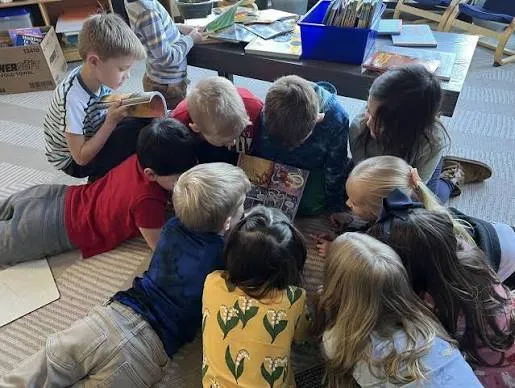

Walk into most high school classrooms today, and you'll see the same setup that existed fifty years ago. Rows of desks, a teacher lecturing at the front, and a bell that cuts off curiosity right when it starts to build. For a kid who loves building robots or coding apps at home, that setup can feel like a cage. Parents notice it too, especially when their child comes home bored instead of excited. This is where a STEM high school changes the equation.
Instead of forcing innovative minds into an outdated mold, it builds the mold around how these students actually think, create, and solve problems. Here's why the old system keeps missing the mark, and what a STEM-focused approach gets right.
Key Takeaways
- Traditional high schools were built for a different era, and that structure often clashes with how curious, hands-on kids actually learn.
- Passive lectures and rigid schedules leave little room for the exploration innovative students crave.
- A dedicated STEM high school builds its day around real projects and real data, not just theory.
- Learning to sit with uncertainty and iterate through failure matters just as much as any test score.
- Being surrounded by equally driven peers pushes students further than any single class could on its own.
- For families looking for something different, the right school structure can change how a student grows.
Why Traditional High Schools Are Falling Behind
Most high schools were built for a different era, one where factories needed workers who could sit still and repeat the same task for eight hours. That system worked fine for its time. It just doesn't work well for kids wired to question things and build stuff nobody asked them to build.
Factory-Model Design
Bells ring every 45 minutes. Students get sorted by age instead of ability. Subjects stay boxed into their own silos, math over here, science over there, rarely touching each other. A student who wants to combine engineering with environmental science has to hunt for that connection on their own, because the schedule wasn't built to let ideas cross paths.
Passive, Lecture-Based Learning
Picture a typical class period. A teacher stands up front, works through a slide deck, and thirty kids copy notes. There's a place for direct instruction, but when it's the only mode a school uses, students lose the habit of asking their own questions. They learn to wait for information instead of chasing it down.
Individualized Testing Over Collaboration
Scantrons and solo essays still dominate how progress gets measured. Meanwhile, the jobs these students will grow into run on teams, feedback loops, and shared whiteboards covered in half-finished ideas. A kid can ace every quiz and still never learn how to pitch an idea to three skeptical teammates, or fix a plan that fell apart halfway through.
Inflexible System Architecture
Credit requirements from decades ago still dictate what a student can take and when. Calendars are fixed. Decisions about curriculum often get made far from the classroom, by people who've never met the students they affect. Add it up and you get a school that struggles to bring in a new robotics kit, let alone rethink how a subject gets taught.
What a STEM High School Gets Right
A dedicated STEM high school flips most of that on its head, and it does so on purpose. The goal is simple. Build a learning environment around how curious, hands-on kids actually operate.
Real-World Application
Instead of memorizing a diagram of a circuit, students wire one themselves and watch it fail a few times before it works. They pull real data sets, not sanitized textbook examples, and use them to look at actual problems, like water quality in a local stream or traffic patterns near their school. That gap between theory and practice closes fast when the stakes feel real, even in a small way.
Comfort with Uncertainty
Project-based learning doesn't hand students an answer key. It hands them a problem and lets them stumble toward a solution, redesign it, and try again. That teaches something a worksheet never can, how to sit with not knowing yet and keep working anyway. Kids who go through this come out less afraid of failure, because they've already failed on smaller things and lived to try again.
High-Density Peer Environments
Put a driven kid next to other driven kids, and something shifts. Conversations in the hallway start sounding like brainstorm sessions. Group projects turn into real collaboration instead of one person carrying the group. That kind of peer pressure, the good kind, pushes students further than any single teacher could alone.
For parents weighing their options, the strongest results tend to come from schools built entirely around this model, rather than a few STEM electives bolted onto a traditional program. If you're searching for the best private school in Warrenville, look at how a school structures its actual school day, not just its mission statement. The difference shows up fast, usually within the first semester.
Traditional high schools aren't struggling because the people running them don't care. They're stretched thin trying to serve everyone inside a structure that was never meant to flex this much. A STEM high school takes a different starting point altogether, and for a certain kind of student, that starting point makes all the difference.
Choosing the right high school shapes the next four years, and no website can replace walking the halls yourself. Come see Orion STEM in Warrenville in person. Sit in on a lab, meet the teachers, and watch how students actually work here. Schedule your visit today and see if this is the fit your student has been looking for.
FAQ
Are STEM Schools Better Than Traditional Schools?
It depends on the student. Kids who like hands-on projects, real-world problem solving, and teamwork usually do better at a STEM high school. Traditional schools still work well for students who thrive with structure and broad electives. The right choice comes down to how that specific student learns best.
What Are Some Alternatives To Traditional High School?
Families have more options than just the local public school. STEM high schools, career and technical academies, online or hybrid programs, homeschool co-ops, and dual-enrollment with local colleges are all common alternatives. Each one suits a different kind of learner, so match the option to the student's actual pace.
What are the Four C's of STEM learning?
The four C's are critical thinking, communication, collaboration, and creativity. STEM programs build these skills on purpose through group projects, hands-on labs, and open-ended problem solving. Instead of just teaching facts, this approach trains students to work through problems and cooperate well, skills that carry into most careers.
What are the Disadvantages of STEM Education?
STEM programs can feel intense, since project-based work often needs more time and self-direction than a standard class. Students who prefer clear, fixed instructions sometimes need extra support adjusting. Access can be limited too, since not every district has a dedicated STEM high school nearby. Fit and pacing matter most.





















Sign in to leave a comment.