

Choosing the right TMT bar is an important decision in any construction project. TMT bars act as reinforcement within concrete structures, helping them withstand loads, stress, and environmental conditions. However, not every TMT bar offers the same level of performance. Factors such as steel grade, chemical composition, mechanical properties, manufacturing quality, and testing can influence the overall performance of a bar.
For builders, contractors, engineers, and buyers, understanding these parameters makes it easier to evaluate TMT bars before placing an order. Here are the key factors to consider when checking the quality of TMT bars.
1. Check the Steel Grade
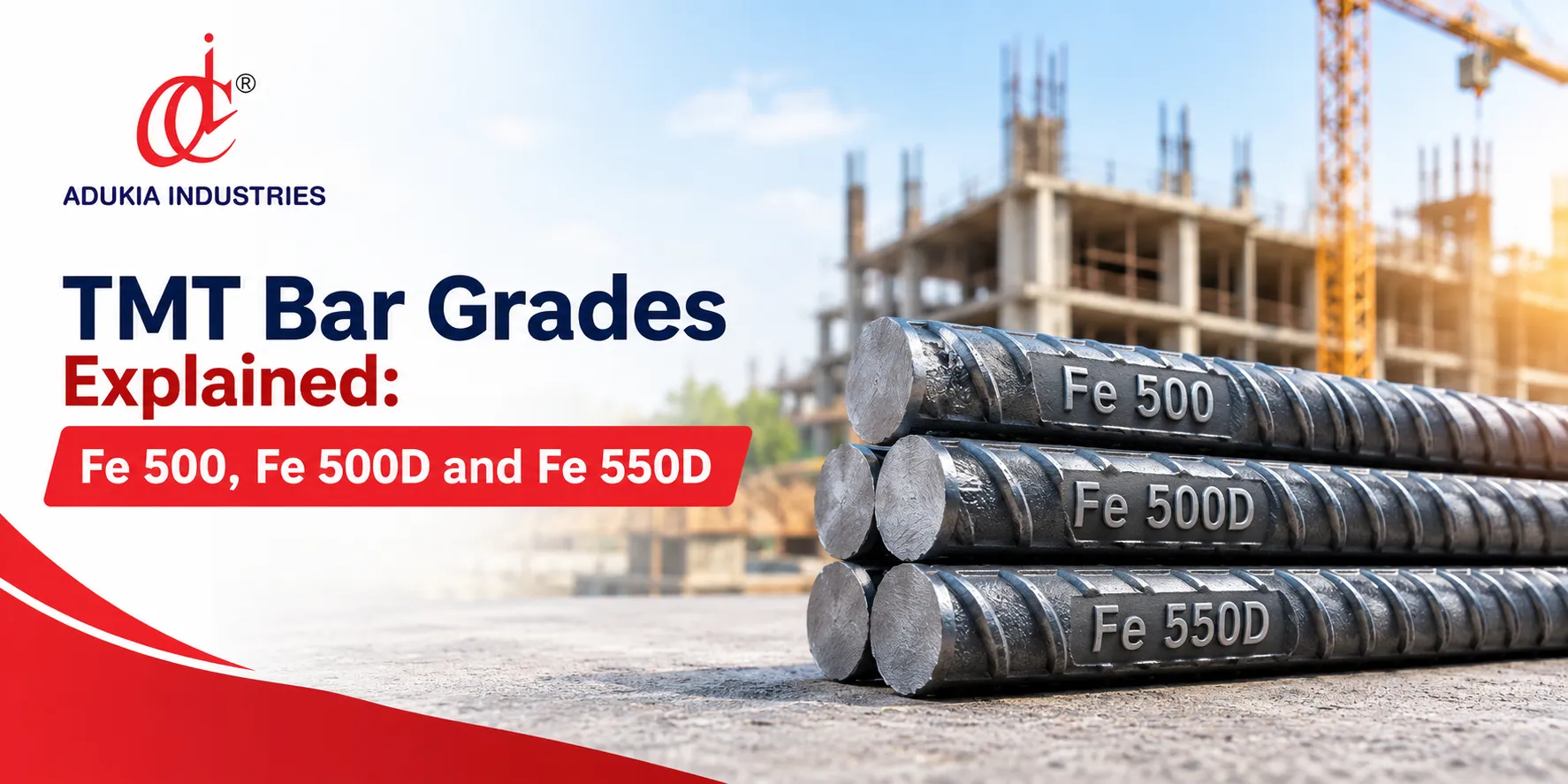
The first parameter to check is the grade of the TMT bar. Different grades are designed to provide specific combinations of strength and ductility. Fe 500D and Fe 550D, for example, are commonly considered when higher strength and ductility are required.
The selected grade should match the structural design and project requirements rather than being chosen only on the basis of price. Buyers should also verify the grade mentioned on the test certificate and product documentation.
2. Examine Chemical Composition
The chemical composition of steel has a direct influence on the performance of TMT bars. Elements such as carbon, manganese, sulphur, and phosphorus need to remain within specified limits.
Carbon can contribute to strength, while excessive carbon can affect weldability and ductility. Sulphur and phosphorus are also controlled because their presence beyond specified limits can influence the properties of steel.
A reliable manufacturer should maintain consistent chemical composition across production batches and provide relevant test information when required. Adukia Industries publishes chemical composition specifications for its TMT products, including limits for carbon, sulphur, phosphorus, and other parameters.
3. Look at Yield Strength
Yield strength indicates the amount of stress a TMT bar can withstand before it begins to undergo permanent deformation. It is one of the important mechanical properties used to assess reinforcement steel.
A high-quality TMT bar should meet the minimum yield strength specified for its grade. Buyers should therefore check the manufacturer's technical specifications and test certificates instead of relying only on visual appearance.
4. Check Tensile Strength
Tensile strength refers to the maximum stress a TMT bar can withstand while being stretched before failure. It provides an indication of the bar's resistance to tensile forces.
Yield strength and tensile strength should be considered together because structural performance depends on a suitable balance between strength and ductility. Quality-control testing generally includes tensile testing to verify whether the bars meet the required mechanical specifications.
5. Consider Elongation and Ductility
Strength alone does not define a good TMT bar. Ductility is equally important because reinforcement may need to deform under heavy or dynamic loading without suddenly fracturing.
Elongation is one of the parameters used to evaluate ductility. A higher elongation value generally indicates that the steel can undergo greater deformation before breaking, subject to the applicable standard and grade.
For structures exposed to dynamic loads or seismic forces, the combination of strength and ductility becomes particularly important.
6. Check the Manufacturing Process
The manufacturing process has a major influence on the final properties of TMT bars. Thermo-mechanical treatment involves controlled heating, rolling, and cooling to develop the required combination of strength and ductility.
At Adukia Industries, TMT bar production uses controlled processing and German Thermex technology. The company's manufacturing process includes heating billets, rolling them, controlled cooling, and subsequent quality checks.
Understanding the TMT bar manufacturing process can help buyers see how temperature control and processing conditions contribute to the final properties of reinforcement steel.
7. Inspect Surface and Rib Quality
A TMT bar should have a consistent surface and properly formed ribs. The ribs help create mechanical interlocking between the reinforcement and surrounding concrete.
During visual inspection, buyers can look for excessive surface defects, cracks, irregular ribs, or visible inconsistencies. While visual inspection cannot replace laboratory testing, it can help identify obvious quality issues before the material is used.
8. Verify Weight and Dimensional Consistency
Diameter, length, and weight consistency are also important when purchasing TMT bars in bulk. Variations beyond acceptable tolerances can affect material estimation and reinforcement planning.
Buyers should check the manufacturer's dimensional specifications and ensure that the supplied material corresponds with the ordered size. TMT bars are available in different diameters, so the appropriate size should be selected according to the structural design.
9. Ask for Quality and Test Certificates
Before purchasing, buyers should ask for relevant test certificates and product documentation. These records can provide information about chemical composition and mechanical properties and help confirm whether the supplied material meets applicable requirements.
Adukia Industries highlights testing of mechanical properties, chemical composition, visual quality, and other quality-control parameters as part of its TMT manufacturing practices.
10. Consider the Quality of the Billet
The quality of the billet used as the starting material can also influence the quality of the finished TMT bar. Billets are an important intermediate product that is subsequently rolled into reinforcement bars.
Adukia Industries manufactures billets with controlled specifications and conducts testing during production. Understanding the role of steel billets in TMT bar production can therefore provide useful insight into how upstream material quality affects downstream steel products.
Final Checklist for Buying Quality TMT Bars
Before purchasing TMT bars, buyers should check:
- Appropriate steel grade for the project
- Chemical composition
- Yield strength
- Tensile strength
- Elongation and ductility
- Manufacturing and cooling process
- Surface and rib quality
- Diameter, length, and weight consistency
- Quality and test certificates
- Quality of the billets used in production
A high-quality TMT bar is the result of several controlled factors rather than a single specification. From the quality of the raw material to chemical composition, mechanical properties, manufacturing technology, and final testing, every stage can influence the finished product.
For construction projects, buyers should evaluate TMT bars against applicable standards and project specifications rather than choosing solely on price. A systematic quality check helps ensure that the reinforcement steel selected is appropriate for the intended application and supports the long-term performance of the structure.


























Sign in to leave a comment.