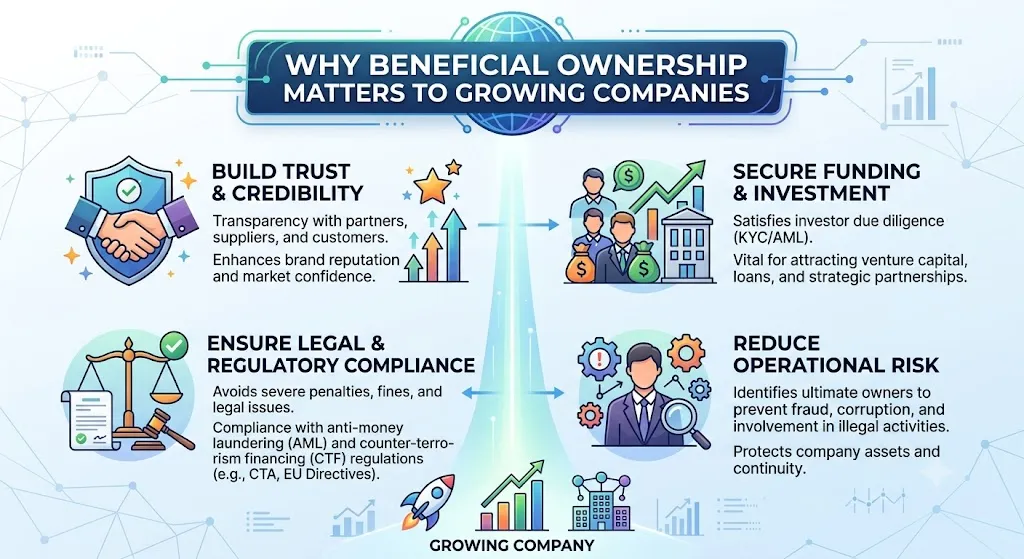

As a company grows, its ownership structure can become more complex. New shareholders may join, investors may acquire interests, and ownership may be held through different entities or arrangements. In such circumstances, knowing who legally owns shares is only part of the picture. Businesses may also need to identify the individuals who ultimately own or control an interest in the company.
Beneficial ownership is important for corporate transparency, regulatory compliance and effective governance. It can also become relevant during investment, banking, due diligence and major commercial transactions. Companies which understand their beneficial ownership position early can maintain more accurate records and respond more effectively when ownership information is requested.

What Is Beneficial Ownership?
Beneficial ownership generally refers to the individual who ultimately owns, controls or benefits from an interest in a company, even where the legal ownership is held through another person or entity. The precise definition and reporting requirements can vary depending on the applicable legislation and jurisdiction. A shareholder listed in a company's records may therefore not always be the individual who ultimately exercises control or receives the economic benefit.
Understanding this distinction is important for companies with layered ownership structures. For example, shares may be held by another company, trust or investment vehicle. Looking only at the immediate shareholder may not provide a complete picture of who ultimately controls the interest. Companies should examine the applicable legal requirements when determining whether beneficial ownership disclosures are required.
Why Beneficial Ownership Records Matter
Accurate beneficial ownership records help establish transparency within a company's ownership structure. They can make it easier for directors, shareholders, regulators and financial institutions to understand who has an interest in the business. Clear records can also support effective corporate decision making when ownership rights or control arrangements need to be considered.
Beneficial ownership information can become particularly important when a company enters into significant transactions. Banks, investors and other counterparties may request information about the people behind a corporate structure as part of their due diligence. A company which cannot clearly explain its ownership arrangements may face additional questions or delays during these processes.
Beneficial Ownership and Corporate Compliance
Growing companies need to understand their ongoing corporate reporting obligations. Depending on the jurisdiction and corporate structure, businesses may be required to identify and report certain beneficial ownership information to the relevant authorities. These obligations can apply when a company is incorporated and may continue as ownership or control changes.
Compliance should not be viewed as a one time exercise. Changes in shareholding, control rights or corporate arrangements may affect previously recorded information. Companies should therefore maintain processes for reviewing ownership information and updating records when legally required. The specific requirements depend on the applicable corporate legislation and should be assessed accordingly.
Ownership Can Become More Complex as a Company Grows
A start up may initially have a simple structure involving a small number of founders. As the business develops, external investment, employee share schemes, holding companies and transfers of shares can introduce additional layers. Without careful record keeping, it can become difficult to determine who ultimately owns or controls the business.
Founders should consider ownership transparency when establishing the company rather than waiting until a major transaction occurs. Businesses which setup a company in India should understand the applicable incorporation and ownership requirements from the beginning. Proper documentation can make future changes easier to manage and reduce uncertainty around the company's ownership position.
Beneficial Ownership During Investment and Fundraising
Investors often conduct due diligence before committing capital to a company. Understanding who owns and controls the business can form an important part of this process. Investors may examine shareholder registers, agreements, corporate filings and other documents to establish whether the stated ownership structure reflects the actual position.
Companies seeking investment should therefore review their beneficial ownership information before fundraising begins.
Any undocumented arrangements or inconsistencies should be investigated and addressed where appropriate. Clear ownership records can also help founders explain voting rights, economic interests and control arrangements during investment discussions.
The Role of Beneficial Ownership in Banking
Financial institutions may need to understand the individuals behind a corporate customer as part of their customer due diligence and anti money laundering obligations. A business may therefore be asked to provide information about its ownership and control structure when opening an account or maintaining an existing banking relationship.
Companies should be prepared to provide accurate and current information when such requests arise. Delays may occur when ownership structures are complicated or supporting documents are unavailable. Maintaining appropriate corporate records can make it easier to respond to legitimate requests and demonstrate how ownership and control are structured.
Beneficial Ownership and Corporate Governance
Beneficial ownership can also affect internal governance. Directors may need to understand who ultimately holds significant interests in the company when considering voting arrangements, related party matters or major corporate decisions. Clear ownership information can help the company identify relevant stakeholders and understand where control may ultimately sit.
Governance becomes increasingly important as the number of shareholders and investors increases. Companies should ensure shareholder agreements, constitutional documents and corporate records are consistent with the actual ownership arrangements. Where different documents contain conflicting information, the company may need legal advice to determine how the issue should be addressed.
Managing Changes in Ownership
Ownership information can change when shares are transferred, new investors enter the company or existing shareholders alter their interests. Changes in voting rights or control can also affect the beneficial ownership position even where the registered shareholder remains the same.
Businesses should therefore review ownership information following significant corporate changes. Relevant records should be updated in accordance with applicable requirements, and supporting documents should be retained. A clear process for recording changes can reduce the risk of outdated information being relied upon during future transactions or compliance reviews.
Professional Advice for Growing Companies
Beneficial ownership can involve detailed corporate and regulatory requirements. The correct approach may depend on the company's structure, shareholders, control arrangements and applicable jurisdiction. Professional advice can help a company understand its obligations and identify areas where its records require review.
Growing businesses may seek guidance from startup law firms India when dealing with shareholder arrangements, investment structures and corporate compliance. Legal advisers can also help companies review ownership documentation when a fundraising round, restructuring or major transaction is being considered. The appropriate advice will depend on the company's circumstances and the relevant legal requirements.
Why Transparency Supports Business Growth
Transparent ownership records can make corporate transactions easier to manage. Investors, lenders and commercial partners often need confidence in the company's ownership structure before entering significant arrangements. Clear information can help reduce uncertainty during due diligence and support more efficient communication between the parties.
Transparency also supports the company's internal management. Directors and shareholders can make better informed decisions when ownership and control rights are properly documented. As the business expands, maintaining accurate information becomes increasingly important because more stakeholders may rely on the company's corporate records.
Conclusion
Beneficial ownership matters because a company's registered shareholders may not always reveal the individuals who ultimately own or control the business. As companies grow, investment structures and corporate arrangements can become more complicated. Understanding the distinction between legal ownership and beneficial ownership can help businesses maintain accurate records and meet applicable regulatory obligations.
Companies should review their ownership structures regularly and keep relevant information current. Early attention to beneficial ownership can support corporate governance, investment due diligence, banking relationships and major commercial transactions. A transparent approach also gives growing businesses a stronger foundation for managing future changes in ownership and control.

























Sign in to leave a comment.