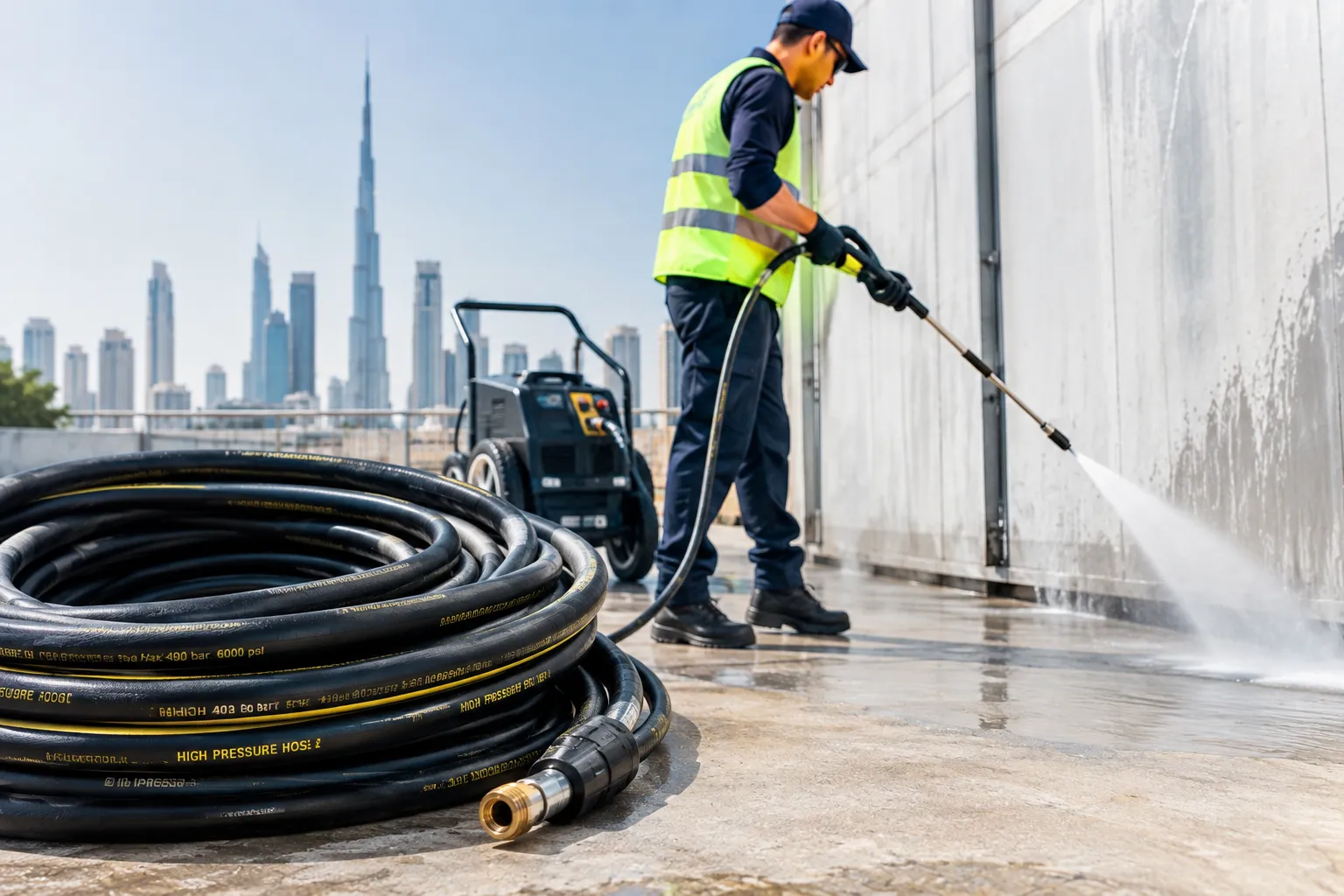

A high-pressure cleaning system is only as reliable as the hose connected to it. You can have a powerful pump and professional equipment, but if the hose cannot handle the pressure, the entire setup can become inefficient—or unsafe.
This is why choosing the right water pressure hose requires more than checking its length or price. The hose needs to withstand the working pressure, temperature, movement, and environmental conditions associated with the application.
In the UAE, where pressure washing and industrial cleaning are common across construction sites, workshops, commercial facilities, vehicle service centres, and maintenance operations, selecting the right hose can make a significant difference.
What Is a High-Pressure Water Hose?
A high-pressure hose is specifically designed to transport water or other approved fluids under considerably higher pressure than an ordinary garden or utility hose.
Its construction normally includes an inner tube, reinforcement layer, and protective outer cover. Each part has a specific role. The inner tube carries the fluid, the reinforcement provides pressure resistance, and the outer cover protects the hose from abrasion, weather, oils, and other external conditions.
The exact construction varies depending on the intended application and pressure rating.
1. Pressure Rating
The most important specification is the hose's pressure rating.
A hose should have a working pressure rating that meets or exceeds the maximum pressure produced by the equipment. Using a hose below the system's operating pressure can increase the risk of failure.
It's also useful to distinguish between working pressure and burst pressure. Working pressure refers to the pressure the hose is designed to handle during normal operation, while burst pressure represents a much higher failure threshold.
For professional applications, selection should always be based on the manufacturer's stated working pressure rather than relying on the burst figure.
2. Reinforcement Construction
The reinforcement inside the hose determines much of its pressure-handling capability.
High-pressure hoses may use textile reinforcement, braided wire, spiral wire, or other engineered structures depending on their design and application. Stronger reinforcement helps the hose maintain its shape when internal pressure rises.
For demanding industrial cleaning applications, choosing the correct reinforcement is particularly important because repeated pressure cycles can place stress on the hose over time.
3. Quality of the Inner Tube
The inner tube comes into direct contact with the water or cleaning fluid, so its material needs to be compatible with the application.
A quality inner tube should resist deterioration caused by the fluid, pressure, and operating temperature. If chemicals or detergents are used with the pressure-washing system, compatibility becomes even more important.
Always check the manufacturer's specifications before using a hose with fluids other than those for which it was designed.
4. Temperature Resistance
Pressure isn't the only factor that affects hose performance. Temperature also matters.
Some cleaning systems use hot water, while others operate with ambient-temperature water. A hose designed for cold-water applications may not be suitable for elevated temperatures.
Before selecting a hose, check both the minimum and maximum temperature ratings. This is particularly relevant for industrial cleaning equipment that operates for extended periods.
5. Abrasion and Weather Resistance
A hose used on a construction site or workshop floor may be dragged across concrete, metal edges, dust, and other rough surfaces.
A durable outer cover helps protect the reinforcement from abrasion and environmental exposure. In the UAE, resistance to heat, sunlight, dust, and outdoor conditions can also be valuable for equipment that spends significant time outside.
A hose that withstands its working environment is less likely to suffer premature external damage.
6. Flexibility and Bend Radius
A hose needs to be strong, but it also needs to move easily.
Operators often need to guide a pressure hose around vehicles, equipment, walls, machinery, or other obstacles. Excessively stiff hoses can be difficult to handle, while bending a hose beyond its recommended minimum bend radius can damage its internal structure.
A good balance between flexibility and pressure resistance makes daily operation easier and helps extend service life.
7. Reliable Connections and Fittings
Even a high-quality hose can become a weak point if the fittings are unsuitable or incorrectly installed.
Connections should match the pressure washer, pump, spray gun, and other components being used. Fittings should also be properly secured and rated for the operating conditions.
When replacing a hose, don't focus only on the hose itself. Check the complete connection system.
Choosing the Right Water Pressure Hose in the UAE
The correct hose depends on the equipment and application. A vehicle detailing centre may have different requirements from a construction company cleaning concrete surfaces or an industrial facility handling heavy-duty maintenance.
Before purchasing, check the working pressure, temperature range, internal diameter, length, reinforcement, flexibility, fitting type, and application compatibility.
It's also worth considering how frequently the hose will be used. Occasional domestic cleaning and continuous commercial operation place very different demands on equipment.
Final Thoughts
A suitable high-pressure hose is a combination of the right pressure rating, reinforcement, materials, temperature resistance, flexibility, and fittings. Choosing based on these factors helps create a safer and more reliable cleaning system.
Whether you're purchasing equipment for industrial maintenance, construction cleaning, vehicle washing, or commercial operations, don't treat the hose as an afterthought. Explore a quality range of water pressure hose solutions and contact a trusted UAE supplier to find a model that matches your equipment, pressure requirements, and working environment.
FAQs
How do I know if a hose can handle high pressure?
Check the manufacturer's specified working-pressure rating and compare it with the maximum operating pressure of your equipment. The hose rating should be appropriate for the complete system.
Does a longer hose reduce pressure?
Pressure loss can increase with hose length, particularly when the internal diameter is too small for the required flow rate. Selecting the correct diameter helps maintain efficient water delivery.
Can any pressure hose be used with hot water?
No. Check the hose's temperature rating before using it with heated water. Pressure and temperature specifications should both match the application.
How can I extend the life of a high-pressure hose?
Avoid sharp bends, excessive twisting, dragging over damaging surfaces, and operating beyond the manufacturer's specifications. Regularly inspect the hose, fittings, and connections for signs of wear.






















Sign in to leave a comment.