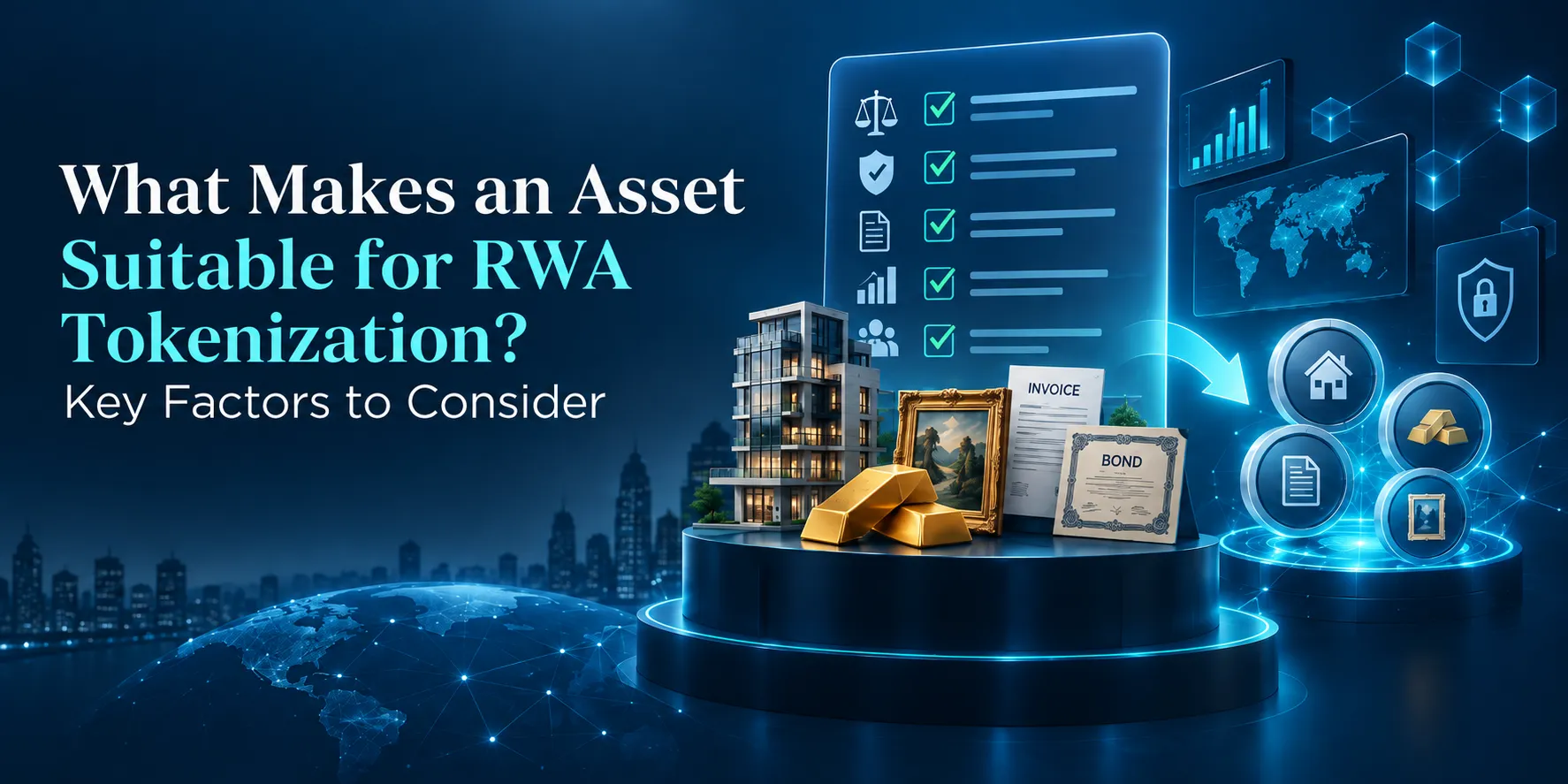

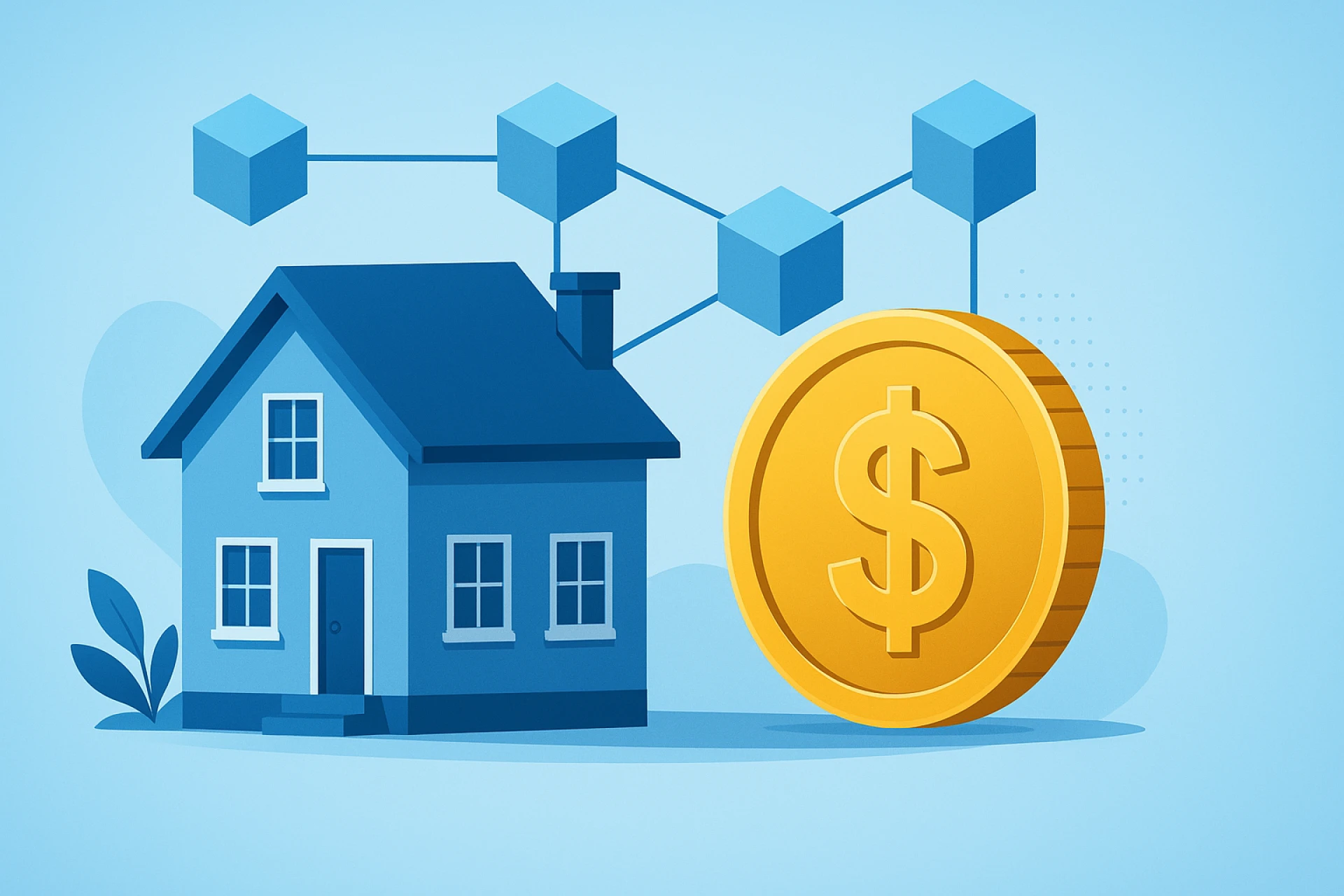
Real-world asset (RWA) tokenization is moving beyond experimentation and becoming an increasingly important part of digital finance. The basic idea is straightforward: an asset or a legally enforceable claim connected to an asset is represented through a blockchain-based token, allowing ownership, economic rights, transfer rules, and settlement processes to be managed through digital infrastructure.
However, not every asset is automatically a good candidate for tokenization. Putting an asset on a blockchain does not eliminate problems related to ownership, valuation, regulation, custody, liquidity, or investor protection. In fact, tokenization can make weaknesses in the underlying asset structure more visible. The most successful projects therefore begin with asset selection rather than technology selection.
This distinction is becoming increasingly important as institutional adoption grows. McKinsey has estimated that tokenized financial assets could reach approximately $2 trillion in market capitalization by 2030 in its base-case scenario, excluding cryptocurrencies and stablecoins, with a range of roughly $1 trillion to $4 trillion depending on adoption. The opportunity is significant, but capturing it requires identifying assets whose economic and legal characteristics genuinely benefit from tokenization.
What Does It Mean for an Asset to Be Tokenizable?
An asset is tokenizable when its ownership, economic rights, or contractual claims can be represented digitally in a manner that is legally enforceable and operationally reliable.
The underlying asset might be tangible, such as real estate, gold, agricultural commodities, artwork, or infrastructure. It could also be financial, such as bonds, private credit, fund interests, or other securities. In each case, the token is not valuable merely because it exists on a blockchain. Its value comes from the rights and claims associated with the underlying asset.
This is particularly important for regulated assets. The U.S. Securities and Exchange Commission explains that tokenized securities can include stocks, bonds, and fund interests represented through crypto assets, while the legal rights associated with different tokenization structures can vary significantly.
Therefore, a suitable asset should be evaluated through several interconnected questions: Who owns it? Can ownership be legally transferred? How is its value determined? Can investors verify that the asset exists? Does it generate predictable economic benefits? Can investors legally buy or sell the associated token? And can the token's rights be enforced if something goes wrong?
These questions form the foundation of responsible RWA tokenization.
1. Clear and Legally Enforceable Ownership
The most important characteristic of a suitable RWA is clear legal ownership.
If ownership of an asset is disputed, fragmented across multiple parties, inadequately documented, or difficult to transfer, tokenization will not solve the underlying problem. Instead, it can introduce another layer of complexity.
For example, consider a commercial property that is fully registered to a special-purpose company. The company can potentially issue tokens representing shares, economic interests, or other legally defined claims connected to the property. Investors can then understand what the token represents and what rights accompany it.
Compare this with a property involved in an ownership dispute. Creating 10,000 blockchain tokens representing that property does not make the underlying ownership clearer. The blockchain may provide an immutable record of token transfers, but it cannot independently establish that the person who originally created the tokens actually had legitimate authority over the property.
This is why legal structuring should precede technical development. The SEC's recent discussion of tokenized securities emphasizes that tokenization does not remove existing securities-law obligations. A tokenized security remains subject to applicable securities requirements.
2. Reliable and Verifiable Asset Data
A tokenized asset needs a trustworthy connection between the blockchain and the physical or off-chain asset.
This is sometimes called the asset-to-token link.
Suppose a platform tokenizes 1,000 ounces of gold. Investors need confidence that:
- The gold actually exists.
- The stated quantity is accurate.
- The gold is stored by an identifiable custodian.
- It is not simultaneously pledged elsewhere.
- Ownership or claims over the gold are properly documented.
- Redemption conditions are clearly defined.
The same principle applies to real estate. A token representing an economic interest in a building should be supported by property records, valuation information, ownership documentation, financial statements, and relevant legal agreements.
Blockchain provides strong recordkeeping capabilities, but it cannot automatically verify an off-chain fact. External data therefore needs reliable verification mechanisms, custodians, auditors, appraisers, registries, and where necessary oracles.
This is one reason tokenization works particularly well when an asset has strong documentation and standardized data.
3. Transparent and Defensible Valuation
Another major factor is whether the asset can be valued consistently.
An asset may be legally suitable for tokenization but economically difficult to tokenize if nobody can establish a credible value for it.
Publicly traded bonds, for example, generally have frequent market pricing. A large commercial property may require professional appraisal, income analysis, comparable-property data, and periodic valuation updates. A unique piece of artwork can be even more challenging because its value may depend heavily on subjective assessments.
Reliable valuation becomes particularly important when tokens are used as collateral, traded on secondary markets, or included in investment portfolios.
For an RWA platform, the valuation methodology should therefore answer:
- Who determines the asset value?
- How frequently is it updated?
- What data sources are used?
- Can investors independently verify the methodology?
- What happens when market conditions change dramatically?
The stronger these mechanisms are, the more credible the tokenized market can become.
4. Predictable Cash Flows Can Increase Suitability
Assets that generate predictable cash flows are often especially attractive candidates for tokenization.
Consider government bonds, private credit, rental properties, infrastructure projects, or revenue-generating equipment. These assets can potentially produce interest, rent, lease payments, dividends, or other measurable economic benefits.
Tokenization can then provide programmable mechanisms for distributing these benefits to eligible token holders.
For instance, a token representing an economic interest in a rental-property structure could potentially be connected to automated distribution processes. Instead of manually reconciling ownership records and payment instructions, smart contracts can help coordinate calculations and distributions according to predefined rules.
This aligns with the broader potential of tokenization identified by the Bank for International Settlements. BIS describes tokenization as a way to integrate asset records, transactions, and settlement processes on programmable platforms, potentially reducing reconciliation and manual intervention.
However, automation does not remove financial risk. If tenants stop paying rent or a borrower defaults, the smart contract cannot manufacture the missing cash flow. Tokenization improves infrastructure; it does not eliminate economic risk.
5. Sufficient Market Demand and Liquidity Potential
Liquidity is another critical consideration.
One of the strongest arguments for tokenization is that it can potentially make traditionally difficult-to-trade assets easier to access and transfer. But tokenization does not automatically create liquidity.
A token can technically be transferable while having almost no buyers.
For example, tokenizing a highly specialized piece of industrial equipment may create thousands of digital units, but if there are only a few potential buyers, the resulting market could remain illiquid.
A more promising asset is one with a broad potential investor base and clear economic characteristics. Government debt, private credit, funds, commodities, and certain real estate structures can be attractive because their investment propositions are easier to understand and compare.
Market infrastructure also matters. Transfer restrictions, investor eligibility requirements, custody arrangements, trading venues, market makers, redemption mechanisms, and settlement systems can all affect real liquidity.
Current market development illustrates this point. Dune's September 2026 RWA report says tokenized RWAs had exceeded $32 billion across four major classes, with fixed income accounting for more than half of the tracked market.
The implication is important: tokenization tends to gain traction where the asset's economic characteristics and market infrastructure already support meaningful investor demand.
6. Regulatory Compatibility
Regulatory suitability is arguably as important as financial suitability.
The regulatory classification of a token can determine who can purchase it, how it can be marketed, where it can trade, what disclosures are required, and what compliance procedures must be implemented.
An asset may be perfectly suitable from a technical perspective but unsuitable for a particular tokenization model because of securities regulations, investment restrictions, property laws, tax rules, licensing requirements, or cross-border regulations.
For example, a token representing shares in a company will generally require a fundamentally different legal structure from a token representing access to a physical commodity.
The SEC's current materials make an important point: tokenized securities are still securities, even when their ownership records are maintained through blockchain networks.
Consequently, asset selection should involve legal analysis from the beginning rather than treating compliance as a final-stage checklist.
7. Strong Custody and Asset Protection
A tokenized asset needs secure custody arrangements.
The question is simple: Where is the underlying asset, and who controls it?
For physical assets, this could involve warehouses, custodians, property managers, banks, or other specialized institutions. For financial assets, regulated custodians and intermediaries may be required.
Custody becomes especially important if the issuer becomes insolvent. Investors need to know whether the underlying assets are legally separated from the issuer's own balance sheet and whether token holders have enforceable claims.
This is one reason special-purpose vehicles and carefully structured legal arrangements are frequently relevant to RWA projects. The token should have a clearly defined relationship with the asset rather than merely providing an informal promise from an issuer.
8. Standardization and Divisibility
Tokenization is particularly useful when an asset can be divided into standardized economic interests.
Real estate provides a useful example. A property worth $10 million may be difficult for an individual investor to purchase directly. A properly structured tokenized vehicle could potentially divide economic interests into smaller units, subject to applicable laws and offering restrictions.
Similarly, bonds, private credit portfolios, commodities, and investment funds can often be represented through standardized units.
The important point is that digital divisibility must correspond to real legal and economic rights. Creating 100,000 tokens does not necessarily mean that each holder owns 1/100,000th of the physical asset. The legal documentation must establish precisely what each token represents.
9. Strong Potential for Blockchain-Based Efficiency
Not every asset needs blockchain.
This is an often-overlooked question in RWA projects. If an asset can already be traded efficiently through existing infrastructure, tokenization may offer limited additional value.
The strongest candidates are assets where blockchain can address a meaningful problem, such as:
- fragmented ownership records;
- lengthy settlement processes;
- expensive intermediaries;
- limited investor access;
- complicated transfer procedures;
- inefficient corporate actions;
- high reconciliation costs;
- or restricted liquidity.
This is where Blockchain Based RWA Tokenization becomes strategically valuable rather than merely technologically fashionable.
BIS research highlights the potential for tokenization to combine messaging, reconciliation, and asset transfer into more integrated programmable workflows.
The business case should therefore be clear: What does blockchain make faster, cheaper, more transparent, more programmable, or more accessible?
10. Appropriate Risk-Return Characteristics
Finally, an asset should be assessed according to its underlying investment risk.
Tokenization can improve access to an investment, but increased accessibility does not mean reduced risk.
A tokenized commercial property still faces vacancy risk. A tokenized private loan still faces borrower default risk. Tokenized commodities still experience price volatility. Tokenized securities remain exposed to the risks associated with their underlying issuers.
Investors therefore need appropriate disclosures covering the asset, issuer, custody arrangements, valuation methodology, fees, liquidity, transfer restrictions, and potential conflicts of interest.
The tokenization structure should make these risks easier to understand rather than hiding them behind technical language.
Which Assets Are Generally Strong Candidates?
There is no universal ranking, but assets with the following characteristics are often strong candidates:
| Asset Type | Why It Can Be Suitable |
|---|---|
| Government bonds | Standardized, measurable cash flows and established markets |
| Private credit | Defined contractual claims and predictable repayment structures |
| Real estate | High value, traditionally illiquid, potentially divisible |
| Gold and commodities | Tangible assets with established valuation markets |
| Investment funds | Standardized ownership and NAV-based valuation |
| Infrastructure | Long-term cash flows and institutional investment demand |
| Selected corporate securities | Established legal rights and financial reporting |
The strongest candidates usually combine clear ownership, verifiable assets, reliable valuation, predictable economics, regulatory clarity, and genuine demand.
Real-World Example: Why Legal Structure Matters
Imagine a developer owns a $20 million commercial property and wants to create 20,000 tokens.
The first step should not be deploying a smart contract. The developer must determine what the tokens represent.
If a special-purpose company owns the property, the token might represent shares or another legally defined interest in that entity. Rental income could potentially flow through the structure to eligible token holders according to the governing agreements.
Now imagine that the developer simply creates 20,000 tokens and states that each token represents $1,000 of the building. Without an enforceable legal relationship between the token and the property, investors may not actually possess the ownership rights they assume they are buying.
This example demonstrates a fundamental principle of RWA tokenization: the blockchain record and the legal record must work together.
A Practical Asset-Suitability Framework
Before tokenizing an asset, issuers can evaluate it across six dimensions:
Legal: Is ownership clear and enforceable?
Economic: Does the asset have measurable value and meaningful economic rights?
Data: Can ownership, valuation, and asset status be independently verified?
Liquidity: Is there sufficient investor demand or a credible redemption/secondary-market mechanism?
Regulatory: Can the proposed token structure comply with applicable laws?
Technology: Can blockchain materially improve settlement, transparency, programmability, accessibility, or operational efficiency?
If an asset performs poorly across several of these categories, tokenization may create more complexity than value.
Conclusion
The best RWA candidates are not simply valuable physical or financial assets; they are assets with clear legal ownership, reliable valuation, verifiable backing, predictable economic characteristics, appropriate regulatory treatment, secure custody, and genuine market demand. Tokenization works best when blockchain infrastructure solves a real problem rather than being added for its own sake. As institutional adoption expands and tokenized markets mature, careful asset selection will become one of the most important determinants of project credibility and long-term success. Businesses considering this transition can work with Blockchain App Factory, which provides best services for RWA tokenization, helping businesses design secure, scalable, and strategically structured tokenization solutions aligned with their asset and business requirements.
FAQs
1. What makes an asset suitable for RWA tokenization?
An asset is generally suitable when it has clear ownership, reliable valuation, verifiable documentation, predictable economic rights, regulatory compatibility, and sufficient investor demand.
2. Can any physical asset be tokenized?
Technically, many physical assets can be represented digitally, but technical tokenization does not guarantee legal ownership or investment suitability. The underlying asset must have a defensible legal and economic structure.
3. Is real estate a good asset for tokenization?
Yes. Real estate can be attractive because properties are high-value and traditionally illiquid, while properly structured tokenization can enable fractional economic interests and programmable ownership processes.
4. Does tokenization automatically make an asset liquid?
No. Blockchain can make transfers more efficient, but liquidity still depends on investor demand, market infrastructure, regulations, transfer restrictions, and available buyers.
5. Why is legal structure important in RWA tokenization?
Legal structure establishes exactly what a token holder owns or claims. Without an enforceable connection between the token and underlying asset, blockchain records alone may not provide meaningful ownership rights.

















Sign in to leave a comment.