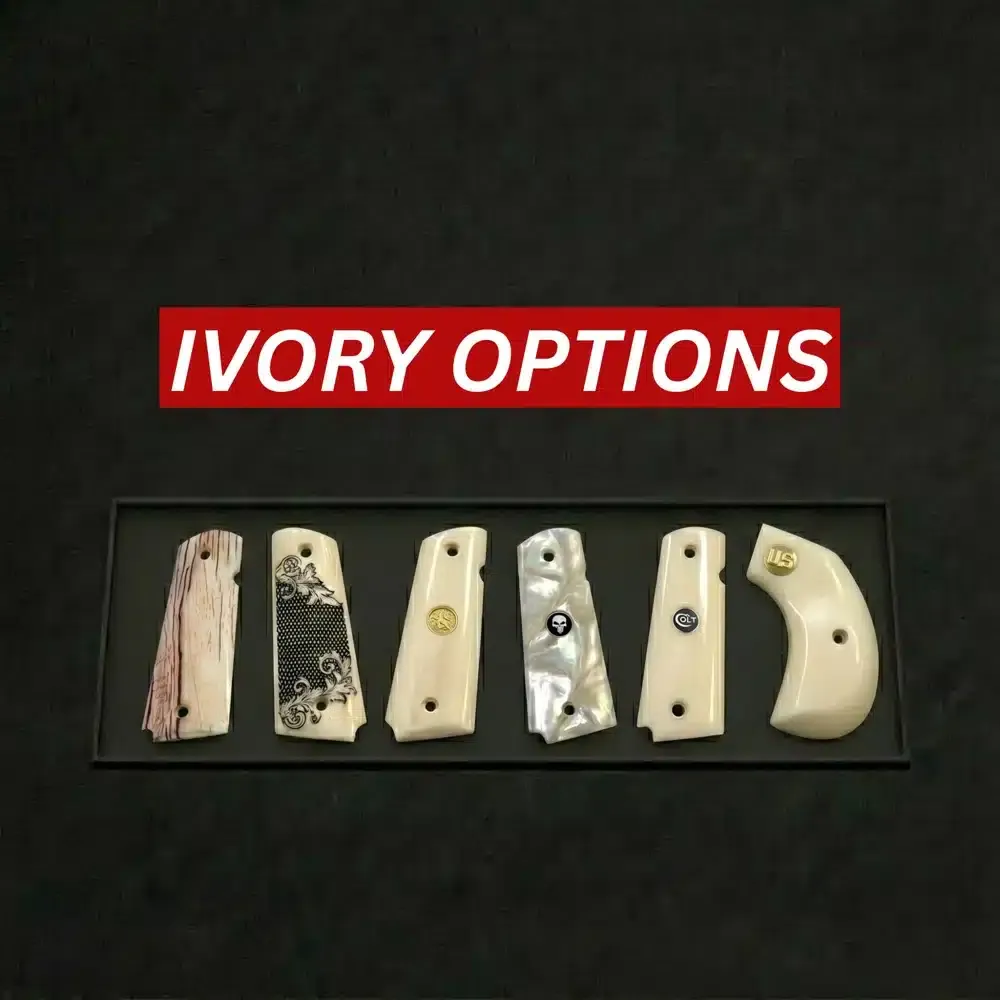

Ivory has a long history as a decorative material in the world of firearms. Before modern synthetic materials became widely available, ivory gun grips were sometimes used on handguns and revolvers, particularly on presentation pieces, engraved firearms, and collectible guns. Their distinctive appearance and connection with traditional craftsmanship helped make them a recognizable feature of luxury firearms.
Today, genuine ivory is also a complicated material because of conservation laws, international trade restrictions, and ethical concerns. For collectors and firearm enthusiasts interested in the classic appearance of ivory gun grips, understanding both their historical appeal and modern considerations is important.
Why Has Ivory Been Used on Firearm Grips?
Ivory was traditionally valued for several physical and aesthetic qualities. It can be shaped, polished, engraved, and decorated by skilled craftsmen. Its smooth surface also develops a distinctive appearance as it ages.
On firearms, ivory was generally used as a grip material rather than as a functional component of the firearm itself. Its primary attraction was visual and artistic.
Presentation firearms, commemorative pieces, and highly decorated revolvers sometimes featured ivory grips alongside engraving, precious-metal inlays, or other decorative work. These combinations could turn an ordinary firearm design into something intended for display or collection.
The Distinctive Appearance of Ivory
One of the main reasons ivory gun grips have historically attracted attention is their appearance.
New ivory can have a light cream or warm white color. Over many years, natural ivory can develop a deeper patina. Small variations, grain patterns, and natural markings can also make individual pieces look different.
This individuality is part of the appeal for collectors. Unlike a completely uniform manufactured material, natural ivory can show characteristics associated with its age and origin.
However, the appearance of genuine ivory should not automatically be considered proof of authenticity. Other materials can closely imitate its color and texture.
Ivory and Traditional Craftsmanship
Ivory is workable with traditional carving and engraving techniques. Craftsmen have historically used these characteristics to create decorative patterns, checkering, initials, logos, and other details.
This made ivory suitable for presentation firearms where craftsmanship was an important part of the item's value.
A pair of historically appropriate grips can also contribute to the overall character of an older firearm. For collectors, the relationship between the grips, firearm, engraving, provenance, and period can be more important than the material alone.
Is Ivory Durable?
Ivory can be durable when properly preserved, but it is not indestructible.
Changes in temperature and humidity can affect natural ivory. Excessive environmental changes may contribute to cracking, shrinking, or other forms of deterioration.
Older ivory grips can therefore require more careful handling than many modern synthetic grip materials.
This is particularly relevant for antique or collectible firearms. Replacing or modifying original grips can also affect historical authenticity and collector value.
For that reason, owners of historically significant firearms should consider preservation before making modifications.
Ivory vs. Modern Grip Materials
Modern firearm grips are available in a wide range of materials, including wood, G10, rubber, polymer, acrylic, and various composite materials.
These materials can provide the appearance of traditional ivory without relying on newly sourced elephant ivory.
For example, ivory-look acrylic can create a light-colored decorative appearance while allowing manufacturers to produce consistent shapes and patterns. Other synthetic materials can also be customized with different textures, colors, and decorative details.
For people interested primarily in the classic appearance, these alternatives can provide more practical options.
Legal Considerations
One of the most important issues surrounding genuine ivory is legality.
Laws concerning ivory can vary significantly depending on the country, state, age of the item, species involved, documentation, and whether the item is being sold, transported, imported, or exported.
An antique firearm with existing ivory grips may be treated differently from newly manufactured grips made from recently sourced ivory. However, "antique" does not automatically mean that every transaction involving ivory is unrestricted.
Before buying, selling, importing, exporting, or modifying a firearm with genuine ivory components, owners should check the laws that apply to their specific location and transaction.
Documentation and provenance can also be important for older pieces.
Ethical Considerations
The historical use of ivory is closely connected to modern wildlife-conservation concerns, particularly regarding elephant populations.
Because of these concerns, many collectors and manufacturers avoid newly sourced ivory. Responsible collecting increasingly focuses on preserving historically documented pieces while avoiding contributions to illegal or harmful wildlife trade.
This distinction is useful when discussing vintage firearms. There is a difference between documenting and preserving an existing historical object and sourcing new ivory for decorative use.
How Should Antique Ivory Grips Be Maintained?
If a firearm has historically significant ivory grips, aggressive cleaning or restoration should generally be avoided.
Simple preservation practices include:
- Keep the firearm in a stable environment.
- Avoid extreme temperature and humidity changes.
- Do not use harsh chemicals on the grips.
- Avoid unnecessary polishing or sanding.
- Handle older grips carefully.
- Keep documentation about the firearm and its components.
- Consult a qualified conservator before attempting significant restoration.
For valuable antiques, professional conservation may be preferable to attempting repairs at home.
Are Ivory-Look Grips a Good Alternative?
For enthusiasts who appreciate the traditional appearance, modern ivory-look materials can offer an alternative.
Synthetic ivory-style grips can reproduce some of the visual characteristics associated with traditional ivory while avoiding many of the legal and conservation issues associated with genuine ivory.
They can also offer additional design possibilities. Depending on the material, manufacturers may produce different finishes, decorative patterns, colors, and custom details.
This makes modern alternatives relevant to both collectors interested in aesthetics and firearm owners looking for replacement grips.
Ivory as Part of Firearm History
The appeal of ivory is not simply about color. Its importance comes from the history of decorative firearms and the craftsmanship associated with presentation pieces.
Engraving, carving, inlay work, unusual grip materials, and custom finishes have all played roles in firearm artistry. Ivory became one of the recognizable materials associated with this tradition.
For collectors, researching the firearm's history, provenance, manufacturing period, and original configuration can provide more context than focusing on the grip material by itself.
Final Thoughts
Ivory has historically been considered a distinctive material for decorative and luxury gun grips because of its color, natural character, workability, and association with traditional craftsmanship.
However, genuine ivory is not simply another grip material today. Conservation concerns, changing regulations, and restrictions on trade mean that buyers and collectors should carefully verify the history and legal status of any genuine ivory component.
For those primarily interested in the classic appearance, modern ivory-look materials provide another option. They can capture some of the traditional aesthetic while offering a practical alternative for contemporary custom-grip designs.
Ultimately, the value of an ivory-gripped firearm depends on much more than the material itself. Its age, condition, authenticity, provenance, craftsmanship, and historical context all contribute to its significance.


























Sign in to leave a comment.