

Japanese kitchen knives have earned a strong reputation among home cooks, professional chefs, and culinary enthusiasts for their sharpness, precision, distinctive designs, and craftsmanship. But what actually makes a Japanese kitchen knife different from an ordinary kitchen knife?
The answer is not one single feature. Japanese kitchen knives combine blade geometry, steel selection, heat treatment, edge refinement, balance, and traditional craftsmanship to create tools designed for controlled and precise cutting.
From the historic blade-making city of Seki to modern kitchens around the world, Japanese knife-making continues to bring together traditional techniques and modern materials. Understanding those differences can make it easier to choose the right knife and get more from it once it reaches your kitchen.
What Makes a Japanese Kitchen Knife Different?
The most noticeable difference is often the blade itself.
Japanese kitchen knives are commonly designed with thinner blades and finer edges than many conventional Western-style kitchen knives. This can make them feel more precise when slicing vegetables, herbs, fish, boneless meats, and other ingredients.
However, sharpness is only one part of the equation. A well-made knife needs to maintain its edge, remain comfortable to control, and perform consistently through repeated use.
Several factors contribute to that performance:
- Blade steel
- Hardness and heat treatment
- Edge angle
- Blade geometry
- Handle design
- Weight and balance
- Forging and finishing methods
- Proper maintenance
This is why comparing knives only by appearance or price can be misleading. Two knives may look similar while offering very different cutting characteristics.

The Importance of Japanese Knife Craftsmanship
Japanese knife-making has developed through centuries of blade-making traditions. Different regions became associated with particular styles of metalworking and cutlery, with Seki in Gifu Prefecture becoming especially well known for blade production.
Modern Japanese kitchen knives do not all follow exactly the same manufacturing process. Some are stamped, while others are forged. Some are produced using highly automated processes, while others involve extensive hand-finishing.
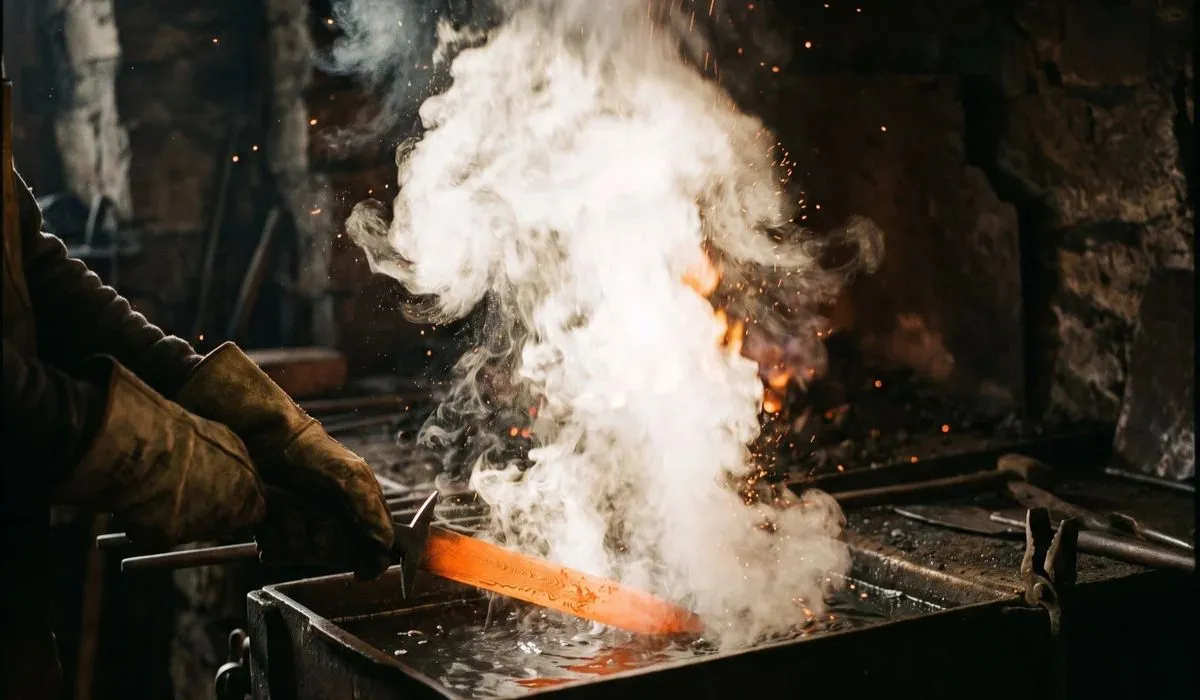
Hand forging is particularly valued because it involves skilled control over processes such as shaping, heating, hammering, grinding, polishing, and sharpening.
The goal is not simply to make a knife that looks beautiful. The craftsmanship ultimately influences the geometry, finish, balance, and cutting performance of the finished blade.
For buyers interested in Japanese knives, understanding where and how a knife is made can therefore be just as important as knowing its steel type.
Why Seki, Japan Is Important to Japanese Knives
Seki is one of Japan's best-known cutlery-producing areas and has a long history of blade making.
The city developed a reputation for sword production and later adapted its metalworking expertise to other types of blades and cutlery. Today, Seki remains associated with Japanese knife manufacturing and is home to manufacturers producing kitchen knives for both domestic and international markets.
For consumers, "Made in Seki, Japan" can therefore provide useful information about the knife's manufacturing origin. However, it should not be treated as a guarantee of quality by itself.
The actual steel, construction, heat treatment, geometry, sharpening, finishing, and quality control still matter.
What Is Damascus Steel?
Damascus is one of the most recognisable features of many premium Japanese kitchen knives.
The term generally refers to layered steel construction that creates a distinctive pattern on the blade. Modern Damascus kitchen knives can use multiple layers of steel surrounding a harder cutting core.
The resulting pattern can be striking, but the appearance should not be confused with cutting performance.
A Damascus pattern does not automatically make a knife sharper. The cutting performance depends much more on factors such as the core steel, blade geometry, hardness, edge geometry, and finishing.
This distinction is important when shopping for a Damascus kitchen knife.
A beautiful pattern can be part of the appeal, but it should be considered alongside the technical specifications of the blade.
Why VG-10 Steel Is Popular in Japanese Kitchen Knives
VG-10 is a stainless steel widely used in Japanese kitchen knives.
One reason for its popularity is the balance it can provide between edge retention, hardness, corrosion resistance, and practical kitchen maintenance.
A knife's steel alone does not determine its performance. Heat treatment and blade geometry also play major roles. Nevertheless, VG-10 has become a familiar choice for cooks looking for a high-performance stainless Japanese knife.
A VG-10 blade can take and maintain a fine cutting edge when properly manufactured and maintained. Its stainless characteristics can also make it more convenient for cooks who want high performance without the additional rust-management considerations associated with some carbon-steel knives.
This makes VG-10 particularly appealing for cooks who want a combination of precision and relatively straightforward care.

What Does 67-Layer Damascus Mean?
When a knife is described as having 67-layer Damascus construction, the number refers to the layered steel structure used in the blade.
For example, a blade may use a harder VG-10 core surrounded by multiple layers of steel. The layering process and subsequent finishing create the characteristic flowing pattern associated with Damascus knives.
The layer count is interesting, but it should not be treated as a simple quality score.
A 67-layer knife is not automatically better than a 33-layer knife simply because the number is higher. The quality of the steel, construction, heat treatment, grinding, edge finishing, and overall manufacturing process are all relevant.
For shoppers, layer count is best understood as one specification among several rather than a standalone measure of performance.
Why Edge Angle Matters
The edge angle has a direct effect on how a kitchen knife feels during cutting.
Many Japanese kitchen knives are sharpened to relatively fine angles compared with traditional Western-style knives. A finer edge can provide a precise cutting feel and allow the blade to move cleanly through ingredients.
For example, a knife sharpened around 15 degrees per side has a relatively fine edge geometry.
However, a finer edge also requires appropriate handling. Using a thin, finely sharpened Japanese knife on hard materials, bones, frozen foods, or inappropriate cutting surfaces can damage the edge.
That is why sharpness and durability should always be considered together.
Japanese Chef Knife vs. Santoku: What's the Difference?
Two of the most popular Japanese knife styles are the chef knife, often called a gyuto, and the Santoku.
Japanese Chef Knife
A Japanese chef knife is generally designed as a versatile all-purpose blade.
Its longer profile can make it useful for slicing, chopping, mincing, and preparing larger ingredients. The curved profile on many chef knives also allows cooks to use different cutting motions.
For people who want one primary knife for a wide range of kitchen tasks, a Japanese chef knife can be a practical starting point.
Santoku Knife
The Santoku is typically shorter and has a broader, taller blade than many chef knives.
Its name is commonly associated with three categories of kitchen work: meat, fish, and vegetables.
The relatively compact design can make a Santoku comfortable for everyday home cooking, particularly for cooks who prefer chopping and push-cutting motions.
Neither style is universally better. The better choice depends on the ingredients you prepare, your cutting technique, your kitchen space, and how the knife feels in your hand.
What About Vegetable Knives?
Vegetable-focused Japanese knives are designed around the needs of produce preparation.
Many have relatively straight cutting edges that work well with push-cutting techniques. Their tall blades can also make it easier to guide the knife and transfer chopped ingredients from the cutting board.
For cooks who prepare large quantities of vegetables, a dedicated vegetable knife can complement a general-purpose chef knife or Santoku.
This is one reason Japanese knife collections often contain several specialised shapes rather than relying on one blade for every task.
How Should You Choose a Japanese Kitchen Knife?
Choosing a Japanese kitchen knife becomes much easier when you start with your cooking habits rather than the appearance of the blade.
Consider these questions before buying.
1. What Do You Cook Most Often?
If you regularly prepare vegetables, a vegetable-focused knife may be useful.
If you cook a mixture of vegetables, meat, fish, herbs, and other ingredients, a chef knife or Santoku may provide greater versatility.
2. Do You Prefer a Longer or More Compact Blade?
Longer knives provide more cutting length and can be useful for larger ingredients.
Shorter knives can feel easier to control, particularly for cooks with smaller cutting boards or kitchens.
3. Do You Want Stainless or Carbon Steel?
Stainless steels such as VG-10 are popular among cooks who want good edge performance combined with easier corrosion management.
Carbon steels can offer excellent sharpening characteristics and cutting performance but generally require more careful maintenance.
Your willingness to clean, dry, and maintain the blade should influence the decision.
4. How Important Is Edge Retention?
A knife that holds its edge well can reduce the frequency of sharpening.
But edge retention should not be considered separately from toughness, sharpening ability, and intended use. A very hard blade may hold an edge well but still require careful handling.
5. How Does the Knife Feel in Your Hand?
Specifications are useful, but comfort matters too.
Weight, handle shape, blade height, balance, and grip can all influence how a knife feels during extended food preparation.
A technically impressive knife is not necessarily the right knife if it does not suit your cutting style.

How to Care for a Japanese Kitchen Knife
A high-quality Japanese knife can provide years of service when maintained properly.
The most important habits are simple.
Hand wash the knife.
Use warm water and mild dish soap rather than placing a quality Japanese knife in the dishwasher.
Dry it immediately.
Leaving moisture on the blade for extended periods can contribute to staining or corrosion, depending on the steel.
Use an appropriate cutting board.
Wood and quality plastic cutting boards are generally more suitable for fine kitchen knives than extremely hard surfaces such as glass, stone, or ceramic.
Avoid bones and frozen food unless the knife is specifically designed for them.
Fine edges can chip when used against materials outside their intended purpose.
Store the knife safely.
A knife block, magnetic storage system, or blade guard can help protect the edge and reduce accidental contact with other utensils.
Sharpen when necessary.
Regular maintenance helps restore the cutting edge before the knife becomes excessively dull.
Does a More Expensive Japanese Knife Mean a Better Knife?
Not necessarily.
Price can reflect materials, craftsmanship, manufacturing methods, finishing, brand positioning, handle materials, quality control, and other factors.
But the most expensive knife is not automatically the best choice for every cook.
A home cook who primarily prepares vegetables may value different characteristics from a professional chef who spends hours preparing fish or proteins.
Instead of choosing based solely on price, look at the complete knife:
steel + heat treatment + geometry + edge + handle + balance + construction + intended use.
That combination gives a much better indication of whether a knife fits your needs.
Why Traditional Craftsmanship Still Matters
Modern technology has made it possible to produce kitchen knives with impressive consistency. However, traditional craftsmanship remains valuable because skilled makers can bring detailed attention to shaping, grinding, sharpening, polishing, and finishing.
The best modern Japanese kitchen knives often represent a combination of both worlds.
Traditional knowledge contributes to the craft, while modern steels and manufacturing methods provide predictable performance and durability.
That combination is one of the reasons Japanese knives continue to attract both professional and home cooks.
What Should You Look for in a Premium Japanese Kitchen Knife?
If you are comparing premium Japanese knives, look beyond the Damascus pattern or marketing language.
Check the following specifications:
- Where the knife is made
- Type of blade steel
- Core steel, if laminated construction is used
- Hardness
- Blade thickness and geometry
- Edge angle
- Blade length
- Handle construction
- Intended use
- Warranty or after-sales support
- Sharpening and maintenance requirements
Also look for clear information about the knife's construction.
A reputable seller should be able to explain what steel is used, where the knife is manufactured, how the blade is constructed, and what maintenance it requires.
Transparency makes it easier for buyers to understand what they are actually purchasing.
The Lasting Appeal of Japanese Kitchen Knives
The appeal of Japanese kitchen knives goes beyond sharpness.
They bring together materials, engineering, craftsmanship, design, and culinary tradition in a tool that is used repeatedly every day.
A well-made knife can change how a cook approaches preparation. Slicing tomatoes, chopping herbs, preparing vegetables, or portioning ingredients can become more controlled and deliberate when the blade is properly matched to the task.
That is ultimately what makes a good kitchen knife valuable: not simply how it looks in a display, but how naturally it performs in the hands of the person using it.
Final Thoughts
Choosing a Japanese kitchen knife is ultimately about finding the right balance between craftsmanship, steel, geometry, edge performance, comfort, and intended use. Whether you prefer a versatile chef knife, a compact Santoku, a vegetable-focused blade, or a carefully selected knife set, understanding these factors helps you make a more informed choice.
For cooks who value traditional Japanese craftsmanship alongside modern blade performance, SHIROSUKI offers hand-forged Japanese kitchen knives made in Seki, Japan, featuring 67-layer Damascus construction, hardened VG-10 cores, hand-honed edges, and a focus on long-term performance and craftsmanship.























Sign in to leave a comment.