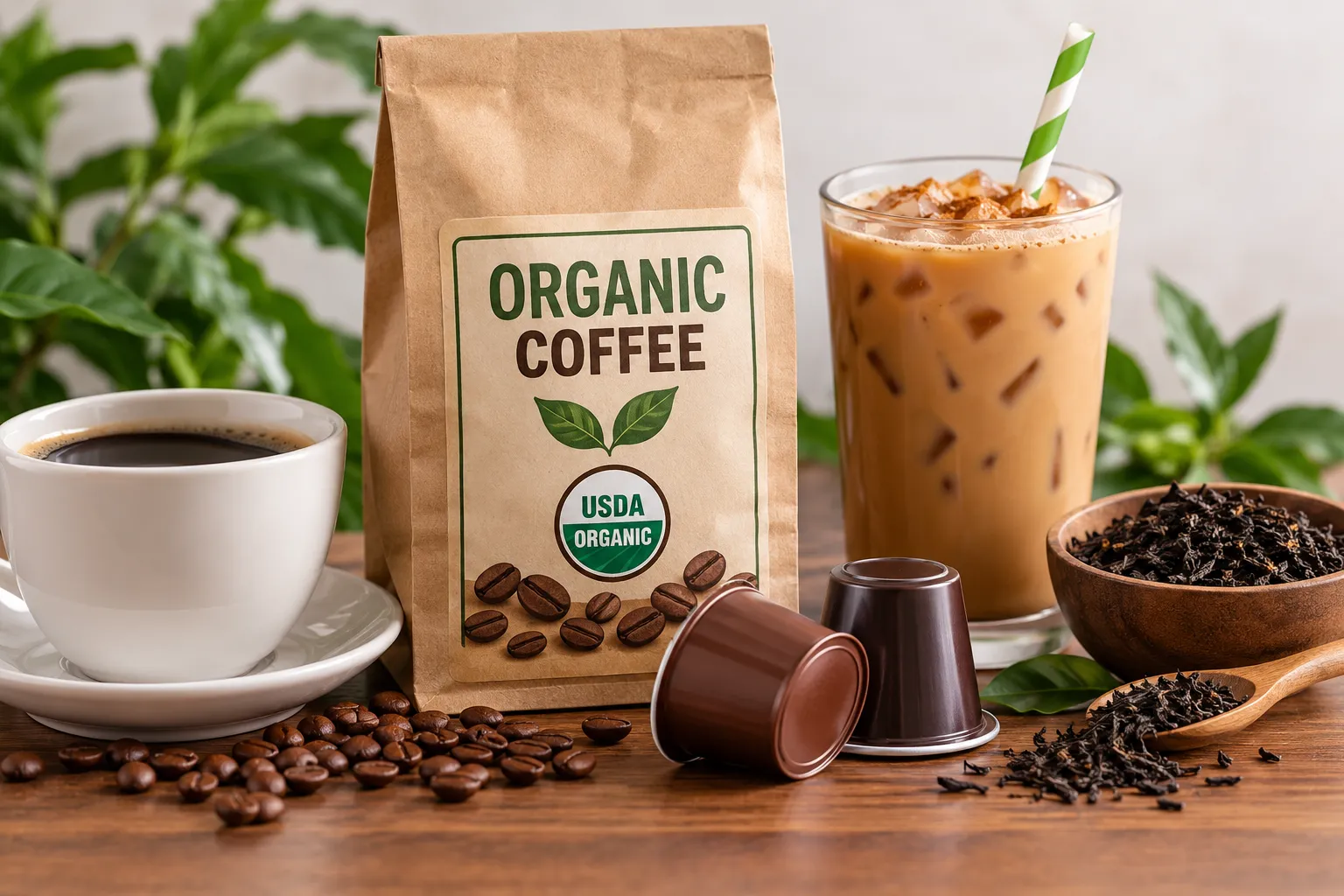

Coffee lovers are becoming more careful about what goes into their daily cup. Many shoppers now check product labels before choosing coffee, looking for information about ingredients, farming methods, and quality. However, understanding Organic Coffee Labels is not always easy.
Words such as organic, natural, sustainably grown, and premium often appear on coffee packaging. Although they sound similar, they do not necessarily mean the same thing. Some describe certified farming practices, while others are general marketing terms.
For consumers exploring different coffee varieties at Witches Brew Coffee, understanding these labels can make shopping easier. Whether purchasing organic arabica coffee, flavored blends, or convenient coffee pods, knowing what packaging actually communicates helps customers make informed decisions.
What Does an Organic Coffee Label Actually Mean?
An organic coffee label indicates that the coffee meets specific production and handling standards. In the United States, certified organic coffee must follow regulations established by the United States Department of Agriculture (USDA).
These standards focus on farming methods, soil management, approved substances, and restrictions on certain synthetic pesticides and fertilizers.
Organic certification also prohibits genetically engineered production methods and requires businesses to follow established handling practices.
However, organic certification does not automatically mean coffee has better flavor or contains more nutrients. It primarily verifies how the product was produced and handled.
Understanding this distinction helps consumers evaluate coffee beyond the claims printed on its packaging.
Understanding Different Organic Coffee Labels
Not every organic statement on a package carries the same meaning. The USDA recognizes several labeling categories based on organic ingredient content.
| Label | What It Means |
|---|---|
| 100% Organic | Contains entirely organic ingredients, excluding water and salt |
| Organic | Contains at least 95% certified organic ingredients |
| Made With Organic | Contains at least 70% organic ingredients and must identify the specified organic ingredients |
| Specific Organic Ingredients | Identifies individual certified organic ingredients without claiming the entire product is organic |
Only qualifying products in the first two categories can display the USDA Organic seal.
These differences become especially important when purchasing flavored coffee products containing multiple ingredients.
Why Organic Coffee Labels Still Confuse Consumers
Despite established certification rules, coffee packaging can still create uncertainty.
Organic and Natural Are Not the Same
One common misunderstanding involves the words organic and natural.
Organic is a regulated labeling claim associated with specific production standards. Natural, however, does not independently establish that coffee meets USDA organic requirements.
A package describing coffee as naturally grown or naturally delicious should not automatically be considered certified organic.
Consumers should look for certification details instead of relying entirely on attractive packaging language.
Organic Does Not Always Mean Better Taste
Another misconception is that organic coffee must taste better than conventional coffee.
Flavor depends on several factors, including bean variety, growing conditions, roasting techniques, freshness, and brewing methods.
For example, organic arabica coffee may offer delicate aromas and balanced flavors, but its taste will still depend heavily on how the beans are processed and roasted.
Organic certification describes production practices rather than guaranteeing a particular flavor experience.
How Organic Claims Apply to Flavored Coffee
Flavored coffee adds another layer of complexity to organic labeling.
Many shoppers enjoy vanilla, caramel, chocolate, or seasonal blends. Others prefer flavored iced coffee for its refreshing taste and convenience.
However, consumers should distinguish between organic coffee beans and an entirely certified organic flavored product.
A flavored blend may contain organically grown coffee alongside additional flavoring ingredients. Whether the finished product qualifies for an organic label depends on its overall ingredients and compliance with certification requirements.
Checking the ingredient list helps shoppers understand exactly what they are purchasing.
Do Premium Coffee Pods Follow the Same Rules?
Convenience has become an important part of modern coffee consumption. Many households choose premium coffee pods because they offer consistent portions and quick preparation.
However, premium does not necessarily mean organic.
Coffee pods containing certified organic coffee must meet applicable labeling requirements when making organic claims. Consumers should also examine the packaging for certification information.
Additionally, organic certification does not automatically guarantee that the pod itself is recyclable, compostable, or environmentally friendly.
These are separate characteristics that should be evaluated independently.
What Organic Labels Do Not Tell You
Organic Coffee Labels provide valuable information, but they cannot answer every question about a product.
For example, certification does not necessarily explain whether coffee farmers receive fair wages, how far beans travel, or whether packaging materials are sustainable.
Consumers interested in ethical sourcing may need to look for additional information about supply chains and producer relationships.
Similarly, customers exploring beverages beyond coffee, such as black loose tea, should understand that organic labeling rules can also apply to agricultural tea products.
The important lesson is that one certification cannot describe every aspect of product quality or sustainability.
How to Choose Coffee With Greater Confidence
A good purchasing decision involves looking beyond the front of the package.
Start by checking whether the product displays a recognized organic certification. Next, review the ingredient list to understand whether the coffee contains additional flavors or other ingredients.
Consider the roast level, bean variety, freshness, and brewing compatibility as well.
Shoppers exploring the coffee selection at Witches Brew Coffee can compare different blends based on their preferred flavors and preparation methods.
Taking a little time to understand product descriptions can make everyday coffee shopping more satisfying.
Conclusion
Organic Coffee Labels help consumers understand how coffee is grown, processed, and certified. However, confusion remains because marketing phrases such as natural, premium, and sustainable can appear alongside regulated organic claims.
Organic certification provides meaningful information, but it does not automatically guarantee superior taste, ethical sourcing, or sustainable packaging.
By understanding labeling categories, reviewing ingredients, and comparing product details, coffee lovers can make more confident choices.
Whether selecting traditional ground coffee, flavored varieties, or convenient pods, informed shopping begins with knowing what the label actually says.
Frequently Asked Questions
1. What does USDA Organic mean on coffee packaging?
It means the coffee meets USDA organic production and handling requirements and has been certified under applicable regulations.
2. Is organic coffee healthier than regular coffee?
Organic certification does not automatically establish that coffee is healthier. It primarily verifies specific agricultural and processing standards.
3. Can flavored coffee be certified organic?
Yes. Flavored coffee can qualify for organic certification when its ingredients and production processes meet the applicable requirements.
4. Are all premium coffee pods organic?
No. Premium describes product positioning or perceived quality, while organic certification requires compliance with specific standards.
5. How can consumers verify organic coffee claims?
Look for the USDA Organic seal where applicable, check the ingredient list, and identify the accredited certification organization listed on the packaging.

























Sign in to leave a comment.