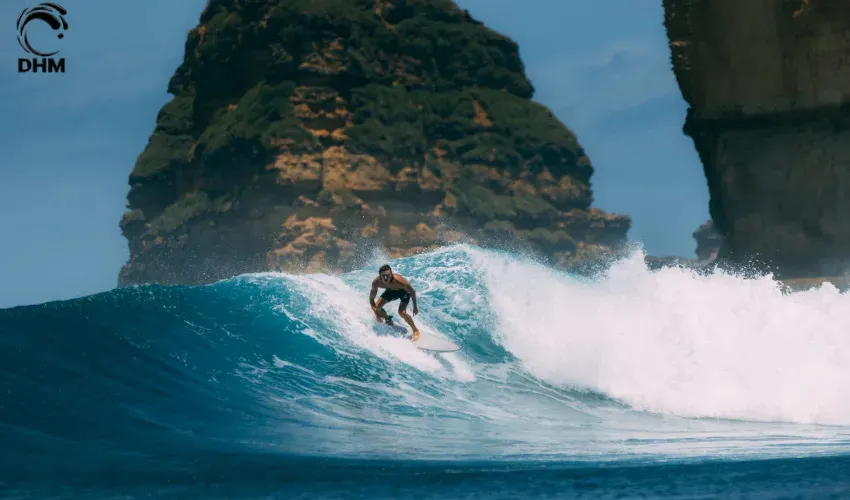

If you're staring at a calendar trying to figure out when to book your trip, you've probably already noticed that every travel blog gives a slightly different answer about the "best" time to visit. Some swear by the dry season, others insist the shoulder months are secretly better and less crowded. So let's actually settle this: does timing really change your experience at a bali surfcamp, or is it mostly overthinking something that works out fine year-round?
Why Seasonality Matters More for Surfing Indonesia Than You'd Think
Unlike a lot of tropical destinations where "the weather is nice all year" is basically the whole story, surfing indonesia has genuine seasonal swings that affect wave quality, not just comfort. Indonesia sits between two major wind and swell systems, and Bali specifically has a dry season (roughly April through October) and a wet season (November through March) that each produce noticeably different surf conditions.
During the dry season, prevailing winds tend to favor Bali's popular west-coast breaks like Canggu and Kuta, producing cleaner, more consistent waves that are ideal for beginners still building confidence. During the wet season, the wind pattern shifts, and while rain showers are more common, the east coast and certain reef breaks can actually pick up quality swell that dry-season visitors miss entirely. This is why serious surfers chasing surfing indonesia at an advanced level often plan trips around specific months rather than just picking whatever fits their vacation schedule.
The "Best" Season for a Bali Surf Camp Depends on Your Skill Level
Here's where a lot of generic travel advice falls short: the best time for a beginner is not necessarily the best time for an advanced surfer, and a good bali surf camp will actually tell you this upfront rather than just pushing peak-season bookings.
For beginners, the dry season (April to October) is generally the safer bet. Winds are more predictable, the popular beach breaks stay cleaner for longer stretches of the day, and conditions are simply more forgiving for someone still learning to read a wave. Most first-timers booking a bali surf camp for the first time are steered toward this window for good reason.
For intermediate to advanced surfers, the shoulder months — think April, May, September, and October — often offer the sweet spot: still-solid conditions without the crowd density of peak July and August. Some experienced surfers actually prefer the wet season specifically because certain reef breaks fire in ways they simply don't during the dry months, even if it means dealing with more rain on land.
Crowds: The Factor Nobody Talks About Enough
Wave quality isn't the only thing that shifts by season — crowd density does too, and it genuinely affects how much water time you actually get. Peak dry season (July and August especially) brings the highest volume of visitors to popular breaks, which means longer waits in the lineup and less individual attention even at a well-run bali surfcamp. If you're specifically choosing a camp to get personalized coaching, booking during shoulder months can mean significantly more one-on-one time with instructors simply because fewer people are competing for the same waves and the same staff.
How This Compares to Timing a Surfcamp Marokko Trip
If you've been weighing Bali against a surfcamp marokko option, timing works a little differently there too, and it's worth understanding before you lock in dates. Morocco's surf season generally runs opposite to what many people assume — autumn through spring (roughly September to April) tends to bring the biggest, most consistent swells, while summer often produces smaller, gentler waves that are actually easier for absolute beginners but less exciting for anyone chasing bigger conditions.
This creates an interesting contrast: if you're a nervous first-timer wanting the calmest possible introduction to surfing, a summer surfcamp marokko trip and a dry-season bali surfcamp trip actually serve a similar purpose — both prioritize gentle, forgiving conditions over exciting swell. The difference mainly comes down to water temperature (Bali stays warm essentially year-round, while Morocco's water even in summer can feel noticeably cooler) and flight logistics depending on where you're traveling from.
What About Holidays and Local Festivals?
One thing that rarely gets mentioned in generic surf travel guides: Bali's local calendar includes religious observances like Nyepi (the Balinese Day of Silence), during which the entire island effectively shuts down for 24 hours — no flights in or out, no activity on beaches, nothing open. It's a fascinating cultural experience if you happen to be there, but it's worth checking the exact dates before booking a tightly scheduled bali surf camp, since it can affect your itinerary if it falls mid-trip.
So, Is There Actually a "Best" Time — Or Is It Overthinking?
Realistically, surfing indonesia offers rideable, learnable waves nearly every month of the year, which is precisely why the island has built such a massive surf tourism industry in the first place. Unlike destinations with a genuinely short window (a few weeks of good conditions and nothing else), Bali's flexibility means you're unlikely to have a "wasted" trip no matter which month you pick.
That said, if you want the statistically safest bet for a smooth beginner experience, dry season (April–October) remains the standard recommendation for anyone booking a first bali surfcamp. If you're chasing bigger, more technical waves and don't mind a bit of rain, the wet season shoulder months deserve serious consideration instead of automatic dismissal.
Final Recommendation
If you're a complete beginner booking your first bali surf camp, aim for May, June, or September — solidly within dry season, but just outside the most crowded peak months of July and August. You'll get clean, forgiving conditions without fighting for space in the lineup or competing for instructor attention.
If you're weighing this against a surfcamp marokko trip instead, remember the seasons run in reverse logic to some degree — Morocco's bigger swells arrive in the cooler months, while its calmer summer conditions suit nervous beginners in a way that mirrors Bali's dry season appeal.
Either way, the takeaway is the same: timing isn't something to stress over endlessly, but it's also not something to ignore completely. A little research into seasonal patterns before booking your bali surfcamp can be the difference between an average week and one where everything — wave quality, weather, and crowd levels — actually lines up in your favor.






















Sign in to leave a comment.