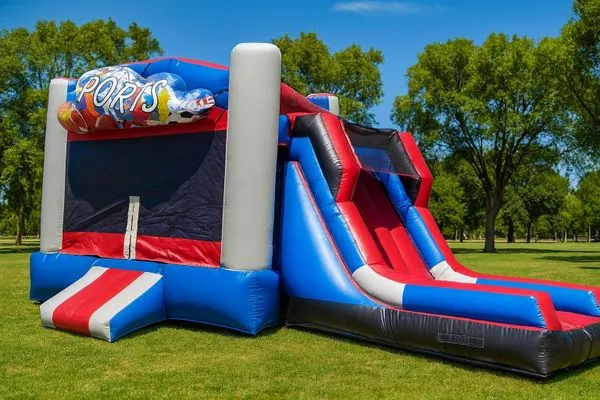

A rental operator inherits a small fleet from a business partner retiring after fifteen years. Every unit still looks presentable, no major tears, no obvious wear.
At first glance, the whole fleet seems like a solid inheritance. The purchase invoices, buried in an old filing folder, tell a more complicated story once someone finally reads them closely.
Three seasons later, half the fleet has been quietly retired. The other half, all originally described as commercial grade bounce houses, keeps performing exactly as expected without a single major repair.
That split was not random. It traces back to two different manufacturers, and two very different definitions of what the label on the invoice actually meant.
The Real Challenge Nobody Explains Upfront
The term commercial grade gets used loosely across the industry. It gets applied to units with genuinely different build quality underneath nearly identical marketing language and product photography.
Some manufacturers use the term to mean simply "not intended for personal home use." That is a fairly low bar, and it says little about actual durability under repeated commercial rental conditions.
Other manufacturers use the same term to mean something much more specific. Reinforced seams, heavier vinyl, and anchor systems rated well beyond typical residential use all factor into their version of the label.
Two products can carry the exact same two words on their listing page and mean almost nothing alike underneath the surface.
What the Data Actually Shows
Safety guidance from federal regulators offers a useful window into why build quality matters this much. The Consumer Product Safety Commission advises that maximum wind speed for safe operation should be no more than 15 to 25 miles per hour. Proper staking and anchoring are required at all times, regardless of conditions.
A cheaply built unit with weak anchor points struggles to meet that safety margin reliably. This is especially true after repeated setup and teardown cycles gradually loosen stitching and stress the fabric at anchor locations.
That margin matters more with every passing season, not less. A unit that met safety requirements comfortably in year one may be operating much closer to the edge by year three.
The Practical Response for Buyers
Genuinely commercial grade bounce houses use heavier vinyl, reinforced stitching at every stress point, and anchor systems built to exceed minimum safety requirements rather than barely meeting them.
Ask a manufacturer directly what vinyl weight they use, measured in ounces per square yard. Compare that number across multiple sellers rather than accepting vague marketing language about durability.
Anchor point construction deserves the same scrutiny. A reinforced anchor point that distributes stress across a wider area of fabric holds up far longer than a single stitched loop under repeated heavy use.
These are not difficult questions to ask, and any manufacturer confident in their build quality should answer them without hesitation or vague deflection toward general marketing claims.
- Ask for vinyl weight specifications in writing, not just a general durability claim.
- Compare anchor point construction across at least two manufacturers before deciding.
- Request photos of the actual stitching detail, not just the finished product from a distance.
What Different Buyers Should Take From This
A buyer purchasing their first unit should treat vinyl weight and anchor construction as non-negotiable questions, even if that means paying more than the cheapest option available online.
An experienced fleet owner adding inventory already knows which specifications matter, but should still verify them on every new order rather than assuming consistency across a manufacturer's entire product line.
A buyer inheriting existing equipment, like the operator in this story, should inspect anchor points and seam condition directly. Trusting a previous owner's description of the fleet's condition is rarely enough on its own.
That inspection takes an afternoon per unit at most. It is a small time investment against months of potential downtime from equipment that looked fine on the surface but was never built to last this long.
The Bottom Line
The retiring business partner's fleet split cleanly along one line. Commercial grade bounce houses, genuinely built to that standard, kept working. Units merely labeled that way for marketing purposes did not.
That distinction rarely shows up in a product photo. It shows up in vinyl weight specifications and anchor point construction long before it shows up anywhere else.
It ultimately shows up in three seasons of real commercial use, the kind that either validates a manufacturer's claims or quietly exposes them one repair at a time.





























Sign in to leave a comment.