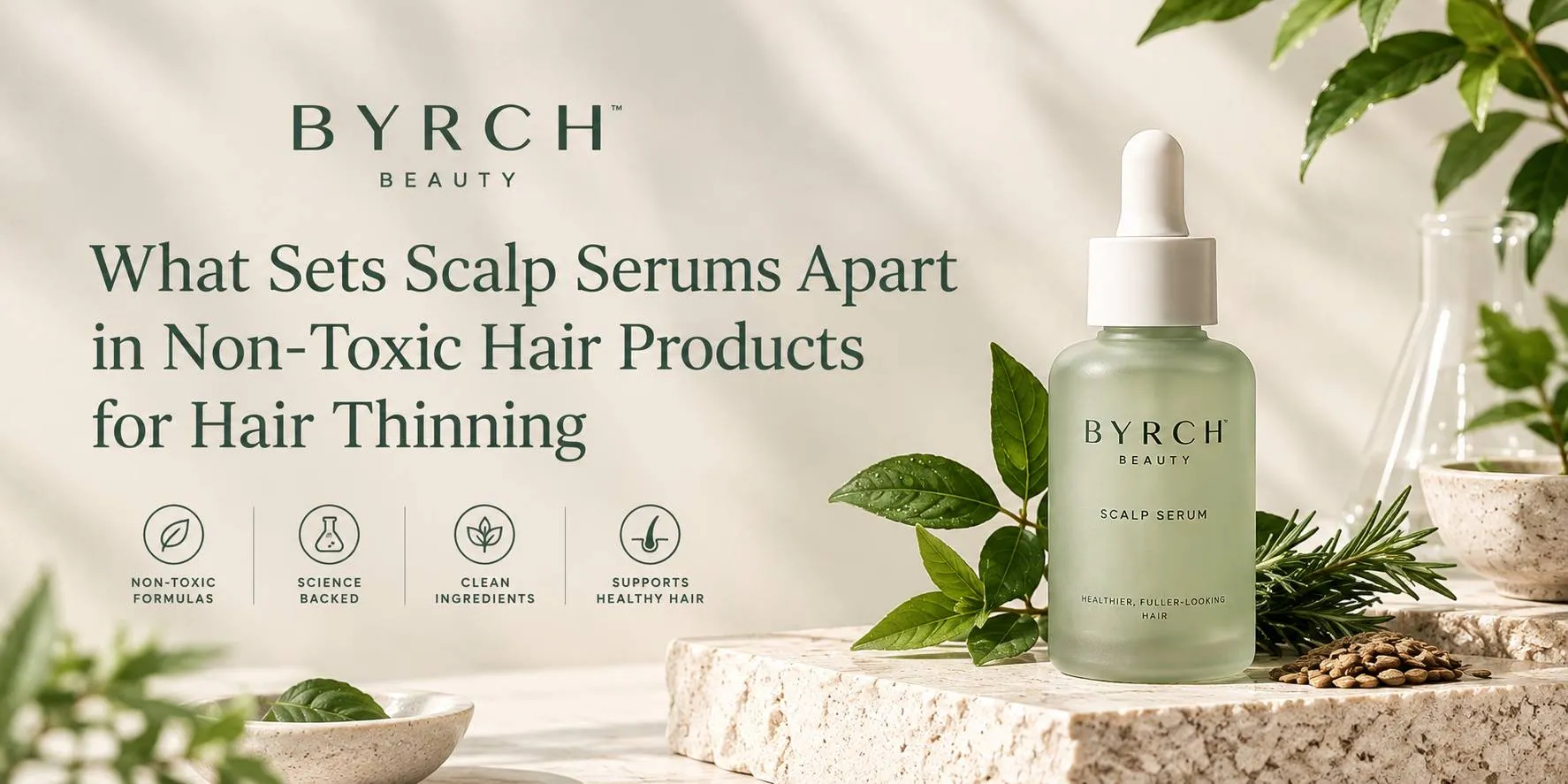

What if the problem is not the number of products in a routine, but where those products actually work? Shampoo spends a short time on the scalp. Conditioner mainly works through the hair lengths. A scalp serum stays in place after application, which gives it a different job. That difference becomes important for people comparing non-toxic hair products for thinning hair, especially when the goal is targeted scalp care rather than another rinse-off step.
Why Scalp Serums Need a Different Formula
A serum has to behave differently from shampoo or conditioner. It needs enough slip to spread between the roots, but not so much weight that fine hair looks greasy. It also needs to dry down cleanly. If a formula leaves a sticky film, regular use becomes difficult.
Product design starts to separate useful scalp care from basic cosmetic marketing here. A good serum should support hydration, deliver selected actives to the scalp, and fit into normal styling habits. People often focus only on the ingredient list, but texture and placement also affect whether a product works well in a real routine.
For anyone reviewing non-toxic hair products, that practical side deserves attention. A formula can look impressive on paper and still disappoint if it causes buildup or makes daily use inconvenient.
What Ingredient Transparency Tells You
The phrase “clean hair care” can sound reassuring, but it does not explain much by itself. Shoppers need more detail. Which ingredients appear in the formula? Which ingredients does the brand avoid? Why does the formula include certain actives? How do supporting ingredients fit in?
Byrch Beauty takes a more specific approach with The Scalp Serum by publishing the ingredient list and identifying exclusions such as parabens, sulfates, phthalates, and synthetic fragrance. The brand also describes its broader formulation approach as hormone-conscious.
A useful review of non-toxic hair products should include a few basic checks:
- Read the full ingredient list, not just the front label.
- Check for added fragrance if the scalp reacts easily.
- Look at the purpose of each featured active.
- Do not assume every botanical ingredient suits every scalp.
- Check whether the brand separates ingredient research from finished-product testing.
These checks make comparisons more practical. They also reduce the chance of choosing a product only because the wording on the bottle sounds cleaner or safer.
Why Hair-Thinning Serums Need More Than Botanical Claims
Botanical ingredients can support a scalp-care formula, but they should not carry the whole argument. Hair thinning is complex. Genetics, stress, hormone shifts, nutrition, illness, medication, breakage, and scalp conditions can all affect density or shedding.
That is why a scalp serum needs a clear formulation logic. Byrch Beauty combines Densidyl and Baicapil with rosemary, ginger, licorice, and Tremella in a lightweight, fragrance-free format for direct scalp use.
The stronger point is not that one ingredient fixes thinning hair. A serum can bring several functions into one leave-on product. Hydration, scalp comfort, cosmetic support for fuller-looking hair, and targeted application can work together without turning the routine into several extra steps.
When comparing non-toxic hair products, this type of formula deserves more attention than a long list of fashionable extracts with no clear purpose.
How Texture Changes Daily Use
People with fine or thinning hair often notice texture problems quickly. Heavy oils can flatten the roots. Thick creams can make the scalp feel coated. Strongly scented products may also frustrate people who prefer fragrance-free care.
A scalp serum should avoid those problems where possible. Precision application helps because users can place the product near areas of concern instead of spreading it through the full hair length. A lightweight base also makes it easier to use the product between wash days.
Consistency depends on this. People usually stop using a product when it feels uncomfortable or leaves visible residue, no matter how impressive the ingredient list looks.
What A Stronger Thinning-Hair Routine Should Include
The first step is identifying the concern correctly. Shedding, breakage, widening parts, dryness, and reduced density can look similar in the mirror, but they do not always come from the same cause. Sudden changes, patchy loss, pain, scaling, or ongoing irritation call for medical attention rather than cosmetic trial and error.
For everyday scalp care, a more useful routine keeps things simple. Choose gentle cleansing, avoid unnecessary buildup, protect the scalp barrier, and use leave-on products that match the concern. Scalp serums fit well here because they can target the scalp without changing the entire wash routine.
Conclusion
Scalp serums stand apart because they stay where the concern begins. They allow targeted application, lighter textures, and a more focused use of active ingredients than many rinse-off products can offer. For people comparing non-toxic hair products for hair thinning, the better choice is usually the formula with clear ingredient logic, realistic claims, and a texture that supports regular use. People with persistent or sudden thinning should consult a dermatologist or qualified hair and scalp professional.















Sign in to leave a comment.