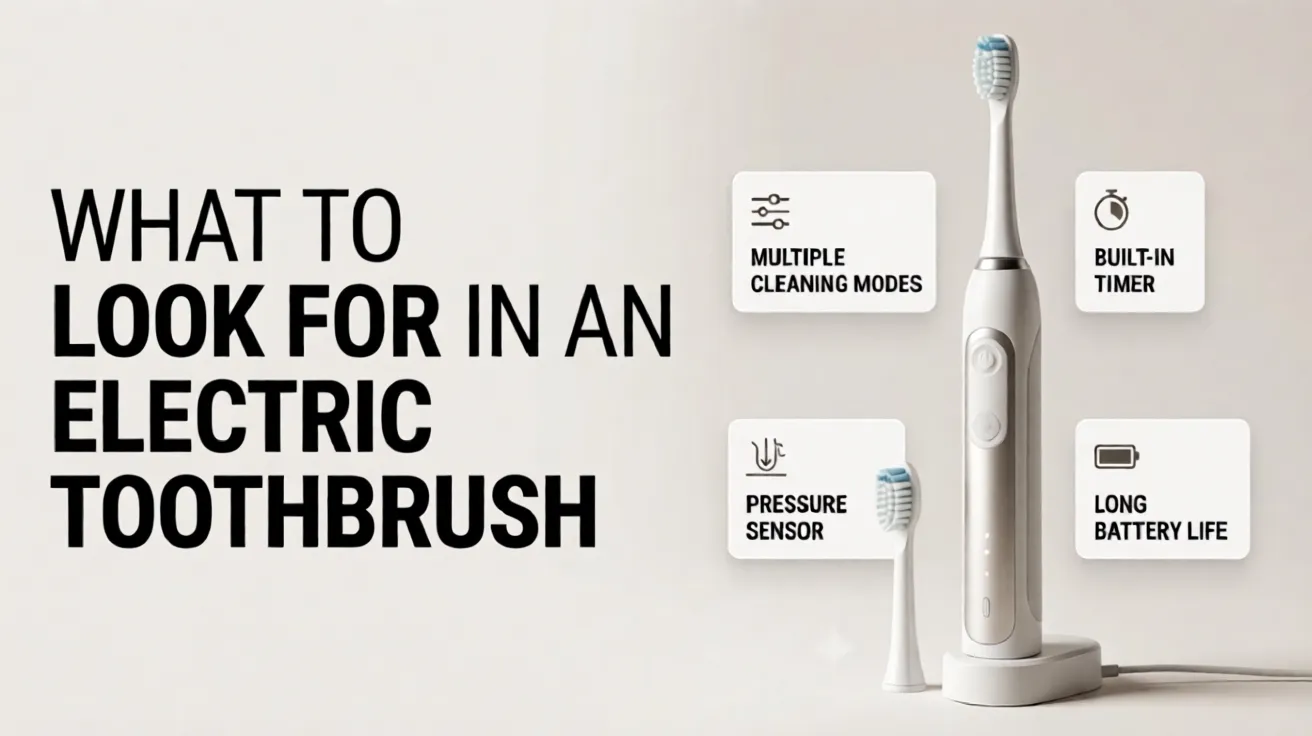

The electric toothbrush market is enormous, confusing, and full of marketing language designed to sound impressive without actually telling you anything useful. "Advanced cleaning action." "Dentist-inspired technology." "Up to 10x cleaner." What does any of that mean, and how do you separate the brushes that actually deliver from the ones that just photograph well?
The good news is that once you know what genuinely matters the features that translate to real-world cleaning performance buying the right electric toothbrush becomes straightforward. Here's the complete guide.

1. Sonic Technology vs. Oscillating vs. Basic Vibration
The single most important feature on any electric toothbrush is the cleaning mechanism. Not the color, not the brand name, not the number of accessories in the box the mechanism.
There are three main types:
Sonic toothbrushes move bristles at high frequency typically between 30,000 and 40,000 strokes per minute and generate a hydrodynamic cleaning effect. The vibrations agitate the fluid around your teeth, disrupting plaque in areas bristles don't directly touch, including the tight spaces between teeth and just below the gum line. This is the gold standard for at-home electric toothbrushing.
Oscillating-rotating toothbrushes spin the brush head in alternating directions at lower speeds. They're effective and have solid clinical backing, but they rely more heavily on direct bristle contact and don't produce the same fluid cleaning action as sonic technology.
Basic vibrating toothbrushes - often the cheapest options simply add vibration to what is otherwise a manual brushing motion. They're better than nothing, but meaningfully less effective than true sonic or oscillating designs.
For most people, sonic technology is worth prioritizing. The hydrodynamic cleaning effect is particularly valuable for people with gum sensitivity, orthodontic appliances, or tight interdental spaces because the cleaning happens partly without physical contact.
2. ADA Acceptance
The American Dental Association's Seal of Acceptance is one of the few third-party verifications in consumer oral care that actually means something. To earn it, a toothbrush manufacturer must submit clinical evidence demonstrating that the product safely and effectively reduces plaque and gingivitis. The ADA reviews that evidence independently it's not a paid endorsement or a rubber stamp.
In a market full of unverified claims, ADA acceptance tells you the brush has cleared a real evidential bar. When comparing two sonic toothbrushes at a similar price point, ADA acceptance is a meaningful tiebreaker. If a brush doesn't have it, that's not automatically disqualifying but the manufacturer should be able to point to independent clinical data that supports their efficacy claims.
3. Built-In Timer with Quadrant Pacing
The ADA recommends brushing for two full minutes. Studies consistently show the average person brushes for under a minute. That gap a single unaddressed minute is where plaque survives and hardens into tartar.
A two-minute timer is now standard on most electric toothbrushes, but the more useful feature is quadrant pacing: a pulse or brief pause every 30 seconds that prompts you to move to the next section of your mouth. Without this, most people spend disproportionate time on the front teeth they can see and rush through the back molars they can't.
Quadrant pacing takes about two weeks to become second nature. After that, it ensures genuinely even coverage every single session without requiring you to think about it. It's a small feature with an outsized impact on brushing quality.
4. Pressure Sensor
This one is non-negotiable for anyone with a history of gum sensitivity, recession, or aggressive brushing habits which is more people than realize it.
Brushing too hard is one of the most common causes of gum recession and enamel wear, and it's almost always unconscious. People press harder when they want to feel clean, when they're in a hurry, or when they're distracted. Over months and years, that excess pressure causes real, irreversible damage.
A pressure sensor detects when you're pushing too hard typically by pausing, slowing the motor, or triggering an alert light and trains you out of the habit passively. You don't have to consciously monitor your pressure; the brush handles it.
Not every budget electric toothbrush includes a pressure sensor. It's worth paying slightly more to get one, particularly if you've ever been told by a dentist that you're brushing too aggressively.
5. Brushing Modes
Entry-level electric toothbrushes offer a single mode. Better ones offer two to five. The most common and genuinely useful modes are:
Clean/Daily - standard intensity for everyday use. This is what you'll use most of the time.
Sensitive - reduced intensity for post-procedure recovery, gum tenderness, or naturally sensitive teeth. Having this available means you don't need to abandon your electric toothbrush during a period of sensitivity you just dial it down.
Whitening - typically a higher-frequency or polishing mode that targets surface stains. Useful for occasional use but not for daily brushing.
Gum care - a gentler pulsing mode designed specifically for massaging and stimulating gum tissue. Often recommended by periodontists for patients managing early gum disease.
Be sceptical of brushes advertising six or eight modes most of the extras add little real value and inflate the price unnecessarily. Two to four well-designed modes cover the full range of what most people need.
6. Battery Life and Charging System
A toothbrush that dies mid-trip or needs daily charging is a minor inconvenience that quietly erodes the consistency of your routine. Battery life matters more than it seems in the moment of purchase.
Two weeks of battery life per charge is a reasonable baseline for regular twice-daily use. Anything less than a week is genuinely inconvenient for travellers. Some premium models offer four or more weeks between charges.
Charging method is worth checking too. Inductive wireless charging bases are convenient for countertop use. USB charging is far more practical for travel you're not hunting for a proprietary adapter in a hotel room.
Check whether the brush comes with a travel case that holds a charge. If travel is part of your life, this detail matters.
7. Brush Head Availability and Cost
The handle is a one-time purchase. The brush heads are ongoing and this is where some brands quietly recoup their margin.
Before committing to a toothbrush, check the replacement head price and availability. Some premium-brand replacement heads run $10–$15 each, which adds up quickly. Others offer multipacks and subscriptions that bring the per-head cost down to a few dollars.
Also confirm the heads are actually available not just currently in stock, but that the manufacturer has a track record of supporting their product line with ongoing replacement head production. A discounted toothbrush that stops selling replacement heads in two years isn't a good investment.
8. Ergonomics and Handle Design
This sounds trivial compared to the features above. It isn't. A toothbrush you find uncomfortable, slippery, or awkward to hold is one you'll use less carefully or less often.
Look for a handle with a non-slip grip, a weight that feels balanced in your hand, and a size that works for your bathroom setup. If you're buying for a child or an elderly family member, handle diameter and weight become even more important larger-diameter handles are easier to grip for people with limited dexterity.
If possible, read user reviews specifically commenting on grip and comfort, not just cleaning performance. The clinical results mean nothing if the daily experience makes you rush through brushing to be done with it.
The Quick Checklist
Before buying any electric toothbrush, run through these eight points:
- Sonic technology (preferred over oscillating or basic vibration)
- ADA acceptance or verifiable independent clinical data
- Two-minute timer with 30-second quadrant pacing
- Pressure sensor
- Two to four brushing modes including sensitive
- At least two weeks of battery life; USB charging for travellers
- Affordable, readily available replacement heads
- Comfortable, non-slip handle
A brush that checks all eight boxes will serve you well for years and deliver measurably better oral health outcomes than one chosen on price or brand name alone.
Aquasonic's lineup of ADA accepted sonic toothbrushes is built around exactly these criteria professional-grade cleaning technology at a price that makes the upgrade genuinely accessible. Explore the full range at Aquasonic.com and find the right fit for your routine.























Sign in to leave a comment.