A pocketknife can lose its bite after cutting rope, preparing food at camp, fishing, hunting, or daily EDC use. Good sharpening should bring the edge back without taking away more steel than needed. The best pocketknife sharpener should follow the knife's own edge instead of forcing it into one fixed angle.
Why Metal Removal Matters for Pocketknife Edges
Every sharpening method treats the blade differently. Some pull-through sharpeners use a rigid V-shaped slot that removes metal to form a new edge. A pocketknife can instead be maintained by honing.
Honing means straightening and refining the existing cutting edge. This approach focuses on the blade that is already there. It is useful for EDC knives and outdoor blades that need regular edge care.
How Flexible Honing Helps Preserve the Existing Edge
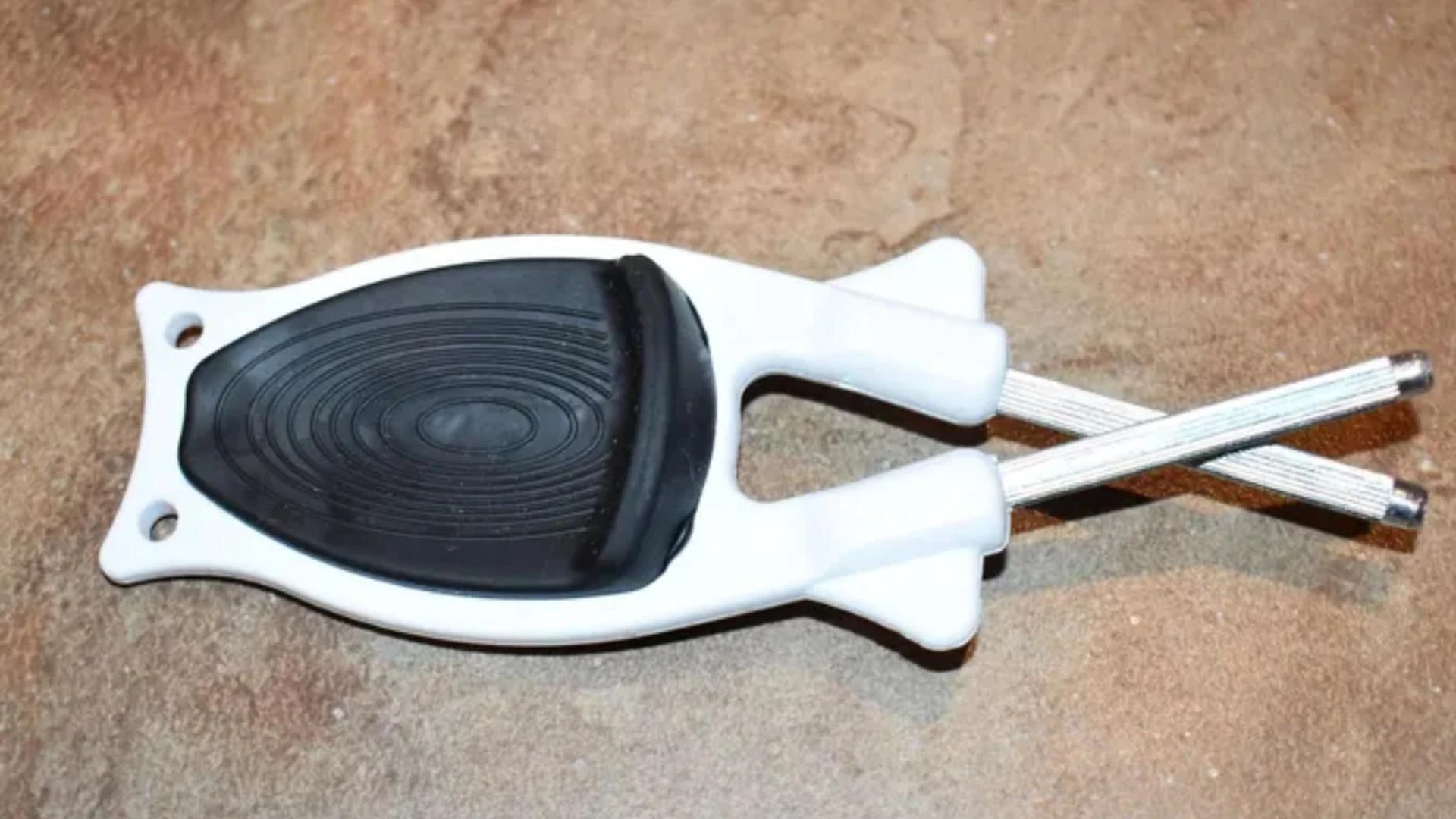
A rigid slot stays at one angle. Pocketknives do not all have the same edge. The flexible honing system lets its rods adjust around the blade. This allows the rods to follow the existing bevel as the knife passes through.
Bevel means the angled surface that forms the cutting edge. This design focuses on realigning the edge instead of constantly grinding away steel.
What the Flex Design Does for Different Blade Angles
The patented Flex Design is built into the handle. As the knife moves through the rods, they flex and adjust to the blade. The Flex Design accommodates blade angles from about 17° to 28°, so pocketknives with different edge angles can be sharpened without forcing them into one fixed position.
The flexible system is also designed for:
- V-edges
- Double-bevel edges
- Convex edges
- Chisel edges
- Hollow grinds
- Serrated edges
This makes the best sharpener for pocketknife maintenance less about forcing one angle and more about following the knife's existing shape.
How the Block Sharpener Hones a Pocketknife
The sharpening method changes based on the condition of the blade.
For a Very Dull Edge
Use firmer pressure while drawing the knife through the rods. Lift the back of the knife during the stroke and let the rods flex around the edge. As the blade becomes sharper, reduce the pressure. Finish with lighter strokes to refine the edge.
For Serrated Edges
Place the knife between the rods and use a side-to-side movement. This allows the rods to move through the teeth. Do not push the knife straight down. That can damage the blade and the sharpener. A leather strop can also be used after sharpening to give the edge a final polish.
Why D2 Steel Rods Matter for Modern Pocketknives
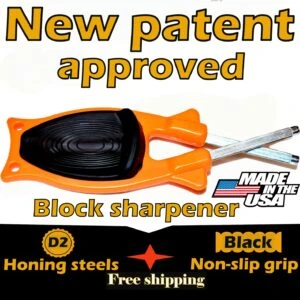
Many modern pocketknives use hard blade steels. Newer models use heat-treated D2 tool-steel rods. D2 tool steel is a hard steel used for the honing rods.
The design is intended for demanding steels such as S30V, MagnaCut, Damascus, and high-carbon steel. This matters to EDC owners who carry premium folding knives and want a sharpening system suited to harder blade materials.
How It Handles Serrated Pocketknife Edges
Serrated knives have teeth and recessed areas between them. These recessed areas are called gullets. The flexible rods are designed to reach into those gullets and follow the existing edge. They are intended for different serration styles, including:
- Scalloped teeth
- Pointed teeth
- Micro-serrations
- Square-toothed patterns
The purpose is to refresh the edge without flattening the individual teeth.
Why Portability Matters for EDC and Outdoor Use
Pocketknife users do not always sharpen at a workbench. Campers, hunters, fishermen, and EDC users can be outdoors when an edge needs attention. The compact design can be carried in a pocket or backpack.
A non-slip grip gives added control, while the thumb grip supports freehand use when there is no table nearby. That makes portability part of what defines a best pocketknife sharpener for outdoor carry.
Choosing the Best Sharpener for Pocketknife Maintenance
A good choice should match the knife's edge and the user's routine. A flexible system is especially relevant when a pocketknife has a different bevel, curved section, or serrated edge.
Key points to consider include:
- Flexible adjustment instead of one fixed angle
- Honing and edge realignment
- Support for several edge shapes
- Serrated-edge capability
- D2 tool-steel honing rods
- Non-slip handheld control
- Portable outdoor use
The design also extends beyond pocketknives. It can be used with hunting knives, scissors, gardening clippers, hatchets, and other blades. For someone comparing options, the best sharpener for pocketknife care should preserve the knife's existing geometry while giving the user control over the sharpening process.
Final Thoughts
Pocketknife sharpening does not have to mean aggressive metal removal. A flexible honing system can follow the blade's existing edge and bring it back toward its original cutting shape.
For EDC, camping, fishing, and hunting users, the right sharpener combines flexible angle adjustment, controlled honing, serrated-edge support, and portable handling. Those features make the best pocketknife sharpener a practical choice for maintaining a knife that sees regular use.





















Sign in to leave a comment.