

Lighting a large outdoor area requires more than simply installing a few fixtures. Parks, commercial properties, pathways, car parks, industrial sites, sports grounds, and public spaces need consistent illumination, reliable performance, and carefully planned coverage. Solar technology provides an efficient way to meet these requirements while reducing dependence on conventional grid electricity.
Modern outdoor solar lights can be designed for different applications, from pedestrian pathways to large open areas. However, choosing the right system requires consideration of lighting requirements, solar exposure, installation conditions, battery capacity, and maintenance needs.
Why Is Solar Lighting Suitable for Large Outdoor Areas?
Large properties often have extensive lighting requirements, and connecting every fixture to the electrical grid can involve significant installation work. Solar lighting operates independently by generating and storing energy during daylight hours for use after dark.
This makes solar-powered illumination particularly useful for locations where extending electrical infrastructure is difficult or expensive.
Key benefits can include:
- Reduced dependence on grid electricity
- Flexible installation without extensive underground cabling
- Lower energy consumption
- Useful illumination for remote or off-grid locations
- Potentially reduced infrastructure and maintenance requirements
- Greater flexibility when expanding outdoor lighting coverage
What Factors Matter When Planning Solar Lighting?
A successful installation starts with understanding the site rather than selecting fixtures based only on appearance or wattage.
Assess the Area and Lighting Purpose
First, identify what needs to be illuminated and why. A pedestrian pathway has different requirements from a warehouse yard, sports facility, or public car park.
Consider:
- Total area requiring illumination
- Pedestrian and vehicle movement
- Desired brightness and uniformity
- Operating hours
- Potential obstacles
- Security and visibility requirements
- Local environmental conditions
A lighting plan can then determine fixture locations, mounting heights, spacing, and suitable light distribution.
Consider Available Sunlight
Solar systems depend on sunlight to recharge their batteries. Buildings, trees, structures, and surrounding terrain can create shadows that reduce solar energy collection.
Before installation, evaluate the available sunlight throughout the year. Solar panels should generally be positioned where they can receive adequate exposure during daylight hours.
This is especially important for large outdoor projects because poor panel placement can affect the performance of multiple lighting points.
Select the Appropriate Battery Capacity
Solar lighting systems store energy in batteries for nighttime operation. Battery capacity should match the expected operating period and the energy requirements of the lighting fixture.
A suitable system should also account for periods when sunlight may be limited. Depending on the application and system design, sufficient energy storage can help maintain lighting performance during cloudy or low-sunlight conditions.
How Do Solar Street Lights Support Large Outdoor Spaces?
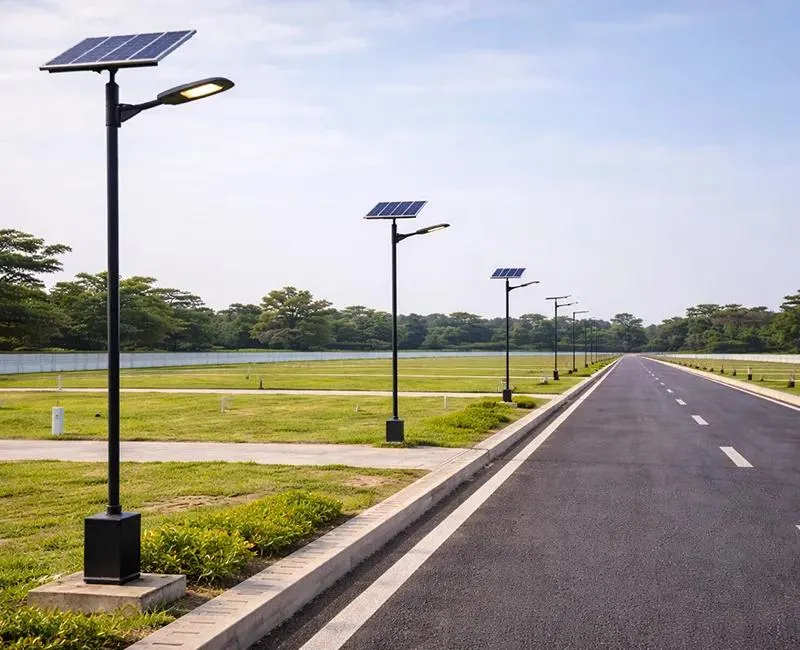
Solar street lights are commonly used where consistent illumination is needed along roads, pathways, access routes, residential streets, commercial developments, and other outdoor areas.
They combine solar panels, LED lighting, batteries, and control components into a system designed to operate without continuous grid power.
For larger sites, their benefits can include:
Independent Operation
Solar street lighting can operate independently from conventional electrical infrastructure, making it practical for locations where grid connections are limited.
Efficient LED Illumination
LED technology provides efficient illumination and can be configured with different beam patterns and light distributions to suit roads, paths, and open spaces.
Flexible Installation
Because dedicated underground electrical cabling may not be required, solar-powered systems can provide greater flexibility when planning lighting across extensive areas.
What Should You Know About Light Distribution?
Brightness is only one part of effective outdoor illumination. Light distribution determines where the illumination reaches and how evenly it is spread.
For large spaces, poorly selected fixtures can create excessive brightness in one location while leaving dark areas elsewhere.
Different optical designs can help direct light toward:
- Roads and driveways
- Pedestrian paths
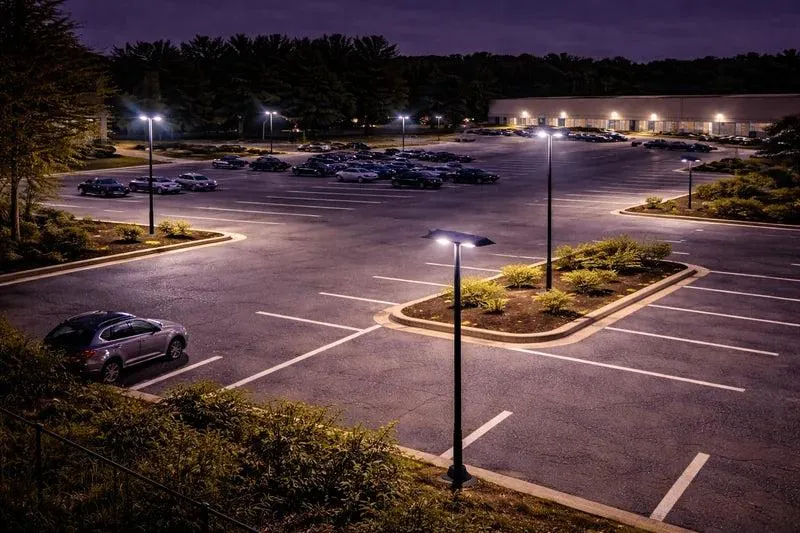
- Parking areas
- Building entrances
- Open grounds
- Commercial and industrial yards
A professional lighting assessment can help determine suitable mounting heights, spacing, beam angles, and fixture output.
How Can Outdoor Solar Lights Improve Energy Efficiency?
Modern solar lighting combines photovoltaic panels with efficient LED fixtures and battery storage. During daylight hours, the solar panel generates electricity, which is stored for later use. After sunset, the stored energy powers the lighting system.
Smart controls can further improve efficiency. Depending on the product and application, systems may use timers, motion sensors, dimming functions, or programmed lighting schedules.
For example, an installation could operate at a higher lighting level during periods of heavy activity and use a reduced output during quieter hours.
What About Weather and Environmental Conditions?
Large outdoor lighting installations are exposed to rain, dust, wind, temperature changes, and other environmental conditions. Equipment should therefore be selected according to the conditions at the installation site.
When evaluating a system, consider:
- Weather resistance
- Enclosure and ingress protection
- Operating temperature range
- Wind exposure
- Battery performance
- Solar panel durability
- Mounting and structural requirements
These factors can have a significant effect on long-term reliability.
How Should Solar Lighting Be Maintained?
Solar lighting generally requires less infrastructure than traditional wired systems, but it still benefits from routine inspection.
Maintenance may include cleaning solar panels, checking mounting hardware, inspecting electrical connections, and monitoring battery performance.
Over time, dirt, leaves, dust, or other debris can reduce the amount of sunlight reaching a solar panel. Keeping panels reasonably clean can help maintain energy generation.
For larger installations, scheduled inspections can make it easier to identify performance issues before they affect a significant part of the site.
Can Solar Lighting Work for Different Large-Scale Applications?
Yes. Solar technology can be adapted to many outdoor environments when the system is properly designed.
Potential applications include:
- Public parks and recreational areas
- Commercial developments
- Industrial facilities
- Car parks and access roads
- Rural properties
- Residential communities
- Pedestrian pathways
- Sports and recreational facilities
- Roads and streets
- Remote or off-grid locations
The appropriate configuration depends on the site's lighting objectives, available sunlight, environmental conditions, and expected operating schedule.
What Should You Consider Before Choosing a System?
Before investing in a solar lighting project, review the complete requirements rather than focusing on the fixture alone.
A useful checklist includes:
- Define the areas that require illumination.
- Determine required lighting levels and operating hours.
- Assess sunlight availability throughout the installation area.
- Choose suitable LED output and light distribution.
- Check battery capacity and expected backup performance.
- Consider pole height and fixture spacing.
- Evaluate environmental and weather conditions.
- Plan for installation, inspection, and maintenance.
- Consider future expansion of the lighting network.
This approach helps ensure that the system is designed around actual site requirements.
Final Thoughts
Lighting large outdoor areas with solar power requires thoughtful planning, but modern solar technology can provide a practical solution for many applications. Efficient LEDs, solar panels, battery storage, and intelligent controls can work together to provide dependable illumination while reducing reliance on conventional electrical infrastructure.
From pathways and commercial properties to roads and public spaces, outdoor solar lights can be tailored to different lighting requirements. For larger installations, careful attention to sunlight exposure, light distribution, battery capacity, spacing, and environmental conditions is essential for achieving consistent long-term performance.






















Sign in to leave a comment.