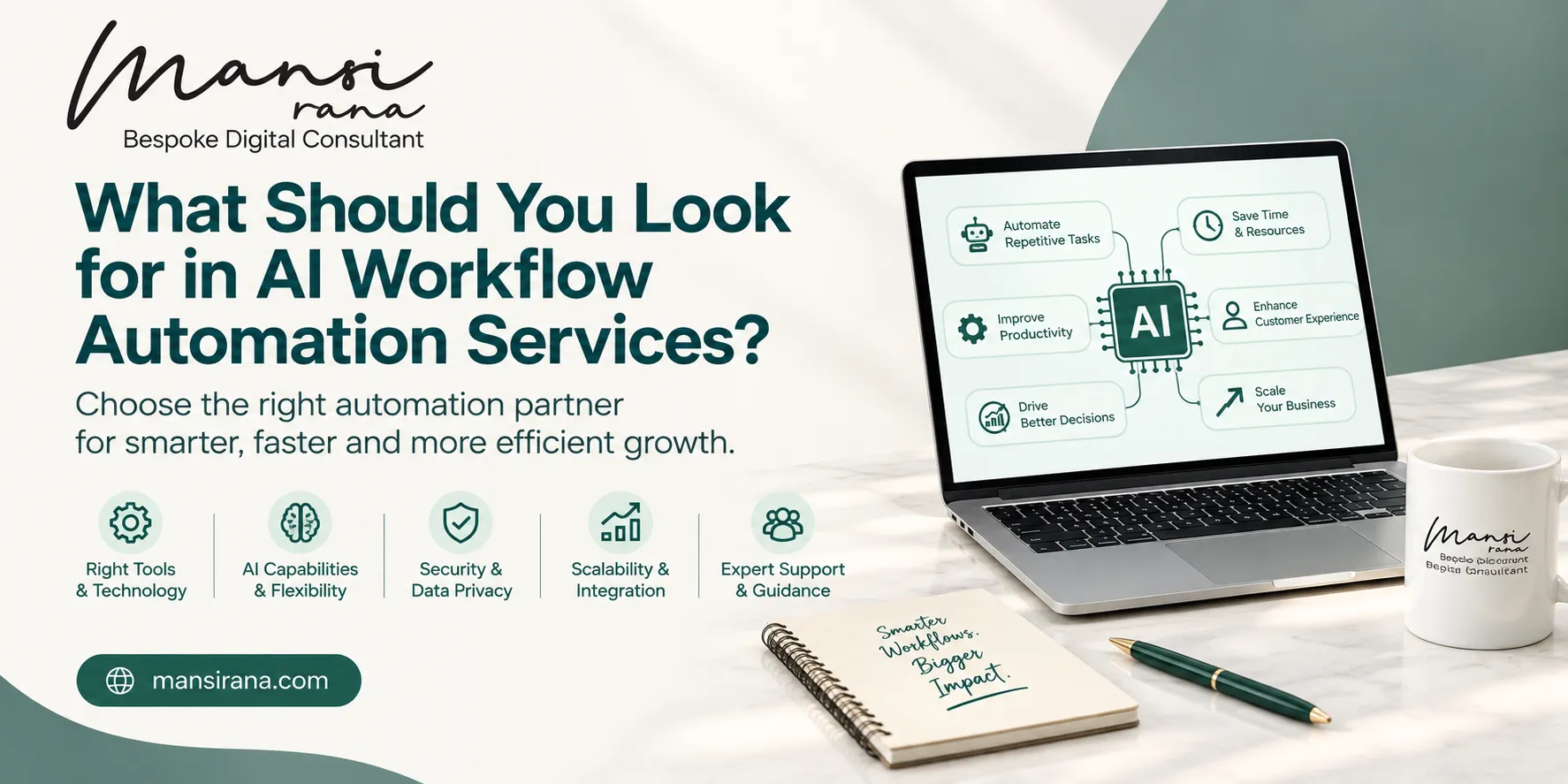

Most businesses don't fail at automation because the technology is weak. They fail because they pick the wrong partner, automate the wrong process, or expect a tool to fix a problem that was never really about the tool. If you're evaluating AI workflow automation services for the first time, it helps to know what actually separates a good provider from one that will leave you with a half-built system and a support ticket queue.
Start With How They Diagnose, Not How They Sell
A provider worth hiring will ask more questions than they answer in the first conversation. They'll want to know which tasks eat the most hours, where handoffs between teams break down, and what your current tools already do well. If a vendor jumps straight to a demo or a pricing sheet before understanding your workflow, that's a sign they're selling a product, not solving your problem. The diagnosis stage should feel less like a sales call and more like an audit. Similar to what you would expect from professional digital audit services.
Check Whether They Understand Your Existing Tech Stack
Workflow automation rarely happens on a blank slate. Most companies already run on a mix of CRMs, spreadsheets, email platforms, and industry-specific software, and a new automation layer has to work with all of it, not around it. Ask any provider you're considering how they handle integrations with the tools you already use. If they can't name specific connectors, APIs, or middleware options for your stack, they may end up rebuilding processes from scratch instead of streamlining what's already there.
Look for Clear Answers on Data Handling
AI automation touches sensitive information: customer records, financial data, internal communications. Before signing anything, ask where your data is stored, who has access to it, and how the provider handles compliance requirements relevant to your industry. A credible service will have straightforward answers to these questions. Vague reassurances or a reluctance to put data practices in writing should raise concerns, no matter how impressive the rest of the pitch sounds.
Prioritize Providers Who Build for Change
Your business won't look the same in a year, and neither will your workflows. Good automation services design systems that can be adjusted without a full rebuild every time a process changes. Ask how updates are handled after launch, whether you'll need to go through the same provider for every tweak, and how much technical knowledge your team would need to make minor changes on their own. Automation that only works as long as nothing else changes isn't really automation, it's a temporary fix.
Ask How Success Is Actually Measured
It's easy for a vendor to promise time savings or efficiency gains without ever defining what that means in practice. Before you commit, ask how they measure results: hours saved per week, error rates before and after, turnaround time on specific tasks, or cost per process. A provider who can point to concrete metrics from past projects is more trustworthy than one who speaks only in general terms about "boosting productivity."
Consider Their Approach to Testing and Rollout
Automation that goes live without proper testing tends to create more problems than it solves, especially when it touches customer-facing processes. Ask whether the provider runs a pilot phase, how they test for edge cases, and what their rollback plan looks like if something doesn't work as expected. A phased rollout, even a short one, usually points to a provider who takes reliability seriously rather than rushing to close the project.
Don't Overlook Support After Launch
The real test of an automation service often comes weeks or months after the initial build, once the system is handling real volume and real edge cases start showing up. Find out what post-launch support looks like: is there a dedicated point of contact, what response times can you expect, and are minor fixes included or billed separately? Providers who treat launch as the finish line, rather than the starting point of an ongoing relationship, tend to leave clients managing problems on their own.
The Bottom Line
The right AI workflow automation partner won't just install software and walk away. They'll take time to understand your processes, work with the tools you already have, handle your data responsibly, and stay involved once the system is live. Asking the right questions upfront saves you from expensive rework later and helps you find a provider who treats automation as a long-term improvement, not a one-time project.
Frequently Asked Questions
How do I know if my business is ready for AI workflow automation?
If your team spends significant time on repetitive tasks, data entry, or manual handoffs between departments, you're likely ready to explore automation. The key is having a documented process to begin with. It's much harder to automate a workflow that isn't consistent or clearly defined in the first place.
How long does it typically take to implement AI workflow automation?
Timelines vary depending on complexity, but a single well-scoped workflow can often be built and tested within a few weeks. Larger, multi-department automations that touch several systems can take a few months, particularly if they involve custom integrations or extensive testing.
Will automation replace the need for my team to be involved in these processes?
Not usually. Most automation is designed to handle repetitive, rule-based parts of a process while leaving judgment calls and exceptions to people. Your team's role often shifts toward reviewing outputs, handling edge cases, and focusing on work that actually needs human input.
What happens if the automation makes a mistake?
Reliable providers build in checkpoints, error logging, and review steps so mistakes get caught early rather than compounding. Ask any provider you're considering how errors are flagged and corrected, and whether there's a person in the loop for decisions with real consequences.
























Sign in to leave a comment.