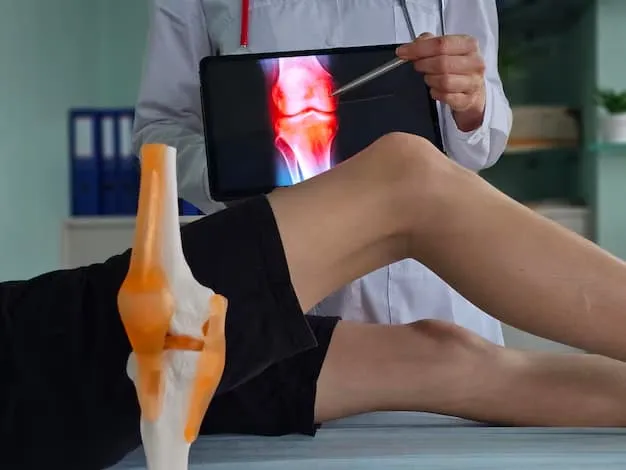

Knee replacement has evolved significantly with advances in medical imaging, surgical planning, and computer-assisted technology. Patients today may hear terms such as robotic-assisted surgery, 3D planning, digital navigation, and computer-guided alignment when researching modern orthopedic care.
But what do these technologies actually do?
A Robotic Knee Replacement Clinic in Jaipur may use a combination of advanced planning tools and surgical technology to help the orthopedic team assess the knee, prepare for surgery, and perform selected stages of the procedure with greater information about the patient's anatomy.
Technology, however, is only one part of the treatment journey. The surgeon's clinical judgment, experience, patient selection, and rehabilitation remain equally important.
1. Advanced Imaging for Understanding the Knee
The first stage of modern knee replacement planning is understanding the patient's joint anatomy.
X-rays are commonly used to evaluate arthritis, joint-space narrowing, bone changes, alignment, and other structural problems.
Depending on the treatment plan and technology being used, additional imaging may sometimes be required.
These images provide the surgeon with information about the condition of the knee and help determine whether replacement is appropriate.
2. Computer-Assisted Surgical Planning
Modern robotic-assisted systems can use detailed information about the patient's knee to support surgical planning.
Instead of relying only on a generalized approach, the surgeon can review information about the patient's individual anatomy and develop a plan accordingly.
Planning may involve considerations such as:
- Knee alignment
- Bone structure
- Joint damage
- Implant positioning
- Ligament balance
- Bone preparation
The purpose is to create a surgical strategy based on the patient's specific requirements.
3. 3D Anatomical Mapping
Some robotic knee replacement systems can create a three-dimensional representation of the patient's knee anatomy.
This can provide the surgical team with a more detailed view of the joint compared with relying only on conventional two-dimensional images.
A 3D representation can help the surgeon understand the relationship between different parts of the knee and plan the procedure accordingly.
The exact technology used varies between robotic systems and hospitals.
4. Robotic-Assisted Bone Preparation
During selected knee replacement procedures, robotic technology may assist the surgeon while preparing the bone.
The system can provide guidance based on the surgical plan and may help the surgeon stay within predefined parameters.
This does not mean that the robot independently performs the surgery.
The surgeon remains responsible for the procedure and can make clinical decisions throughout the operation.
5. Real-Time Information During Surgery
One of the important features of some robotic systems is the ability to provide information during the procedure.
The surgeon may receive data related to alignment, positioning, and other aspects of the knee while performing the operation.
This information can help the surgeon assess the joint and make adjustments when clinically appropriate.
The technology acts as an additional source of information rather than replacing surgical expertise.
6. Digital Alignment and Positioning
Correct alignment is an important consideration in knee replacement.
Computer-assisted technology can help the surgical team assess alignment and positioning according to the planned procedure.
The objective is to position the implant components appropriately for the patient's anatomy.
However, alignment is only one part of a successful knee replacement. Implant selection, soft-tissue balance, surgical technique, rehabilitation, and patient-related factors also contribute to the overall outcome.
7. Technology for Implant Planning
Modern planning systems can assist surgeons in determining appropriate implant size and positioning.
The implant needs to fit the patient's anatomy while supporting appropriate movement and stability.
The final choice is made by the surgeon based on the patient's anatomy, joint condition, surgical requirements, and available implant options.
Technology can provide useful measurements, but clinical judgment remains essential.
8. Does Robotic Technology Mean the Robot Operates Alone?
This is one of the most common misconceptions about robotic knee replacement.
The robot does not independently diagnose the patient's condition or decide what operation should be performed.
The orthopedic surgeon evaluates the patient, determines whether knee replacement is appropriate, develops the treatment plan, and controls the procedure.
The robotic system functions as a technology platform that can assist with planning and selected surgical steps.
Understanding this distinction is important when evaluating a Robotic Knee Replacement Clinic in Jaipur.
9. Navigation and Tracking Technology
Some robotic systems use tracking technology to monitor the position of surgical instruments and the patient's anatomy during the procedure.
This can provide the surgeon with additional information while working on the knee.
The exact navigation and tracking methods depend on the specific robotic platform being used.
Patients can ask their surgeon which system is available and how it will be used during their procedure.
10. Technology Is Not a Substitute for Clinical Experience
Advanced equipment can provide useful information, but technology alone does not determine the success of a treatment.
The surgeon must still interpret imaging, understand the patient's medical history, evaluate the joint, choose the appropriate procedure, and manage unexpected findings during surgery.
For this reason, patients should consider both technology and the experience of the orthopedic team.
A clinic having robotic equipment does not automatically mean that every patient needs robotic-assisted surgery.
When Might Robotic Assistance Be Considered?
Robotic assistance may be considered for selected patients undergoing knee replacement.
The decision can depend on:
- Severity of arthritis
- Knee alignment
- Joint anatomy
- Previous surgery
- Bone condition
- Ligament status
- Type of knee replacement planned
- Overall health
The surgeon should explain whether robotic assistance is appropriate for your specific situation.
What About Knee Arthroscopy?
Not every knee problem requires replacement.
Some patients may have ligament injuries, cartilage problems, meniscus injuries, or other conditions that may be managed with arthroscopic procedures or non-surgical treatment.
A Best Knee Arthroscopy Surgeon in Jaipur can evaluate whether arthroscopy or another treatment may be appropriate when the symptoms do not require joint replacement.
This is why accurate diagnosis should come before choosing a surgical technology.
The Role of the Orthopedic Specialist
A modern orthopedic consultation should focus on the patient's complete condition rather than the technology alone.
When selecting a Best Orthopedic Doctor in Jaipur, patients can consider qualifications, experience, diagnostic approach, familiarity with joint replacement, communication, and postoperative rehabilitation.
It is reasonable to ask about the technology available, but also ask why a particular approach is being recommended for your knee.
Dr. Arun Partani's Orthopedic Experience
Dr. Arun Partani has more than 20 years of experience in orthopedic and joint replacement care. His qualifications include MS, DNB, FJRS, FAA (Germany), and OLC (Hong Kong).
His areas of expertise include total knee replacement, robotic-assisted knee replacement, partial knee replacement, hip replacement, shoulder replacement, knee arthroscopy, ACL reconstruction, sports injuries, ligament conditions, cartilage-related problems, and trauma-related orthopedic care.
At Partani Clinic, treatment planning focuses on understanding the patient's symptoms, medical history, joint condition, lifestyle, and expectations.
Advanced technology may be considered when it is clinically appropriate for the individual patient.
Questions to Ask About Robotic Knee Replacement
Before undergoing robotic-assisted knee replacement, patients can ask:
What robotic system is being used?
Understanding the technology can help you know what to expect.
Why is robotic assistance suitable for my knee?
Ask what specific benefit it may provide in your case.
Will the procedure be planned specifically for my anatomy?
This can help you understand how personalized planning works.
Who will perform the surgery?
The surgeon's qualifications and experience remain important.
What will recovery involve?
Ask about physiotherapy, walking, work, exercise, and follow-up.
Does More Technology Always Mean Better Treatment?
Not necessarily.
The purpose of technology is to support appropriate patient care.
A sophisticated system cannot replace an accurate diagnosis, appropriate patient selection, careful surgical planning, experienced surgical technique, or effective rehabilitation.
The most appropriate treatment is the one that addresses the patient's actual medical needs.
Conclusion
Modern robotic knee replacement combines orthopedic expertise with advanced planning and surgical technology. Imaging, computer-assisted planning, 3D anatomical information, navigation, tracking, and robotic assistance may all play a role in selected procedures.
For patients exploring robotic treatment, the most useful approach is to understand what technology is available, how it will be used, and why it may be appropriate for their particular knee.
A detailed consultation can help patients understand their options, expected recovery, and the role of technology before making a treatment decision.

























Sign in to leave a comment.