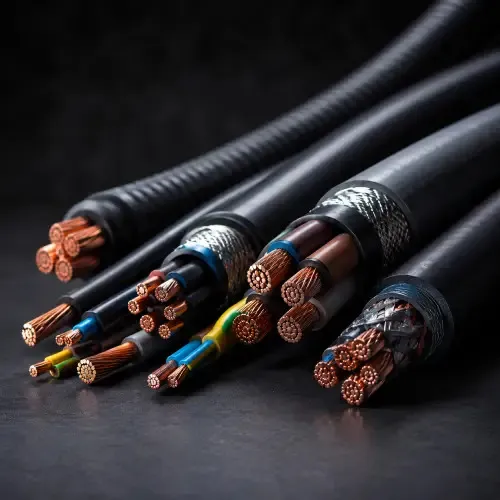

Procuring electrical infrastructure for manufacturing units, commercial complexes, or power distribution networks involves more than comparing unit costs. Selecting the right industrial wiring requires an evaluation of electrical loads, operating voltage levels, environmental exposures, and mechanical stress. A standard cable suitable for a dry indoor panel will quickly fail if installed underground or exposed to industrial chemicals and extreme temperature fluctuations.
To avoid costly project delays, premature insulation breakdown, and safety hazards, procurement managers and electrical engineers must evaluate technical specifications against exact site conditions before placing an order. Partnering with an established cable & wire supplier ensures access to verified technical documentation and proper product selection. This practical guide outlines the essential technical, environmental, and commercial factors to evaluate before purchasing industrial cables and wires.
Why Proper Cable and Wire Selection Matters
Cables and wires form the backbone of any industrial electrical infrastructure. Selecting an incorrect specification leads to severe operational risks, including frequent circuit trips, excessive voltage drops, conductor overheating, and catastrophic electrical fires. Beyond immediate safety risks, improper cable selection directly impacts long-term operating costs.
Undersized conductors or cables with insufficient thermal ratings suffer high power losses, leading to wasted energy over time. Similarly, using non-armoured or inadequately insulated cables in heavy-duty environments accelerates mechanical wear, requiring frequent maintenance, unplanned downtime, and premature replacement. Evaluating load profiles, installation routing, and protective requirements during procurement ensures reliable power transmission, regulatory compliance, and maximum operational longevity.
Types of Industrial Cables and Wires to Consider
Industrial projects require specialized cable designs tailored to specific electrical and mechanical demands. Understanding the structural differences and intended applications of each type helps buyers specify the right product.
Armoured Cables
Armoured cables feature a protective metallic layer—typically steel wire armour (SWA) or steel tape armour (STA)—placed beneath the outer sheath. This design provides exceptional resistance to impact, crushing loads, and mechanical damage, making it essential for direct burial, underground ducting, and heavy industrial plants. Sourcing from a reliable armoured cables supplier ensures the cable meets international mechanical and flame-retardant standards required for harsh outdoor applications.
Power Cables
Power cables are engineered for high-voltage and high-current energy transmission across utility grids, industrial machinery, and power distribution networks. They are constructed to handle significant thermal stress and high operating voltages efficiently. Working with an experienced power cables supplier allows project teams to select suitable conductor geometries and insulation materials based on system voltage and continuous current ratings.
Copper Cables
Copper remains the industry standard for applications requiring high electrical conductivity, superior tensile strength, and excellent terminal reliability. Due to their low electrical resistance, copper conductors generate less heat under load and offer exceptional flexibility for tight bending radiuses inside control panels and switchgear. Consulting a trusted copper cables supplier helps procurement teams identify the right flexibility class and strand construction for their equipment.
Instrumentation Cables
Instrumentation cables are specialized multi-pair or multi-triple conductors designed to transmit delicate analog and digital signals in process automation systems. They feature individual and overall screening (such as aluminum-mylar tape with a tarnish-free drain wire) to protect signal integrity against electromagnetic interference (EMI) from surrounding heavy machinery. A reliable instrumentation cables supplier provides low-capacitance, noise-resistant cables critical for precise instrumentation and control loops.
Rubber Cables
Rubber-insulated and sheathed cables provide outstanding flexibility, high thermal endurance, and excellent resistance to oils, greases, and weather conditions. They are extensively used in trailing applications, mobile industrial equipment, cranes, and temporary site power connections where frequent movement and flexing occur. Ordering through a reputable rubber cables supplier guarantees the rubber compound retains its elasticity and protective properties across extreme hot or cold operating temperatures.
Identify the Application and Installation Requirements
Before selecting cable construction or conductor materials, define where and how the cable will operate. Each installation environment introduces unique mechanical and operational demands:
- Industrial Machinery & Control Panels: Requires highly flexible cables capable of tight routing, resistance to internal cabinet heat, and protection against oil splashes.
- Power Distribution Networks: Demands medium-to-high voltage cables built for continuous, high-current transmission over extended distances.
- Commercial Buildings: Prioritizes fire-retardant low-smoke (FRLS) or zero-halogen (LSZH) insulations to safeguard personnel during emergencies.
- Outdoor & Underground Installations: Requires heavy mechanical protection, UV-resistant outer sheathing, and moisture barriers to prevent water ingress.
- Temporary or Mobile Connections: Calls for highly flexible, rubber-sheathed trailing cables capable of withstanding continuous dragging, twisting, and abrasion.
Matching the cable structural design to its physical installation method prevents mechanical stress on conductors and premature insulation decay.
Check the Required Voltage Rating
Cables are classified by their rated insulation voltage, typically expressed as U0/U (where U0 is the rated phase-to-earth voltage and U is the rated phase-to-phase voltage). Common industrial voltage categories include:
- Low Voltage (LV): Up to 1kV (1000V), widely used for internal building wiring, motor control circuits, and secondary power distribution.
- Medium Voltage (MV): Generally ranging from 3.3kV to 33kV, suited for main industrial power distribution, heavy plant sub-stations, and utility networks.
- High Voltage (HV): Typically exceeding 33kV, utilized for primary power transmission grids and major utility infrastructure.
Installing a cable rated below the system's peak operating or surge voltage will cause dielectric breakdown, leading to phase-to-ground faults and severe short circuits. Always cross-reference system surge expectations and operational voltages against manufacturer datasheets.
Select the Appropriate Conductor Material
Choosing between copper and aluminum conductors requires balancing electrical performance, mechanical demands, weight constraints, and overall project budget.
Copper Conductors
Copper offers higher electrical conductivity than aluminum, allowing a smaller cross-sectional conductor area to carry the same electrical load. It features excellent physical ductility, high tensile strength, and ease of termination, making it ideal for tight spaces, dynamic flexible applications, and precision signal transmission.
Aluminium Conductors
Aluminum is significantly lighter than copper and offers a lower initial material cost per meter. It is widely used in large cross-section power transmission and long-distance distribution networks where cable weight directly affects support structures and cable tray designs. However, aluminum requires larger cross-sections to match copper's current capacity, along with dedicated bi-metallic lugs and oxide-inhibiting compounds at termination points to prevent galvanic corrosion and loose connections over time.
Choose the Correct Cable Size
Selecting a cable size based solely on current capacity is a common procurement error. Accurate cable sizing requires calculating the cross-sectional area (mm2) considering multiple derating factors:
- Current-Carrying Capacity (Ampacity): The maximum continuous current the conductor can handle without exceeding its insulation temperature limits.
- Permissible Voltage Drop: Over long distance runs, resistance causes voltage drops. Excess drop causes motor overheating and equipment malfunction. Standard designs keep voltage drop under $3\%$ to $5\%$ of nominal voltage.
- Ambient Temperature Derating: Standard ampacity tables assume ambient temperatures around $30^\circ\text{C}$ to $40^\circ\text{C}$. Higher ambient operating environments require larger conductor sizes to offset reduced heat dissipation.
- Grouping & Installation Method: Cables bunched closely in trays or routed through enclosed conduits trap thermal energy, requiring ampacity derating factors to be applied.
Examine the Insulation and Sheathing Material
The primary insulation around conductors and the outer protective sheath must withstand the physical and chemical conditions of the operating environment.
- PVC (Polyvinyl Chloride): Standard insulation for general-purpose indoor low-voltage wiring. Affordable and flame-retardant, but limited in high-temperature applications.
- XLPE (Cross-linked Polyethylene): Offers superior thermal endurance (typically rated up to $90^\circ\text{C}$ continuous operating temperature), high dielectric strength, and excellent moisture resistance, making it ideal for power cables.
- EPR / Rubber: Highly flexible elastomeric material suited for moving equipment, low-temperature flexibility, and high-heat applications.
- FRLS / LSZH Compounds: Specialized sheathing that releases minimal smoke and non-corrosive gases when exposed to fire, essential for enclosed public spaces and industrial control rooms.
Consider Environmental and Installation Conditions
Outdoor and heavy industrial installations expose cabling to aggressive stresses that standard commercial-grade wires cannot withstand.
Indoor Installations
Focus on neat tray routing, adequate heat dissipation, compliance with indoor building fire codes, and using halogen-free materials to protect electronic hardware from corrosive smoke during fires.
Outdoor Installations
Select cables with UV-stabilized outer sheathing (typically carbon-black pigmented PVC or Polyethylene) to protect against sunlight degradation, cracking, and water ingress from rain and ambient humidity.
Underground Installations
Specify armoured construction (SWA/STA) to withstand soil movement, heavy surface load crushing, and stone impacts. The sheathing material must also resist continuous moisture, ground acidity, and soil microbial attack.
Industrial Environments
Where chemical splashes, lubricating oils, severe vibrations, high ambient temperatures, or mechanical abrasion are present, specify specialized oil-resistant, chemical-proof rubber or heavy-duty polyurethane (PUR) outer sheathes.
Review the Technical Datasheet Before Ordering
Never place an order based strictly on broad catalog descriptions or product titles. Procurement personnel and site engineers must cross-examine the official technical datasheet for the following details:
- Conductor Class: Class 1 (solid), Class 2 (stranded for fixed installation), or Class 5/6 (flexible stranded).
- Core Identification: Color coding or numerical numbering compliant with relevant national/international standards.
- Voltage & Temperature Ratings: Nominal voltage (U0/U) and maximum continuous conductor operating temperature.
- Applicable Standards: Compliance with recognized international standards such as IEC, IS, or BS specifications.
- Overall Diameter & Bending Radius: Minimum bending radius calculations to ensure cables fit inside designated tray curves and conduits without structural damage.
- Weight and Reel Lengths: Drum dimensions and gross weights for freight planning and site handling equipment.
Common Mistakes to Avoid When Buying Industrial Cables and Wires
Avoid these frequent procurement pitfalls to maintain installation safety and project timelines:
- Buying Soles on Purchase Price: Opting for lower-cost, unverified cables often results in high energy losses, short lifespans, and frequent replacement costs.
- Selecting Incorrect Conductor Sizes: Sizing without evaluating ambient temperature and grouping derating factors leads to dangerous thermal overload.
- Ignoring Voltage Drop Calculations: Failing to factor run length causes operational equipment failure at terminal points due to under-voltage.
- Overlooking Site Exposure: Installing non-UV or non-armoured cables outdoors leads to insulation cracking and moisture ingress.
- Neglecting Smoke and Toxic Gas Risks: Using standard PVC in poorly ventilated indoor control spaces presents safety hazards in the event of a fire.
- Bypassing Industry Standards Compliance: Purchasing non-certified products exposes installations to regulatory penalties and safety failures.
- Ordering Without Datasheet Verification: Relying on basic trade names instead of detailed datasheets leads to dimensional or core-type mismatch on site.
- Assuming Equal Performance from Equal Sizes: Different insulation compounds and strand classes yield varying ampacity and mechanical performance even if conductor cross-section area is identical.
Why Choose Sohum Industrial Sales Corporation?
Sourcing industrial electrical infrastructure requires working with a dependable cable & wire distributor that understands technical specifications, industry standards, and regional logistics. Sohum Industrial Sales Corporation serves as an established supply partner, delivering high-grade electrical wires and cables tailored to industrial, commercial, and utility requirements.
As an experienced industrial cable wholesale supplier, Sohum Industrial Sales Corporation assists procurement managers and engineering teams in matching technical datasheets to actual project demands. Whether sourcing heavy-duty power distribution lines, flexible rubber cables, or screened instrumentation wiring, Sohum Industrial Sales Corporation maintains a robust distribution network serving key industrial regions across Eastern and Northeastern India, including West Bengal, Kolkata, Odisha, Chhattisgarh, Bihar, Arunachal Pradesh, Manipur, Meghalaya, Mizoram, Nagaland, and Tripura. as well as Bhutan.
By offering a comprehensive product portfolio from trusted manufacturers, Sohum Industrial Sales Corporation helps buyers streamline their procurement process, meet stringent technical compliance standards, and maintain project delivery timelines.
Frequently Asked Questions
Q1. How do I choose the right industrial cable for an application?
Start by determining the operating voltage, current demand, circuit length, and ambient temperature. Identify physical routing requirements—such as direct burial, cable tray placement, or flexible machinery wiring—to select appropriate conductor materials, insulation types, and protective armour. Always verify these choices against the manufacturer's technical datasheet.
Q2. Is copper or aluminium better for industrial cables?
Neither material is universally superior; selection depends on project priorities. Copper is ideal for applications requiring high flexibility, tight installation radiuses, compact conduits, and maximum conductivity. Aluminum offers a lightweight, cost-effective alternative for long-distance, high-voltage distribution lines where reduced weight reduces support infrastructure demands.
Q3. What environmental factors affect cable selection?
Key environmental factors include ambient temperature, direct exposure to sunlight (UV radiation), moisture or water submersion, contact with chemicals or industrial oils, physical abrasion, and potential exposure to flame or mechanical impact.
Q4. What role does an electrical wire supplier play during project procurement?
A knowledgeable electrical wire supplier does more than fulfill orders; they help verify project specifications against technical datasheets, suggest compatible cable types, supply required test certificates, and coordinate bulk logistics to keep project timelines on schedule.
Q5. What is the difference between armoured and non-armoured cables?
Armoured cables incorporate a metallic layer (steel wire or tape) beneath the outer sheath to provide physical protection against crushing forces, mechanical impacts, and rodent damage. Non-armoured cables lack this layer and are intended for installation inside conduits, control cabinets, or protected indoor cable trays.
Q6. How do I source products from a reliable industrial power cable supplier?
When selecting an industrial power cable supplier, choose a distributor with an established supply chain, verified manufacturer partnerships, access to complete technical documentation, and the logistical capacity to deliver materials efficiently across your target project location.
Conclusion
Selecting the correct industrial cables and wires requires a systematic approach. Rushing the procurement process or selecting products based solely on unit cost can lead to compatibility issues, premature electrical failure, elevated safety risks, and unexpected downtime. By thoroughly evaluating technical specifications, insulation grades, mechanical conditions, application requirements, and site conditions, buyers can make more informed decisions for long-term operational reliability and safety.
For industrial projects across West Bengal and Kolkata, Odisha, Chhattisgarh, Bihar, Arunachal Pradesh, Assam, Manipur, Meghalaya, Mizoram, Nagaland, Tripura, and Bhutan, buyers should assess cable requirements according to the specific electrical system and installation environment.
To discuss your industrial wiring requirements, request detailed datasheets, or source suitable electrical products for upcoming projects, consult the technical sales team at Sohum Industrial Sales Corporation.
















Sign in to leave a comment.