What to Consider Before Buying Portable Cabins NZ


Why More Kiwis Are Choosing Portable Cabins
Space is getting tighter and pricier across New Zealand, and homeowners, farmers, and small business owners are looking for smarter ways to add room without the cost and hassle of a full build. That's where portable cabins come in.
They're quick to install, easier on the budget than a traditional extension, and flexible enough to move if your needs change. If you've been searching for portable cabins in nz, you've probably noticed just how many options are out there, from compact sleepouts to full site offices. But before you buy, there are a few things worth thinking through so you end up with a cabin that actually suits your site, your budget, and your long-term plans.
Start With Your Purpose
Before you look at a single model, work out exactly what the cabin needs to do for you.
Living Space, Office, or Storage?
A cabin used as a teenager's retreat needs different features than one used as a construction site office or a garden storage unit. Think about:
- Will people sleep in it overnight?
- Does it need power points, insulation, or plumbing?
- Is it a permanent fixture or something you'll relocate later?
Getting clear on the purpose early saves you from paying for features you don't need — or worse, missing ones you do.
Size and Layout
Portable cabins come in a wide range of sizes, and it's easy to either underestimate or overestimate what you need.
Measure your site properly, including access paths for delivery. Then think about layout: a single open room suits an office or studio, while a cabin used as extra living space might need a separated sleeping area or small kitchenette. Don't just plan for today — think about whether your needs might grow in a year or two.
Materials and Build Quality
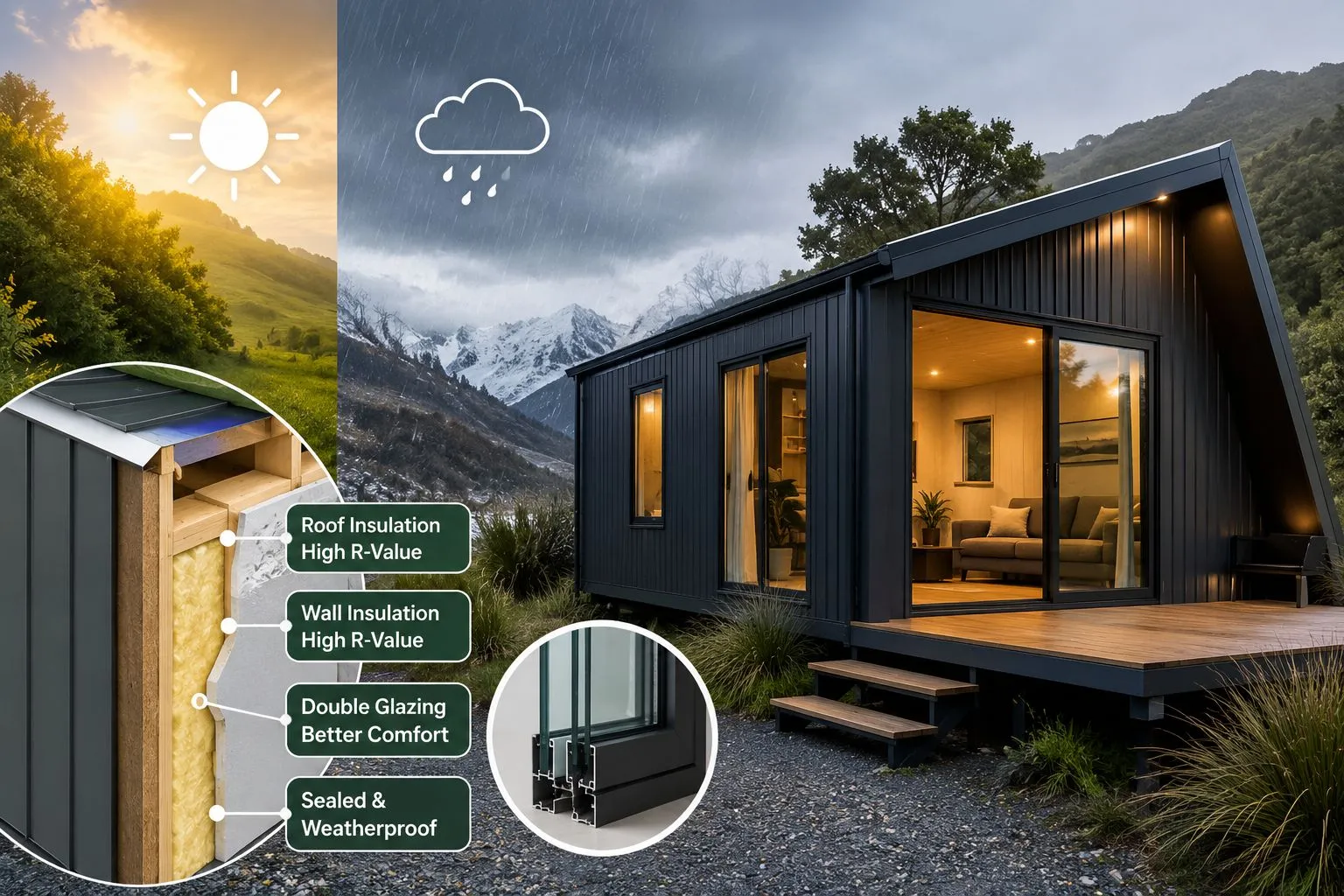
Not all cabins are built the same, and this is one area where cutting corners shows up fast.
Check the frame material, wall cladding, roofing, and flooring. Steel-framed cabins generally hold up better over time than timber-only builds, especially in exposed rural areas.
Insulation and Weatherproofing for NZ Conditions
New Zealand's climate swings from humid summers to cold, wet winters depending on the region. A cabin that isn't properly insulated or sealed can feel like an oven in January and a fridge in July.
Common Mistake: Many buyers focus on the exterior finish and forget to ask about insulation ratings or double-glazing. This is one of the most frequent regrets cabin owners mention after their first winter.
Ask your supplier directly about wall and roof insulation R-values, and whether double glazing is standard or optional.
Compliance and Building Consent
Here's the short answer: whether you need a building consent depends on the cabin's size, use, and how it's fixed to the site.
Under New Zealand's Building Act, some small, unoccupied structures may fall under exemption categories, but cabins used for sleeping, cooking, or connected to power and plumbing usually require consent from your local council. Rules also vary between councils, so it pays to check with yours before committing.
A reputable supplier of portable cabins in nz should be able to walk you through what's typically required in your region and flag anything that might affect your plans.
Cost and Budget Planning
Price is often the deciding factor, but it shouldn't be the only one. Cheaper cabins can end up costing more over time through repairs, poor insulation, or the need for early replacement.
Did You Know? Portable cabins can work out significantly cheaper per square metre than a traditional home extension, mainly because they skip the foundation work, extended labour hours, and consenting delays that come with permanent builds.
When comparing quotes, ask exactly what's included: delivery, site prep, power connection, and any council fees can all sit outside the base price.
Delivery, Site Access, and Placement
Getting the cabin to your property is its own challenge. Narrow driveways, steep sections, or overhead power lines can all limit what size unit you can actually have delivered.
Pro Tip: Send your supplier photos and rough measurements of your access route before you order. It's far easier to solve a delivery problem on paper than on the day the truck arrives.
Also think about the base the cabin will sit on — piles, concrete pads, or level ground are common options, and the right choice depends on your soil type and how permanent the setup will be.
Choosing the Right Supplier
The supplier matters just as much as the cabin itself. Look for a company with a solid local track record, clear warranty terms, and cabins built to withstand New Zealand's weather rather than imported designs that weren't made for it.
As one industry perspective puts it: after years of building and delivering cabins across the country, the biggest difference between a happy customer and a disappointed one usually comes down to whether their supplier asked the right questions upfront — about site access, purpose, and climate — rather than just selling off a standard spec sheet.
Read reviews, ask to see completed projects, and don't be afraid to ask detailed questions about build materials and after-sales support.
Common Mistakes to Avoid
- Buying based on price alone without checking build quality
- Skipping the council consent check
- Underestimating site access limitations
- Choosing a size that doesn't allow for future needs
- Not asking about insulation and weatherproofing upfront
Ready to Find the Right Cabin for Your Property?
Choosing the right cabin doesn't have to be complicated when you have the right team guiding you. Unit2go specialises in durable, well-built portable cabins in NZ, designed to handle local conditions and suit everything from home offices to extra living space.
Get in touch with the Unit2go team today for a free quote and honest advice on the right size, layout, and setup for your site.
Frequently Asked Questions
1. Do I need a building consent for a portable cabin in NZ?
It depends on the size, use, and how the cabin is fixed to your property. Small, unoccupied structures may be exempt, but cabins used for sleeping or connected to power and plumbing typically need council consent. Always check with your local council first.
2. How long does it take to get a portable cabin delivered and set up?
Most standard cabins can be manufactured and delivered within a few weeks, though this varies by supplier, customisation level, and site access. Site preparation and consent timelines can add extra time.
3. Can portable cabins handle New Zealand's weather?
Yes, if they're built for it. Look for steel framing, proper roof insulation, and double glazing, since these features make a real difference during wet winters and humid summers.
4. Are portable cabins cheaper than a home extension?
Generally, yes. Cabins avoid many of the costs tied to permanent extensions, such as extensive foundation work and longer consenting processes, making them a more budget-friendly option for extra space.
5. Can a portable cabin be relocated later if I move?
Many portable cabins are designed to be repositioned or transported, though this depends on the build and how it's anchored to the site. Ask your supplier about relocation options before you buy.






Sign in to leave a comment.