

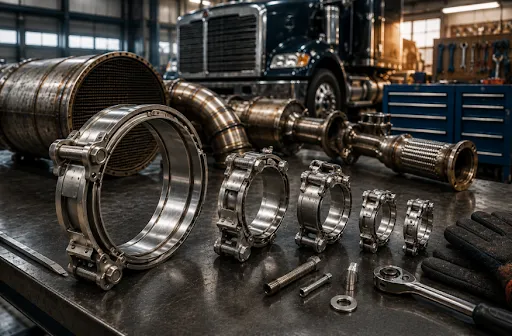
Heavy-duty diesel vehicles depend on properly functioning exhaust systems to manage emissions, maintain engine performance, and support reliable operation. Within these systems, the Diesel Particulate Filter (DPF) plays an important role by capturing particulate matter from exhaust gases. While much of the attention surrounding DPF maintenance focuses on cleaning and regeneration, the components used to secure the filter are equally important. DPF clamps help hold the filter and connected exhaust components securely in position, making their selection an important consideration during installation or repair.
Choosing an appropriate clamp involves more than simply finding a component that fits around the filter. Heavy-duty trucks, buses, construction equipment, agricultural machinery, and other diesel-powered vehicles can experience high temperatures, vibration, pressure changes, and demanding operating conditions. A suitable clamp needs to accommodate these conditions while maintaining a secure connection.
Understanding the Role of DPF Clamps
DPF clamps are designed to secure connections within an exhaust system. Depending on the vehicle and exhaust configuration, clamps may be used around DPF housings, pipes, and other connected components. Their primary purpose is to maintain a tight connection and help prevent unwanted movement or exhaust leakage.
A properly fitted clamp can also make servicing easier. DPFs may need to be removed for inspection, cleaning, replacement, or testing. Using an appropriate clamping solution can help technicians access the filter without unnecessarily damaging surrounding components.
Because heavy-duty vehicles operate under demanding conditions, the clamp should be selected according to the application rather than based only on appearance or price.
1. Check the Correct Size and Fit
One of the first considerations when selecting a clamp is size. A clamp that is too large may not provide adequate securing force, while one that is too small may be difficult to install correctly or may not fit around the connection.
Before purchasing replacement dpf clamps, check the dimensions of the exhaust connection and compare them with the manufacturer's specifications. Measurements should include the outside diameter and the configuration of the connection where the clamp will be installed.
The correct fit helps distribute clamping pressure more effectively and reduces the possibility of movement or leakage.
2. Consider Exhaust Temperature
The exhaust system of a heavy-duty diesel vehicle can reach extremely high temperatures, particularly during DPF regeneration. Because clamps are positioned close to hot exhaust components, they need to be manufactured from materials suitable for high-temperature applications.
Material selection matters because repeated heating and cooling can affect metal components over time. A clamp designed for ordinary low-temperature applications may not be appropriate for a DPF connection.
When selecting a clamp, consider its temperature rating and the operating conditions of the vehicle. This is particularly important for trucks that frequently perform long-distance hauling or operate under heavy loads.
3. Pay Attention to Material Quality
The material used to manufacture an exhaust clamp can affect durability and resistance to corrosion. Heavy-duty vehicles may operate in rain, snow, mud, road salt, dust, and other harsh environments.
Stainless steel and other corrosion-resistant materials are commonly considered for demanding exhaust applications. However, the appropriate material depends on the specific vehicle and manufacturer requirements.
A high-quality clamp should maintain its structural integrity despite exposure to heat, vibration, moisture, and exhaust gases. Choosing a component based solely on its lowest price can result in more frequent replacements if it cannot withstand the operating environment.
4. Evaluate Vibration Resistance
Heavy-duty trucks generate substantial vibration while driving, especially on uneven roads, construction sites, farms, and other challenging surfaces. Exhaust components are exposed to this vibration throughout the vehicle's operating life.
A suitable clamp should maintain a secure connection despite repeated movement and vibration. If the clamp loosens or loses its ability to maintain the connection, the exhaust system may develop unwanted movement or leaks.
When selecting a replacement, consider the vehicle's typical operating environment and choose a clamp designed for heavy-duty exhaust applications.
5. Look for Reliable Sealing Performance
An exhaust connection needs to remain properly secured to help minimize leaks. A poorly fitted or damaged clamp can contribute to exhaust leakage around the connection.
When replacing a clamp, inspect the surrounding components as well. A damaged gasket, distorted pipe, cracked connection, or contaminated sealing surface may prevent the system from sealing correctly even when a new clamp is installed.
This is why replacing a clamp should often involve inspecting the complete connection rather than focusing on the clamp alone.
6. Consider Ease of Installation
Heavy-duty vehicles can spend significant amounts of time in operation, so maintenance efficiency matters. A clamp that is straightforward to install can help reduce service time when a DPF or exhaust component needs to be removed.
However, ease of installation should never replace correct installation procedures. Technicians should follow the vehicle or component manufacturer's recommendations for positioning and tightening.
Over-tightening can potentially damage components, while insufficient tightening may allow movement or leakage. Using the correct tools and following the recommended specifications helps achieve a more reliable installation.
7. Inspect the Clamp During DPF Service
DPF maintenance provides a useful opportunity to inspect clamps and surrounding exhaust components. During filter removal or cleaning, technicians can check for corrosion, deformation, cracks, damaged hardware, or signs of previous exhaust leakage.
A clamp that appears worn may be replaced before it becomes a larger maintenance concern. Regular inspection is particularly useful for heavy-duty fleets where vehicles accumulate high mileage and operate for extended periods.
The condition of the clamp should be considered alongside the condition of the DPF itself.
8. Understand the Difference Between Soot and Ash
DPF maintenance often involves discussions about soot accumulation and regeneration. Regeneration burns accumulated soot from the filter, but ash can remain inside the DPF over time.
This distinction is important when maintaining the complete exhaust system. If a DPF becomes excessively restricted, regeneration alone may not restore the filter's original flow characteristics. Professional cleaning can remove accumulated material and allow the filter to be tested more thoroughly.
A dpf cleaner product may be marketed for certain maintenance applications, but vehicle owners should understand that additives or cleaners are not automatically a substitute for professional DPF removal, cleaning, and testing when the filter has significant ash accumulation or physical damage.

9. Match the Clamp to the Vehicle Application
Not every diesel vehicle uses the same exhaust configuration. A highway tractor may have different requirements from a refuse truck, agricultural tractor, delivery vehicle, or construction machine.
Before ordering a replacement, identify the vehicle's make, model, engine, exhaust configuration, and DPF setup where possible. Manufacturer specifications or verified part information can help ensure compatibility.
Using a universal component without confirming compatibility can create installation problems and may not provide the required clamping performance.
10. Consider the Overall Cost of Ownership
The cheapest clamp is not necessarily the most economical option. A low-cost component that fails prematurely can result in additional labor, replacement parts, and vehicle downtime.
For fleet operators, even a small exhaust repair can become costly when multiple vehicles require maintenance. Selecting durable components that are appropriate for the operating environment can help reduce unnecessary service interruptions.
The goal should be to balance purchase price, quality, compatibility, installation requirements, and expected service life.
Why Professional DPF Service Matters
Selecting the right clamp is only one part of maintaining a heavy-duty DPF system. The filter itself should also be inspected and maintained according to the vehicle's operating requirements.
Professional DPF cleaning can help address accumulated soot and ash when regeneration is no longer sufficient. Flow testing before and after cleaning can provide useful information about the filter's condition and help verify the effectiveness of the cleaning process.
During this type of service, technicians can also inspect clamps, gaskets, connections, and other components that may affect exhaust-system performance.
For fleet managers and truck owners, combining proper DPF maintenance with inspection of associated hardware can help create a more complete approach to exhaust-system care.
Choosing DPF Clamps for Long-Term Reliability
The right dpf clamps should be selected based on compatibility, dimensions, material, temperature resistance, vibration tolerance, sealing requirements, and the vehicle's specific application. Taking these factors into account can help reduce installation problems and support a more secure exhaust connection.
Heavy-duty diesel vehicles face demanding operating conditions, so every component surrounding the DPF deserves attention. A clamp may be a relatively small part, but its role in securing the exhaust system makes proper selection and installation important.
Regular inspections during DPF service can also help identify worn or damaged clamps before they contribute to larger exhaust-system problems. When combined with appropriate DPF cleaning, testing, and maintenance, these steps can support dependable operation and help reduce avoidable downtime.
Get Professional DPF Cleaning and Testing
If your heavy-duty vehicle is experiencing DPF restriction, repeated regeneration issues, or reduced exhaust flow, professional inspection can help determine the condition of the filter. 30 Minute DPF Clean provides professional DPF cleaning and before-and-after flow testing for diesel vehicles, helping owners and operators better understand filter condition.
Whether you need DPF cleaning, filter testing, or guidance regarding related exhaust components such as dpf clamps, proper service can help keep your diesel vehicle's emissions system maintained.
Contact 30 Minute DPF Clean today to discuss your DPF cleaning needs and arrange professional filter cleaning and testing.


























Sign in to leave a comment.