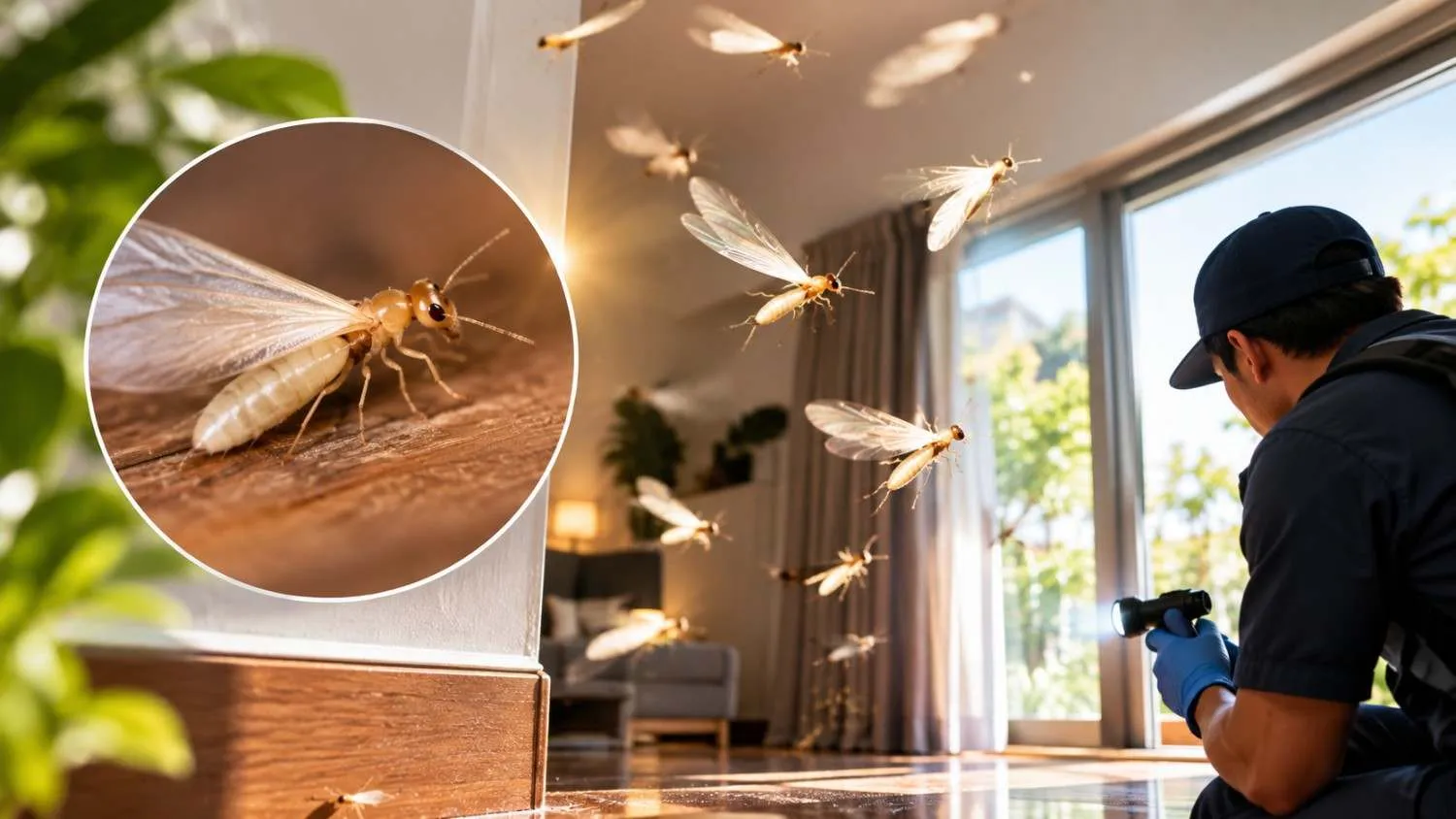


If you see flying white ants inside your home, act immediately — do not wait. These winged insects are almost certainly termite alae (reproductive termites), and their presence indoors means a colony is either already established within your structure or actively trying to start one. Knowing the right steps in the next 30 minutes can limit serious structural damage.
Flying white ants indoors are a pest emergency, not a minor nuisance. Engaging professional white ants pest control is the single most important action you can take, but there are critical steps to take right now, before the technician arrives.
Are Those Really Flying White Ants — or Something Else?
Before you panic, confirm what you are dealing with. Flying white ants and flying regular ants look similar at a quick glance, but the difference matters enormously for treatment.
| Feature | Flying White Ants (Termite Alates) | Regular Flying Ants
|
|---|---|---|
| Body shape | Straight, no visible waist | Pinched waist between thorax and abdomen |
| Wing size | All four wings equal in length | Front wings noticeably larger than rear |
| Antennae | Straight, beaded | Elbowed (bent at an angle) |
| Colour | Pale white to translucent brown | Dark brown or black |
| Urgency level | Extremely high — call pest control now | Moderate — monitor and treat if recurring |
If the insects match the left column, you are dealing with termite alates. In Singapore's humid tropical climate, swarms typically occur after rain, particularly between March and October. Subterranean termites — the most destructive species found in Singapore — release alates in large numbers when a colony matures and is ready to expand.
Step-by-Step: What to Do Right Now
Step 1 — Do Not Spray Them with Household Repellent
This is the most common mistake homeowners make. Using a can of household insect spray feels instinctive, but it is counterproductive. Repellent aerosols scatter the swarm, driving termites deeper into wall cavities and flooring. You eliminate a few visible alates while the thousands already in the colony remain untouched — and now hidden further inside your home.
Put down the spray. Step away from the swarm area.
Step 2 — Turn Off Indoor Lights and Open a Window or Door
Termite alates are strongly attracted to light. Switch off the lights in the affected room and, if safe to do so, open a window or external door. Many alates will fly toward natural or external light sources and exit on their own. This keeps them concentrated near exit points rather than spreading deeper into the property.
Step 3 — Collect a Sample Without Touching Directly
Use a small sealed container or zip-lock bag to collect three to five live or dead specimens. A pest control technician will use this to confirm the exact termite species, which directly determines the treatment method used. Subterranean termites, drywood termites, and dampwood termites each require a different approach.
Step 4 — Locate and Document Where They Are Emerging From
Look for the entry point — cracks in skirting boards, gaps around door frames, holes near window sills, or openings around plumbing entry points. Take photos or a short video. Do not seal or block these entry points yet. Blocking them now can trap the colony inside and delay accurate diagnosis by the pest control team.
Step 5 — Check Nearby Wood for Early Damage Signs
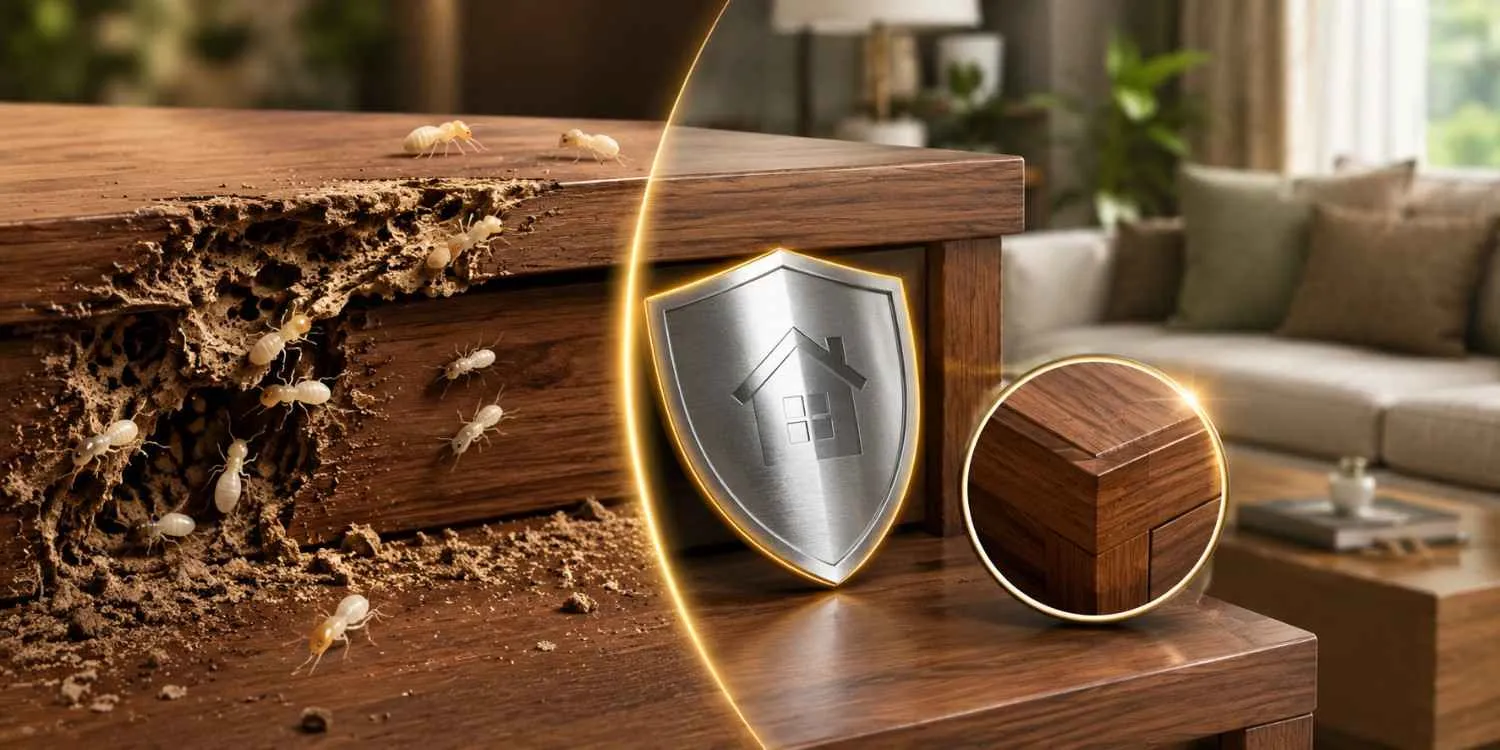
While waiting for professional help, do a quick visual inspection of exposed timber nearby. Run your knuckle along wooden skirting boards, door frames, and furniture legs. Hollow-sounding wood, small pinholes, or fine powdery frass (termite droppings that look like sawdust or fine sand) are indicators that a colony is or was actively feeding in that area.
Step 6 — Call a Licensed Pest Control Company Immediately
A swarm indoors is not a situation that resolves itself. Once alates land, they shed their wings, pair up, and attempt to establish new colonies. Time is the critical variable here. Contact a pest control professional as soon as possible and request same-day or next-morning attendance. Provide them with your sample description, the emergence location, and any damage signs you observed.
What the Pest Control Team Will Do for White Ants Pest Control
When a licensed technician arrives, the inspection process typically covers the following:
- Species identification — confirmed using your sample and visual inspection
- Moisture mapping — termites thrive where moisture is present; technicians check for leaks, condensation, and damp timber
- Structural assessment — probing suspected areas for hollow wood and mud tube trails
- Colony location estimate — using acoustic detection or thermal imaging where available
- Treatment recommendation — which may include soil treatment, baiting systems, or localised wood treatment depending on species and severity
In Singapore, the National Environment Agency (NEA) regulates pest control operators under the Environmental Public Health Act. Engaging a licensed operator ensures treatments meet safety standards and that chemicals used are approved for residential use.
How to Reduce the Risk of Another Swarm Event
Once the immediate threat is managed, prevention becomes the priority. Termite colonies in Singapore can contain hundreds of thousands of individuals, and a single treatment without structural corrections can lead to reinfestation.
- Fix all water leaks promptly — damp timber is the primary attractant for subterranean termites
- Remove wood debris, old timber, and cardboard stored against or beneath the home
- Seal foundation cracks and gaps where pipes enter the building
- Schedule annual termite inspections, especially if your property is more than ten years old
- Ask your pest control provider about long-term termite baiting or monitoring station systems
Flying White Ants Indoors: A Swarm Is a Signal, Not the Full Story
The alates you see flying around your living room are not the threat themselves — they are the symptom. The actual damage is being done by the worker termites, which never appear above ground and which have likely been active inside your walls, floors, or roof structure for months, possibly longer before the swarm became visible.
A swarm is the colony's way of reproducing and spreading. It is also your clearest warning that a mature colony exists nearby. If you are in Singapore and you have just experienced this, do not delay. Action Pest provides professional termite pest control services for residential properties, with experienced technicians available to respond quickly when timing matters most. Visit the Action Pest homepage to learn more or to book a same-day assessment.
Frequently Asked Questions
Are flying white ants the same as termites?
Yes. Flying white ants are termite alates — the reproductive caste of a termite colony. They develop wings during the swarming season to leave the nest, mate, and establish new colonies. Spotting them indoors strongly suggests an active or nearby termite colony and requires immediate professional inspection.
How long does a termite swarm last indoors?
An indoor termite swarm typically lasts between 30 minutes and a few hours. After swarming, alates shed their wings and attempt to pair up and nest. The swarm ending does not mean the danger has passed — the colony driving the swarm remains active and requires professional treatment.
Can I treat flying white ants myself?
DIY sprays can kill visible alates but will not reach the colony. Without treating the source, the infestation continues and often worsens. Licensed termite pest control professionals have access to baiting systems and soil treatments that target the entire colony, making professional intervention far more effective than any retail product.
Why are flying white ants appearing inside my home specifically?
Alates swarm from inside a structure when a colony has matured within or directly beneath it. Their emergence indoors — especially from skirting boards, window frames, or flooring gaps — usually indicates an established infestation rather than alates that entered from outside. This distinction makes professional assessment urgent.
How quickly should I call pest control after seeing flying white ants?
Contact a pest control professional the same day. Once alates land and shed their wings, new colony formation begins rapidly. The faster a technician can assess the source colony, the better the outcome. Same-day or next-morning inspections are strongly recommended when an active swarm has been observed indoors.
Does Singapore's climate make termite swarms more common?
Yes. Singapore's year-round heat and humidity create near-ideal conditions for termite activity. Swarms are most common after rainfall between March and October. Properties with older timber, moisture issues, or dense surrounding vegetation carry a higher risk and benefit most from regular annual inspections and preventive treatment programmes.























Sign in to leave a comment.