

What to Look for in a Private Label Sportswear Manufacturer
Starting a sportswear brand can be exciting, but turning your ideas into consistent, market-ready products requires the right manufacturing partner. One of the biggest decisions a clothing brand has to make is choosing a private label sportswear manufacturer.
Private label manufacturing allows a brand to develop apparel under its own name instead of selling products as a generic manufacturer brand. The manufacturer handles production while the brand builds its own identity through designs, labels, packaging, product specifications, and customer experience.
However, not every sportswear manufacturer offers the same level of customization or production support. Before choosing a manufacturing partner, there are several important factors to check.
What Is Private Label Sportswear Manufacturing?
Private label sportswear manufacturing is a production model where a manufacturer produces clothing for another business, while the finished products are sold under the customer's brand name.
Depending on the manufacturer, private label services can include:
- Custom garment designs
- Custom fabrics
- Custom colors
- Brand labels
- Woven labels
- Printed labels
- Hang tags
- Custom packaging
- Custom sizing
- Logo printing
- Embroidery
- Sublimation
- DTF printing
- Product development
For example, a new fitness company may want to launch its own collection of gym shirts and shorts. Instead of purchasing generic products and reselling them, the company can work with a private label manufacturer to develop products that carry its own branding.
This gives the business more control over how its products look and how customers experience the brand.
1. Look for Experience in Sportswear
The first thing to check is whether the manufacturer actually understands sportswear production.
Sportswear is not always the same as ordinary casual clothing. Depending on the product, it may require stretch fabrics, breathable materials, specialized stitching, lightweight construction, or specific garment panels.
Ask the manufacturer about its experience with products such as:
- Football jerseys
- Basketball uniforms
- Gym wear
- Running apparel
- Compression wear
- Training clothes
- Leggings
- Sports shorts
- Tracksuits
- Performance shirts
- Athletic jackets
A manufacturer that regularly produces sportswear is more likely to understand the practical requirements involved in these garments.
2. Check How Much Customization Is Available
Private labeling should be more than putting a logo on an existing shirt.
A serious private label project may involve customization across multiple parts of the product.
Ask whether the manufacturer can customize:
- Fabric
- Colors
- Patterns
- Measurements
- Fit
- Logos
- Labels
- Tags
- Packaging
- Printing
- Embroidery
For example, if you are creating a premium gymwear brand, you may want a specific fabric, custom waistband, unique logo placement, branded labels, and custom packaging.
The more control you have over these details, the easier it becomes to create a product that represents your brand.
3. Ask About Custom Labels
Brand labeling is one of the most important parts of private label manufacturing.
Depending on the product, a manufacturer may offer options such as:
- Woven labels
- Printed neck labels
- Size labels
- Care labels
- Brand tags
- Hang tags
These small details can make a significant difference in how a finished product feels to the customer.
Imagine receiving two identical-quality hoodies. One arrives with a generic factory label, while the other has a professional brand label, care instructions, size information, and branded packaging.
The second product provides a much clearer brand experience.
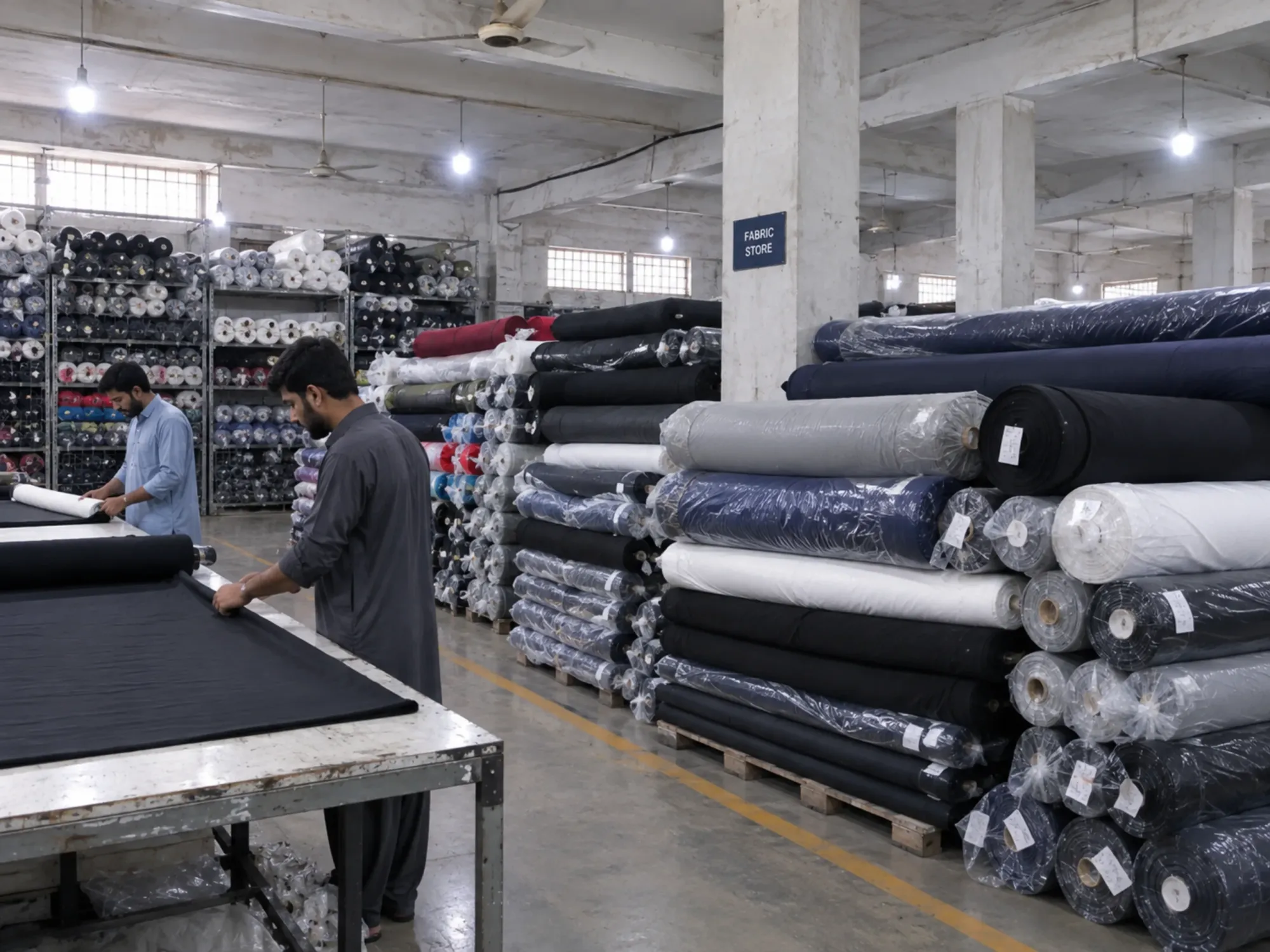
4. Review Fabric Options
Fabric affects comfort, appearance, durability, and performance.
Before selecting a manufacturer, ask what materials they can provide for your product category.
Depending on your collection, you may need materials with:
- Stretch
- Breathability
- Lightweight construction
- Soft texture
- Durability
- Moisture management
- Quick-drying properties
- Specific weight
Do not choose fabric only from a product photograph.
If possible, request physical fabric samples and compare them before approving the final production specifications.
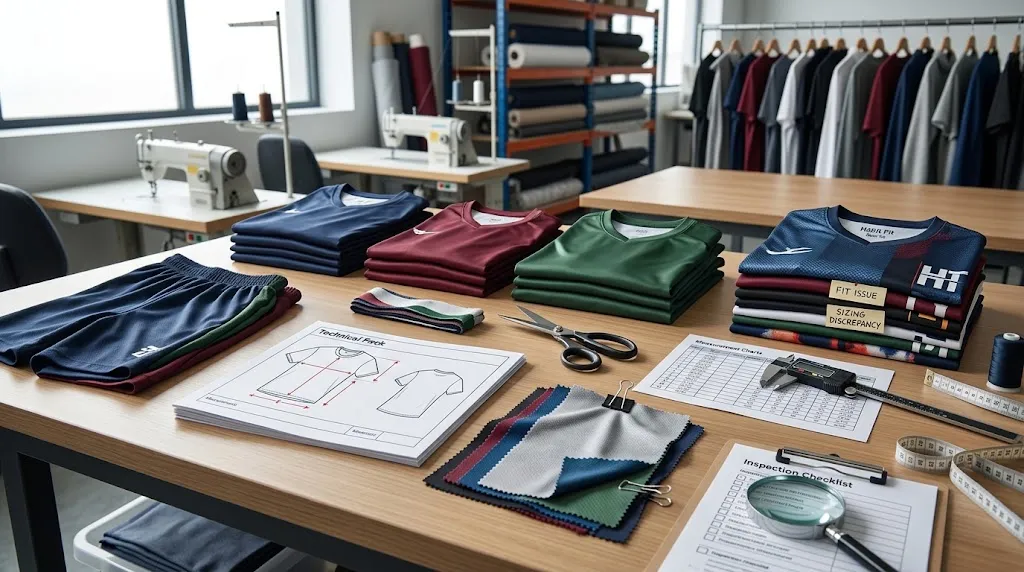
5. Make Sure They Can Produce Samples
Sampling is a critical stage in private label manufacturing.
A product can look perfect in a digital design but appear different when produced physically.
A sample allows you to check:
- Fit
- Measurements
- Fabric
- Stitching
- Colors
- Logo placement
- Printing
- Embroidery
- Labels
- Overall finishing
For example, suppose your brand is launching a pair of custom training shorts. The digital design may show the logo in the correct position, but the physical sample may reveal that the logo is too close to the side seam.
It is much easier to correct the issue before bulk production.
6. Understand the Minimum Order Quantity
Minimum order quantity, commonly called MOQ, is another major consideration.
Different manufacturers may have different requirements for private label production.
The MOQ might depend on:
- Product type
- Fabric
- Color
- Design
- Printing method
- Custom labels
- Packaging
For a new brand, a very high MOQ can create unnecessary financial pressure.
Before placing an order, ask exactly how the MOQ is calculated.
For example, is the minimum quantity:
- Per design?
- Per color?
- Per size?
- Per production run?
Getting a clear answer can help you plan your inventory and budget.
7. Check Printing and Decoration Options
Private label sportswear often requires logos, graphics, patterns, names, numbers, or other branding elements.
A good manufacturer should have suitable decoration options for different products.
Screen Printing
Screen printing can be useful for bold graphics and certain larger production runs.
If your brand uses strong graphic designs, you can review the manufacturer's screen printing manufacturing service when evaluating production options.
Sublimation
Sublimation is widely used for sportswear and detailed designs.
It can work well for full-color graphics, patterns, gradients, and all-over jersey designs.
For brands developing performance apparel, custom sublimation printing can be one option to consider.
Embroidery
Embroidery gives a garment a stitched, textured appearance.
It can be suitable for logos, brand names, jackets, hoodies, uniforms, caps, and other apparel.
You can review custom embroidery manufacturing when deciding how your brand identity should appear on the product.
DTF Printing
Direct-to-film, or DTF, printing can be useful for detailed and colorful artwork.
It is another option for brands that need custom graphics across different types of apparel.
See the DTF printing service for another example of apparel decoration that can be considered during product development.
8. Look at Quality Control
A private label brand carries its own name on the finished product.
That means manufacturing quality directly affects the brand's reputation.
Ask the manufacturer how products are checked before shipment.
Quality checks may cover:
- Measurements
- Stitching
- Fabric defects
- Print quality
- Logo placement
- Embroidery
- Color consistency
- Seams
- Finishing
You should also ask what happens if defective items are found.
A clear quality-control process can reduce the risk of receiving a large quantity of products with the same problem.
9. Check Production Capacity
A manufacturer may be able to produce a small order but struggle when your brand grows.
This is why production capacity matters.
Ask whether the manufacturer can handle both your current requirements and potential future orders.
For example, your first order might contain 100 pieces. If the product performs well, you may later need 1,000 or more pieces.
A manufacturer capable of supporting growth can make the transition easier.
10. Ask About Repeat Orders
Private label brands often depend on repeat production.
If a product sells well, you may want to reorder the same item months later.
Ask how the manufacturer handles repeat orders and whether approved specifications can be maintained.
Important details include:
- Fabric specification
- Size chart
- Color
- Artwork
- Logo placement
- Labels
- Packaging
- Stitching requirements
Consistency matters because customers expect a product they reorder to have the same basic quality and fit.
11. Evaluate Communication
Communication is often underestimated when choosing a manufacturer.
A manufacturing project can involve many small details. If messages are unclear or important questions remain unanswered, mistakes can happen.
A reliable manufacturing partner should communicate clearly about:
- Pricing
- Samples
- Production
- Materials
- Artwork
- Changes
- Timelines
- Shipping
- Quality issues
You do not need constant messages throughout the day. What matters is that important information is communicated clearly and documented.
12. Check Production Timelines
Before placing an order, ask about the expected timeline.
The full process may include:
- Product discussion
- Design review
- Material selection
- Sample development
- Sample approval
- Bulk production
- Quality inspection
- Packaging
- Shipping
Do not assume that the factory production time is the same as the total delivery time.
International shipping and customs can add additional time.
If you have a specific launch date, discuss it with the manufacturer before confirming the order.
13. Consider Packaging
Private label products should have packaging that matches the brand.
Depending on your business model, you may need:
- Individual bags
- Branded bags
- Hang tags
- Stickers
- Size labels
- Care instructions
- Shipping cartons
For an online clothing business, packaging is especially important because it is often part of the customer's first physical interaction with the brand.
A well-organized package can make the product feel more complete and professional.
14. Ask About International Orders
Many private label brands sell products internationally.
If you are working with an overseas manufacturer, ask whether they regularly handle international customers.
Questions can include:
- Which countries do you ship to?
- What shipping methods are available?
- Is tracking provided?
- What documentation is supplied?
- How are products packaged for shipping?
- Who handles customs requirements?
You should also research the import rules that apply to your destination country.
15. Calculate the Total Cost
Do not compare manufacturers using the factory price alone.
Your real product cost may include:
Manufacturing + customization + labels + packaging + shipping + customs + other applicable expenses
For example, a manufacturer offering a lower garment price may become more expensive after adding custom labels, packaging, decoration, and international shipping.
Compare the complete cost of getting the finished product into your hands.
16. Check Whether the Manufacturer Matches Your Brand
Not every manufacturer is suitable for every type of clothing brand.
A startup focused on affordable teamwear may have very different requirements from a premium fashion-focused activewear company.
Consider whether the manufacturer can support your:
- Product category
- Quality expectations
- Design style
- Quantity
- Budget
- Branding requirements
- Target market
The right manufacturing relationship should fit your actual business model.
17. Look for a Manufacturer That Can Support Product Development
A strong private label relationship can involve more than production.
You may need help understanding:
- Fabric choices
- Construction
- Printing
- Embroidery
- Sizing
- Packaging
- Production requirements
Ask whether the manufacturer can explain the practical side of your project rather than simply accepting an order.
This can be particularly useful for new brands that are producing apparel for the first time.
18. Review the Manufacturer's Existing Capabilities
Before making a decision, review the manufacturer's website and service information.
Look for evidence of the products and manufacturing methods they actually provide.
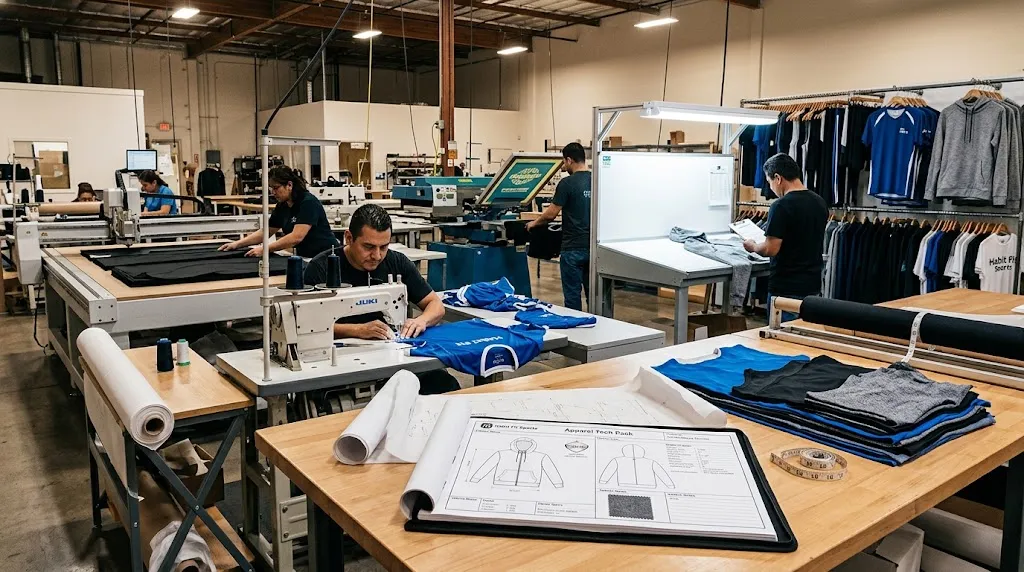
For example, Habit Fit Sports is a Sialkot, Pakistan-based manufacturer and supplier of custom sportswear, activewear, streetwear, and workwear.
Its manufacturing services include different apparel decoration options such as screen printing, sublimation printing, embroidery, and direct-to-film printing.
Reviewing these individual capabilities can help a brand determine whether a manufacturer can handle its specific product requirements.
19. Questions to Ask Before Choosing a Private Label Manufacturer
Before committing to a manufacturer, prepare a simple list of questions.
Product Questions
- What sportswear products do you manufacture?
- Can you create custom designs?
- What fabrics are available?
- Can you follow a custom size chart?
Branding Questions
- Do you provide custom labels?
- Can you add hang tags?
- Can you provide custom packaging?
- Can you use different printing and embroidery methods?
Production Questions
- What is the MOQ?
- Can you produce samples?
- What is the production timeline?
- What is your production capacity?
Quality Questions
- How do you inspect products?
- How are defective products handled?
- Can I approve a sample before bulk production?
Shipping Questions
- Do you ship internationally?
- What shipping methods are available?
- Is tracking provided?
- What documentation is supplied?
Getting clear answers to these questions can make the comparison process much easier.
Common Mistakes to Avoid
Choosing Based Only on Price
The cheapest quotation is not automatically the best option for your brand.
Compare quality, customization, communication, production consistency, and total cost.
Skipping the Sample
A sample gives you an opportunity to identify problems before bulk production.
Skipping this stage can create unnecessary risk.
Ignoring Labels and Packaging
Private label branding includes more than the main logo.
Labels, tags, packaging, and care information can all contribute to the finished brand experience.
Ordering Too Much Too Early
New brands should carefully consider demand and budget before committing to large quantities.
Providing Poor Artwork
Low-quality or unclear artwork can create production problems.
Provide the manufacturer with suitable files and clear instructions for logo placement and decoration.
Private Label Sportswear Checklist
Before placing an order, make sure you have checked:
- Sportswear manufacturing experience
- Product range
- Fabric options
- Customization capabilities
- Sample availability
- MOQ
- Custom labels
- Printing options
- Embroidery
- Packaging
- Quality control
- Production capacity
- Production timeline
- International shipping
- Total cost
- Repeat-order process
Final Thoughts
Choosing a private label sportswear manufacturer is a long-term business decision, not simply a search for the lowest production price.
The right manufacturer should be able to understand your product requirements, provide suitable materials, produce samples, support your branding, maintain consistent quality, and handle production according to agreed specifications.
Start by defining your product clearly. Then compare manufacturers based on their sportswear experience, customization options, MOQ, sampling process, decoration methods, quality control, production capacity, communication, and total cost.
If you are researching private label sportswear production, you can explore Habit Fit Sports and its specialized apparel services, including screen printing, sublimation printing, embroidery, and DTF printing.
A careful manufacturing decision at the beginning can make it much easier to build a consistent sportswear brand as your business grows.
























Sign in to leave a comment.