What to Look for in a Social Media App Development Company

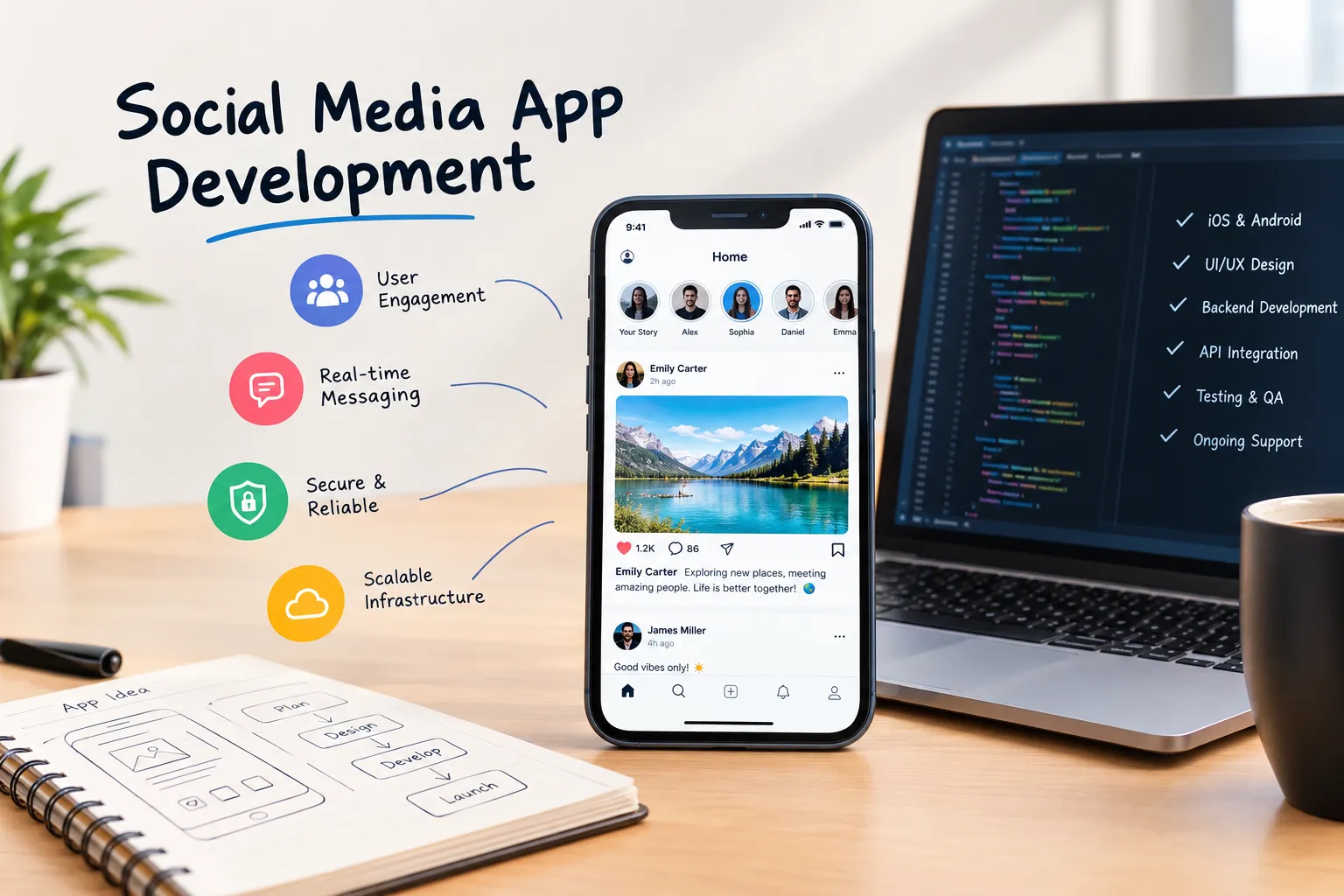
Building a social media app is more than creating user profiles, adding a news feed, and allowing people to share posts. Successful platforms need a strong technical foundation, engaging user experiences, reliable infrastructure, privacy controls, and features that encourage users to return regularly. Choosing the right development partner can therefore have a major impact on the success of your product.
Whether you are planning a community platform, professional networking app, creator-focused platform, or a new social networking concept, finding the best social media app development company requires careful evaluation. The right partner should understand your business idea, target audience, technical requirements, and long-term growth plans.
This guide explains the key factors to consider before selecting a development company for your social media app.
1. Experience in Social Media App Development
The first thing to evaluate is the company's experience in developing social networking applications. Social media platforms have different requirements compared with standard business apps. They often need real-time interactions, content sharing, messaging, notifications, media processing, user-generated content, and scalable backend infrastructure.
Ask potential development companies about their previous social media or community-based projects. Look at the types of applications they have built and determine whether their experience matches your requirements.
A company with relevant experience can better understand common challenges such as content moderation, user engagement, privacy, performance, and scalability.
2. Strong UI/UX Design Capabilities
User experience plays a significant role in the success of a social media platform. Users should be able to create profiles, discover content, interact with other users, send messages, and navigate between features without confusion.
When evaluating a development partner, review its UI/UX portfolio and pay attention to:
- Navigation and information architecture
- User onboarding
- Feed design
- Profile layouts
- Content creation flows
- Messaging interfaces
- Search and discovery
- Accessibility
- Mobile responsiveness
The best social media app development company should not simply create an attractive interface. It should design experiences that make important actions easy and encourage users to spend more time on the platform.
3. Understanding of Your Target Audience
A technically strong development team may still fail if it does not understand the people who will use your application.
Before development begins, your partner should ask questions about your target audience. Are you building the platform for creators, students, professionals, businesses, local communities, gamers, or a specific interest group?
Audience research can influence everything from onboarding and content discovery to notification strategies and monetization.
A good development company should help translate your audience research into practical product features rather than simply following a predefined development checklist.
4. Technical Expertise and Technology Stack
Social media applications often require a combination of technologies. Depending on the product, your development team may need expertise in mobile development, backend development, databases, cloud infrastructure, APIs, real-time communication, artificial intelligence, and media processing.
Important areas to evaluate include:
- iOS and Android development
- Cross-platform development
- Backend architecture
- Cloud infrastructure
- Database management
- API development
- Real-time messaging
- Push notifications
- Video and image processing
- Security and authentication
- Analytics integration
The technology stack should be selected according to your product requirements rather than simply following the latest technology trend.
5. Scalability and Performance
A social media application can potentially grow from hundreds of users to millions. Your application architecture therefore needs to support increasing traffic, content, interactions, and data without major performance problems.
Ask the development company how it approaches scalability. Discuss server architecture, database optimization, caching, cloud infrastructure, media storage, load management, and performance monitoring.
This is especially important if your long-term goal is to build a large social platform. A development partner should consider future growth during the initial architecture stage instead of trying to solve scalability problems after the application becomes popular.
6. Security and Privacy
Social media platforms handle large amounts of user information, including profiles, messages, photos, videos, location information, and account credentials. Security should therefore be treated as a core product requirement.
Before hiring a development company, ask about its approach to:
- Secure authentication
- Data encryption
- Access control
- Secure APIs
- Privacy settings
- Account recovery
- Data protection
- Vulnerability testing
- Secure cloud infrastructure
The development team should also understand the privacy and regulatory requirements relevant to your target markets.
7. Experience With Real-Time Features
Many modern social platforms depend on real-time functionality. Users expect messages, notifications, comments, reactions, activity updates, and other interactions to happen quickly.
If your application includes features such as real-time chat, live streaming, group discussions, or instant notifications, confirm that the development company has experience implementing these technologies.
Ask how real-time communication will be handled and how the system will maintain performance as the number of simultaneous users increases.
8. AI and Advanced Social Media Features
Artificial intelligence is becoming increasingly useful in social media applications. Depending on your concept, AI can support content recommendations, search, moderation, personalization, spam detection, automated support, and content analysis.
For example, AI can help personalize a user's feed based on interests and previous interactions. It can also help identify potentially harmful or inappropriate content.
However, AI should solve a genuine product problem rather than being added simply because it is a current trend. A capable development partner should help identify where AI can create measurable value.
9. Testing and Quality Assurance
Social media applications contain many interconnected features, which means even a small technical issue can affect the user experience.
Ask about the company's quality assurance process and whether testing covers:
- Functional testing
- UI testing
- Performance testing
- Security testing
- API testing
- Device compatibility
- Regression testing
- Usability testing
The company should have a clear process for identifying, documenting, fixing, and retesting bugs before launch.
10. Post-Launch Support and Maintenance
Launching the application is only the beginning. Social platforms require continuous updates based on user feedback, analytics, operating system changes, security requirements, and new market trends.
Before signing an agreement, understand what happens after launch. Ask whether the company provides:
- Bug fixes
- Performance monitoring
- Security updates
- Feature improvements
- OS compatibility updates
- Technical support
- Server maintenance
A long-term development partner can help your application evolve instead of treating the initial launch as the final stage of the project.
11. Transparent Pricing and Development Process
Cost is naturally an important consideration, but choosing a company based only on the lowest quote can create problems later. A cheaper initial estimate may exclude important features, testing, maintenance, or infrastructure costs.
Request a clear breakdown of the expected development costs and timeline. Understand what is included and whether additional features will affect the budget.
A reliable company should also explain its development methodology, communication process, milestones, deliverables, and payment structure.
12. Portfolio, Reviews, and Client Experience
Finally, research the company's reputation before making a decision. Review its portfolio, client feedback, case studies, and previous projects.
Look beyond general testimonials and try to understand the actual results delivered by the development partner. If possible, ask for examples of applications with similar functionality or technical requirements.
For example, Developer Bazaar Technologies works across mobile application development and emerging technologies, making it important for potential clients to evaluate its portfolio and capabilities against their specific social media product requirements.
Final Thoughts
Choosing the right development partner can significantly influence the quality, scalability, security, and long-term growth of your social media application. Instead of focusing only on price or a company's marketing claims, evaluate its technical expertise, relevant experience, design capabilities, security practices, scalability approach, testing process, and post-launch support.
The best social media app development company should act as a technology partner rather than simply a team that writes code. It should understand your users, challenge weak ideas when necessary, recommend practical solutions, and build an architecture that can evolve with your business.
If you are researching the Ultimate Guide to Develop a Social Media App, start by clearly defining your target audience, core features, business model, technology requirements, and growth objectives. Once these fundamentals are established, you can compare development companies based on their ability to turn your concept into a reliable and engaging social platform.
Ultimately, the right partner is one that combines product thinking, technical expertise, user-focused design, and long-term support to help your social media app move from an idea to a scalable digital product.




Sign in to leave a comment.