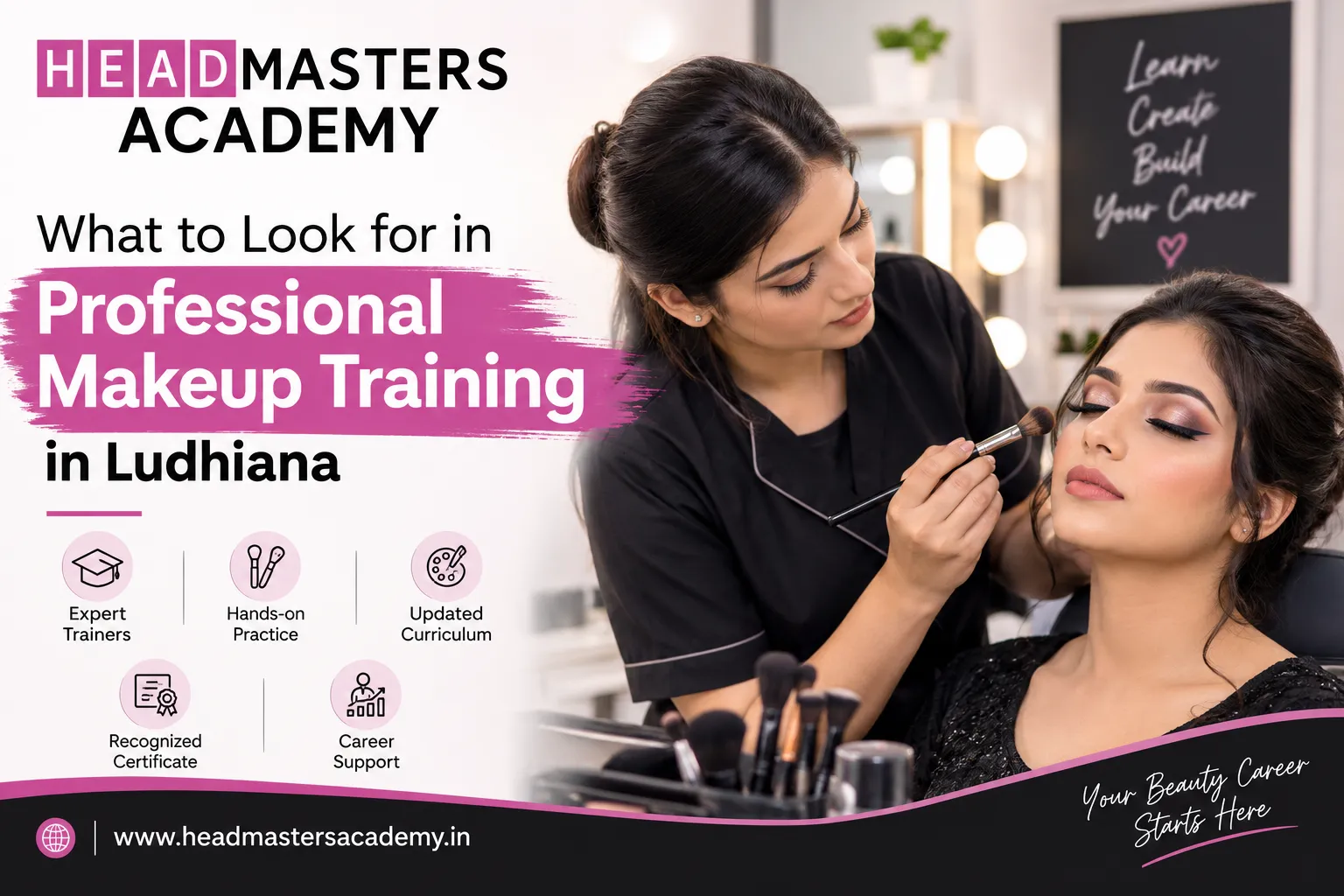

The beauty industry continues to create opportunities for people with strong technical skills, creativity, and the ability to understand client requirements. For aspiring makeup artists, choosing the right training program is an important first step toward developing these skills. A well-structured course should go beyond demonstrations and introduce students to practical techniques, product knowledge, client handling, hygiene, and different makeup styles.
If you are searching for professional makeup training in Ludhiana, it is useful to understand what separates a comprehensive program from a basic makeup class. The right training can help beginners build a strong foundation while allowing existing beauty professionals to improve their techniques and expand their services.
Key Takeaways
- Choose training that provides substantial hands-on practice, not only theory or demonstrations.
- Check whether the curriculum covers multiple makeup styles and professional techniques.
- Look for experienced trainers who can provide personalised feedback.
- Product knowledge, colour theory, skin preparation, and hygiene are essential professional skills.
- Portfolio development can help demonstrate your abilities to prospective clients or employers.
- Consider certification and career guidance when comparing courses.
- Select a course according to your intended career path, whether bridal makeup, freelancing, salon work, fashion, or broader beauty services.
Why Professional Makeup Training Matters
Makeup artistry combines creativity with technical knowledge. Simply knowing how to apply foundation, eyeshadow, or lipstick is not enough to work confidently with different clients. A professional course should help students understand skin preparation, colour selection, facial features, blending, product compatibility, and professional application techniques.
A structured makeup artist course can also introduce students to different looks, including party, engagement, bridal, reception, editorial, glamour, and other occasion-based makeup. For students planning to work independently, learning how to communicate with clients and create a professional portfolio can be equally important.
Key Things to Look for in Makeup Training
1. A Practical, Hands-On Curriculum
One of the most important factors is practical training. Makeup is a skill-based profession, so students need opportunities to practise techniques rather than only watching demonstrations.
Look for programs that include practical sessions covering areas such as:
- Skin preparation
- Foundation and concealer application
- Colour correction
- Contouring and highlighting
- Eye makeup
- Bridal makeup
- Party and engagement looks
- HD and advanced makeup techniques
- Product selection
- Hygiene and tool handling
For example, the makeup curriculum at Headmasters Academy includes skin tone and complexion, foundation and concealer, smoky makeup, bridal makeup, contouring, highlighting, colour understanding, and other professional techniques.
2. Experienced Trainers
The trainer can have a major influence on how effectively students develop their skills. Look for instructors who understand current professional techniques and can demonstrate how makeup is adapted to different faces, skin types, occasions, and client expectations.
A good trainer should also provide individual feedback instead of simply demonstrating a technique and moving on to the next topic.
3. Coverage of Different Makeup Styles
Makeup professionals may eventually work with different types of clients. Therefore, training should not focus exclusively on one style.
A comprehensive course can introduce students to bridal, party, engagement, reception, glamour, editorial, and other looks. Headmasters Academy's professional makeup curriculum, for instance, includes bridal makeup, reception looks, pre-wedding shoots, smoky makeup, glitter and pigment application, contouring, and highlighting.
4. Product and Tool Knowledge
Professional makeup requires more than application skills. Students should understand why different products are used and how to select them appropriately.
Training should ideally cover:
- Foundation types
- Concealers
- Colour theory
- Skin preparation products
- Brushes and tools
- Pigments and glitter
- Setting products
- Professional hygiene
- Product compatibility
This knowledge helps aspiring artists make informed decisions rather than relying on a single set of products for every client.
5. Portfolio Development
A portfolio can be an important part of establishing yourself as a makeup artist. When evaluating a makeup academy in Ludhiana, check whether students get opportunities to practise different looks and document their work.
A diverse portfolio can demonstrate your ability to work with different styles and client requirements. It can also be useful when approaching salons, studios, photographers, bridal clients, or potential freelance customers.
6. Certification and Career Preparation
Certification can provide formal recognition of completed training, although practical ability and portfolio quality remain important when building a career.
Students should also look for training that discusses professional conduct, client consultation, salon practices, and career development. Some advanced makeup programs may also cover branding, marketing, salon management, or portfolio development.
Headmasters Academy states that its makeup programs include hands-on sessions, portfolio development, and placement support, while its broader professional programs cover makeup, hair, skin, nail, and spa-related skills.
Choosing the Right Makeup Course for Your Career Goal
Your ideal training program can depend on your existing experience and career plans. A beginner may need a course that starts with fundamental makeup techniques, while someone already working in the beauty industry may prefer advanced or international makeup training.
If your goal is to work primarily as a bridal makeup artist, look for substantial bridal and occasion makeup practice. If you want to work in fashion or editorial environments, look for programs that expose you to creative and advanced looks. Those interested in salon employment may benefit from broader professional beauty courses that combine makeup with other beauty skills.
For students specifically searching for a makeup artist course in Ludhiana, comparing the curriculum, practical sessions, trainer experience, certification, course structure, and career support can help narrow down the available options.
Conclusion
Choosing the right makeup training program is an investment in your skills and future career. Instead of selecting a course based only on its title or duration, consider the practical curriculum, trainer expertise, variety of techniques, product knowledge, portfolio opportunities, certification, and career support.
For aspiring makeup artists in Punjab, Headmasters Academy offers structured makeup education in Ludhiana, with training covering foundational and advanced techniques, practical sessions, bridal and occasion looks, and professional development. Its wider range of beauty programs also allows students to explore related areas such as hair, skin, nails, and professional cosmetology.
If your goal is to build professional skills and develop a career in makeup artistry, researching the curriculum carefully and choosing training that balances knowledge, practice, and industry-oriented skills can provide a strong foundation for your next step.
Frequently Asked Questions
1. What should I look for in professional makeup training?
Look for a program that combines theory with hands-on practice, experienced trainers, multiple makeup styles, product knowledge, hygiene, portfolio development, and career-oriented guidance.
2.How do I choose a makeup artist course in Ludhiana?
Compare the curriculum, practical training, course duration, trainer experience, certification, facilities, and career support. You should also consider whether the course matches your specific career goals.
3.Is practical training important for becoming a makeup artist?
Yes. Makeup application is a practical skill, and repeated practice helps students improve technique, precision, speed, blending, and confidence.
4.What can I learn during professional makeup training?
Depending on the program, students may learn skin preparation, colour theory, foundation and concealer application, contouring, highlighting, eye makeup, bridal looks, party makeup, HD techniques, product knowledge, and professional client handling.
5.Can beginners join a professional makeup course?
Yes. Many programs offer beginner-level training before progressing to more advanced techniques. Headmasters Academy's makeup offerings include different levels, from foundational makeup training through professional and international makeup programs.

















Sign in to leave a comment.