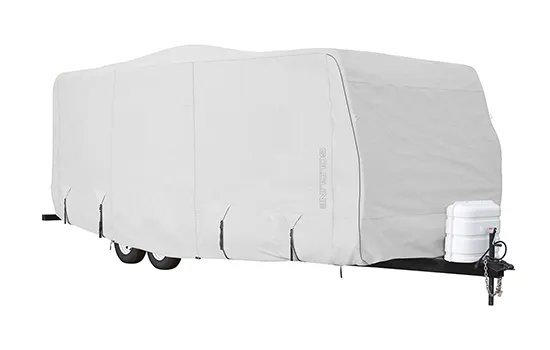

An RV may spend weeks quietly in a driveway, campground, or storage lot between adventures. But that doesn't mean it is completely out of the elements. A cover can serve as a simple barrier between the vehicle and everything that accumulates on it while it sits unused.
The challenge is finding one that actually suits your RV rather than choosing the first option that looks right. From sizing and fabric to fastening systems and warranty coverage, several details deserve attention before you buy.
This guide will provide detailed information on a few things that will help you with RV camper covers while shopping online.

Choose the Right Cover Size
It is crucial to consider the size of the cover before you purchase one. The size must be large enough to cover the whole vehicle, yet not so big as to become loose. To ensure that you buy the right size, you should measure your RV using manufacturer instructions, taking into consideration various features like mirrors, AC units, and ladders.
Taking accurate measurements is especially important when shopping for RV camper covers, as an oversized or undersized cover may not provide the protection you expect.
Consider the Cover Material
The material used in the construction of a cover leaves a lasting impact on its longevity, safety, and maneuverability. Choose cover materials that are able to resist the effects of outdoor elements such as UV rays and moisture. Another advantage of breathable materials is that they allow moisture to be vented out, hence reducing the likelihood of condensation. The choice of material should depend on the storage requirements of your RV.
Look for Weather Protection
Different environments can expose an RV to different challenges. Extreme exposure to the sun will lead to fading and deterioration of its surfaces, while rain and snow will lead to moisture issues.
In addition, dust, dirt, tree sap, and debris falling from trees are other external factors that can threaten the appearance of the RV. During comparison, ensure that you assess the UV protection, water, and debris resistance properties of the cover.
Check the Fit and Fastening Features
A good cover should stay in place rather than constantly shifting or flapping in the wind. Features such as adjustable straps, buckles, elasticized edges, and reinforced attachment points can help create a secure fit.
Pay attention to how the fastening system works and whether it can be adjusted to suit your RV. A properly secured cover can reduce movement and help minimize unnecessary wear on both the cover and vehicle.
Evaluate Ease of Installation and Storage
Handling large RV covers may become difficult. That’s why you should think about easy installation. Some of the characteristics that make the cover easy to install should be given preference, especially if you want to use the cover on a regular basis.
Ease of handling the cover when it is not in use is another point to consider. Having a cover storage bag is helpful because it makes it easy to fold and store the cover. The weight of the cover is also an important factor.

Look for Access and Convenience Features
Some covers include zippered panels or access doors. This allows owners to reach certain areas of the RV without completely removing the cover. These features can be useful when you need to inspect the vehicle.
Even accessing storage compartments or performing minor maintenance during storage. Convenience features may not be essential for every RV owner, but they can make regular use considerably easier.
Compare Durability and Construction
The construction of a cover is as important as the fabric. Inspect the stitching, seams, straps, and fastening points. Some reinforced parts may be used to ensure extra protection where there is a higher likelihood of damage. In case you have to keep your RV outside for long periods of time, you should choose a cover that is made to endure long-term use. A durable cover may also reduce the need for frequent replacement.
Compare Prices Without Sacrificing Quality
Price plays an integral role in the buying process, but the least expensive option may not always provide the features you need. When comparing trailer covers for sale, pay attention to such factors as material used, size, protection from weather, fastening device, warranty, and lifetime in addition to price. Sometimes the increased initial price will be justified by a better quality of the product.
Check Warranty and Manufacturer Support
Before buying a cover, it is important to read the warranty and returns policy offered by the manufacturer. This will offer protection in case the cover is defective or doesn’t work the way you expect it to work. Consider also the manufacturer’s availability of any helpful information regarding sizing, installation, etc.
Conclusion
The right RV cover isn't necessarily the thickest, cheapest, or most feature-packed option. It should simply be the right fit for your RV, the right fit for where your RV will be stored, and the cover that will provide the necessary level of protection and convenience. With all these factors in mind, you should be able to make a more informed decision about your RV camper covers.























Sign in to leave a comment.