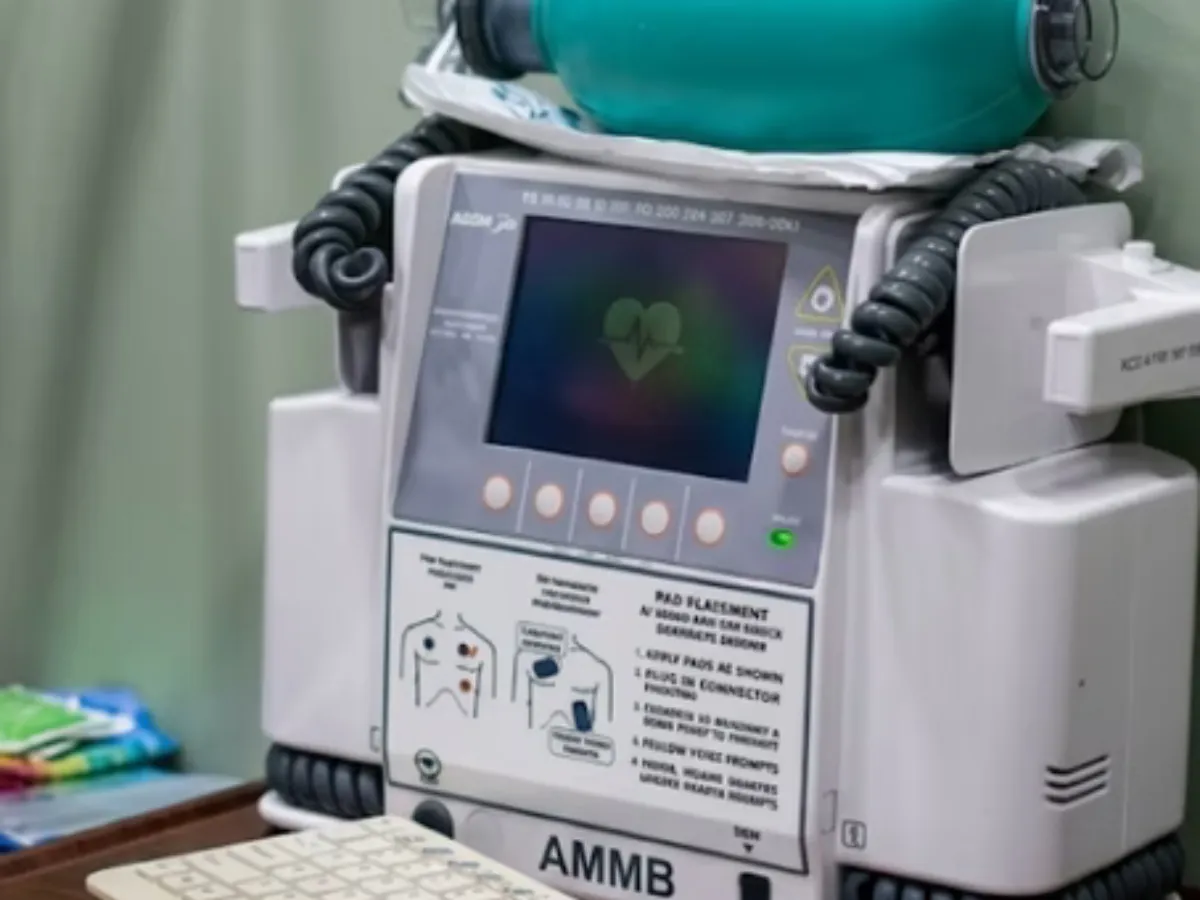

When people hear the term defibrillator, one of the most common questions they ask is, "What voltage does a defibrillator use?" The answer is not as straightforward as a single number because modern Automated External Defibrillators (AEDs) are designed to deliver a controlled amount of energy rather than a fixed voltage. Depending on the patient's body resistance (impedance), the voltage can vary significantly while still delivering the required life-saving shock.
At Eosullivan Training Solutions, we believe that understanding how a defibrillator works is just as important as knowing how to use one. Whether you're a workplace first aider, healthcare professional, or someone interested in emergency response, understanding defibrillator voltage can help you appreciate the technology that saves thousands of lives every year.
What Is a Defibrillator?
A defibrillator is a medical device designed to restore a normal heart rhythm in someone experiencing sudden cardiac arrest (SCA). During cardiac arrest, the heart's electrical system becomes chaotic, preventing it from pumping blood effectively.
An AED analyzes the heart rhythm and determines whether a shock is required. If a shockable rhythm such as ventricular fibrillation (VF) or pulseless ventricular tachycardia (VT) is detected, the device delivers an electrical shock to reset the heart's electrical activity.
What Voltage Does a Defibrillator Use?
A modern AED can generate between approximately 1,000 and 5,000 volts, depending on several factors, including:
- The patient's chest impedance
- The type of defibrillator
- The selected energy level
- The waveform technology used
Although these voltage figures sound extremely high, they are delivered for only a fraction of a second under carefully controlled conditions. The purpose is to safely pass sufficient electrical current through the heart to interrupt abnormal electrical activity.
Rather than focusing on voltage alone, modern defibrillators are programmed to deliver a specific amount of energy, measured in Joules (J).
Why Don't AEDs Use a Fixed Voltage?
Many people assume a defibrillator always uses the same voltage, but that's not how modern devices work.
Human bodies have different electrical resistance, known as impedance. Factors affecting impedance include:
- Body size
- Chest hair
- Skin moisture
- Pad placement
- Age
- Muscle mass
If a patient has higher impedance, the AED automatically increases the voltage to ensure the correct current reaches the heart. If impedance is lower, less voltage is required.
This intelligent adjustment allows AEDs to safely deliver effective treatment across a wide range of patients.
Energy vs Voltage: What's the Difference?
One of the biggest misconceptions is confusing voltage with energy.
Voltage refers to the electrical pressure pushing current through the body.
Energy (measured in Joules) represents the total electrical energy delivered during the shock.
Most AEDs are programmed to deliver:
- 120 Joules
- 150 Joules
- 200 Joules
- Up to 360 Joules in certain professional defibrillators
The AED automatically adjusts the voltage required to deliver that preset energy level safely.
Biphasic vs Monophasic Defibrillators
Modern AEDs almost always use biphasic technology, which is far more effective than the older monophasic design.
Biphasic Defibrillators
These send electrical current in one direction and then reverse it during the same shock.
Advantages include:
- Lower voltage requirements
- Lower energy settings
- Less damage to heart tissue
- Higher success rates
- Improved patient outcomes
Typical energy settings:
- 120–200 Joules
Monophasic Defibrillators
Older devices sent current in only one direction.
They typically required:
- Up to 360 Joules
- Higher voltages
- Greater electrical exposure
Today, biphasic AEDs have become the global standard due to their improved efficiency and safety.
How Does an AED Decide the Correct Shock?
Modern AEDs contain advanced software capable of:
- Detecting heart rhythm
- Measuring patient impedance
- Calculating appropriate voltage
- Charging to the correct energy level
- Delivering the shock automatically or after user confirmation
The entire process typically takes only a few seconds.
Is High Voltage Dangerous?
The voltage produced by a defibrillator is intentionally high because it must briefly overcome the body's natural electrical resistance.
However, AEDs are designed with multiple safety systems that ensure:
- Shocks are only delivered when necessary.
- The device will not shock a normal heart rhythm.
- Voice prompts guide the rescuer step by step.
- Built-in diagnostics verify proper operation.
- Safety sensors prevent accidental shock delivery.
For rescuers, following instructions such as standing clear during shock delivery minimizes any risk.
Why Does a Defibrillator Need Such High Voltage?
The heart is protected by:
- Skin
- Fat
- Muscle
- Rib cage
- Lung tissue
These tissues resist electrical flow.
To ensure enough current reaches the heart muscle, the AED briefly generates high voltage. Although the voltage is high, the duration is extremely short, making the treatment safe and effective when used correctly.
Can a Defibrillator Harm Someone?
Modern AEDs are remarkably safe.
The device will only recommend a shock when it detects a shockable rhythm. If no shock is required, it instructs the rescuer to continue CPR.
This makes AEDs suitable for use by trained first aiders and even members of the public with minimal instruction.
Importance of Proper AED Training
While AEDs are designed to be user-friendly, proper training increases confidence and improves emergency response.
Training helps participants learn:
- How sudden cardiac arrest differs from a heart attack
- Correct AED pad placement
- Safe shock delivery
- Effective CPR techniques
- Team coordination during emergencies
- Post-resuscitation care until emergency services arrive
Hands-on practice ensures users can respond quickly and effectively under pressure.
Why Choose Eosullivan Training Solutions?
At Eosullivan Training Solutions, we provide comprehensive CPR and AED training designed for workplaces, schools, sports clubs, community groups, and healthcare settings across Ireland.
Our experienced instructors combine practical demonstrations with real-life emergency scenarios, ensuring participants gain the confidence to use a defibrillator correctly when every second counts. We focus on nationally recognised training standards while making learning engaging, practical, and easy to understand.
Whether you're purchasing an AED, updating workplace safety procedures, or looking to improve your emergency preparedness, our training equips you with the knowledge and skills needed to respond effectively to sudden cardiac arrest.
Final Thoughts
So, what voltage does a defibrillator use? Modern defibrillators typically generate between 1,000 and 5,000 volts, depending on the patient's impedance and the energy required. However, the device's primary goal is not to deliver a specific voltage but to provide the correct amount of energy—usually between 120 and 200 Joules for modern biphasic AEDs—to restore a normal heart rhythm safely and effectively.
Understanding how voltage, energy, and advanced AED technology work together helps demystify these life-saving devices. With the right equipment and proper training from Eosullivan Training Solutions, individuals and organisations can be prepared to act confidently during a cardiac emergency, potentially saving a life when every second matters.


























Sign in to leave a comment.