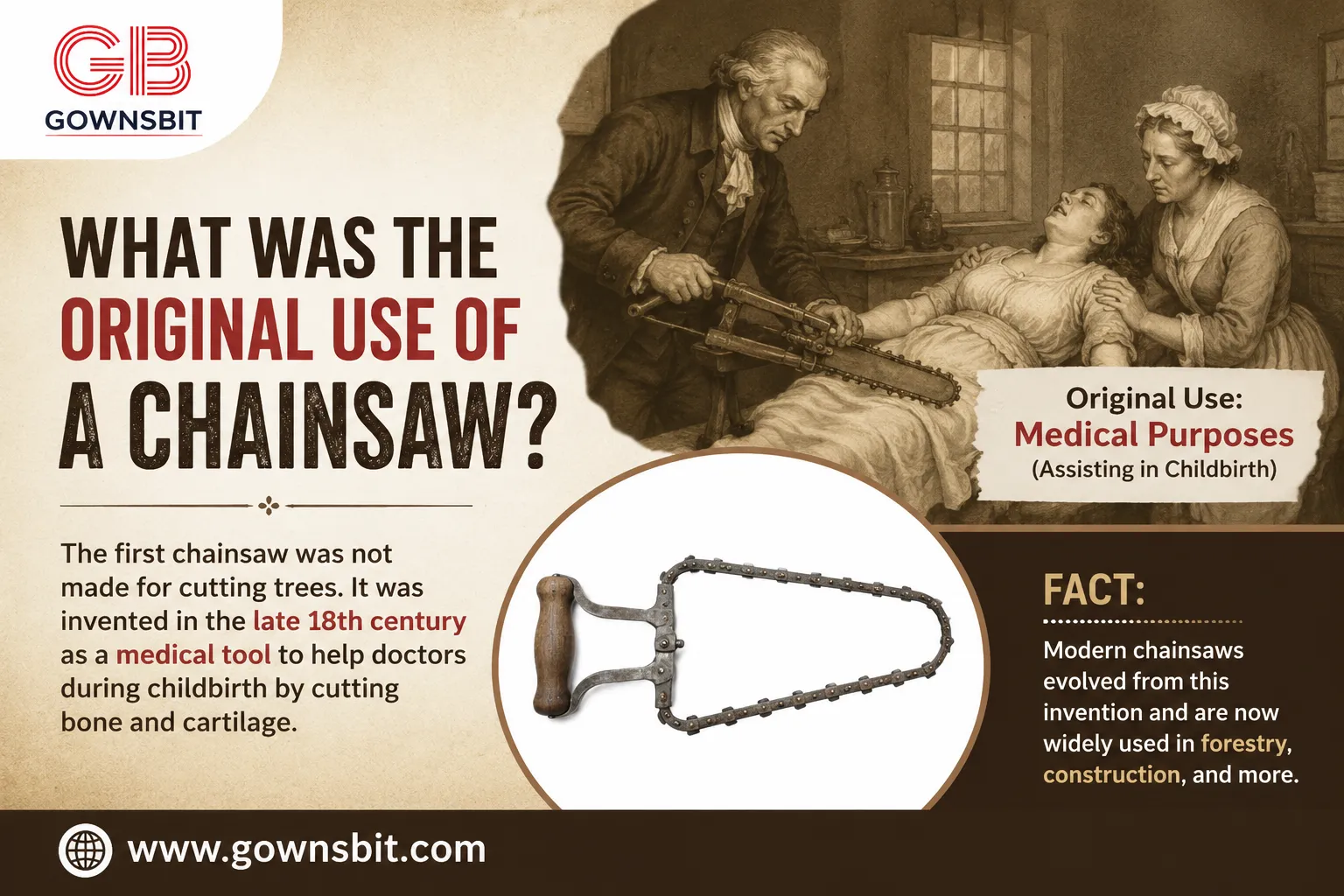

Most people associate chainsaws with cutting trees, preparing firewood, or handling construction projects. However, the history of this powerful machine is far more surprising than many realize. If you've ever wondered what was the original use of a chainsaw, the answer has little to do with forestry. The earliest chainsaws were actually designed for medical procedures long before they became common in logging and woodworking. Exploring this fascinating evolution reveals how innovation can transform a specialized invention into an everyday tool used across multiple industries worldwide.
The Invention of the First Chainsaw
The first chainsaw was developed during the late 18th century by two Scottish doctors, John Aitken and James Jeffray. Their invention was not powered by electricity or gasoline as modern chainsaws are today. Instead, it was a small handheld surgical instrument featuring a chain with tiny cutting teeth that rotated around a guide.
The purpose of this device was to make certain medical procedures faster and more precise compared to traditional surgical tools available at the time.
Although primitive by today's standards, this invention represented an important advancement in surgical technology.
The Original Medical Purpose
The answer to what was the original use of a chainsaw lies in a medical procedure known as a symphysiotomy.
A symphysiotomy involved cutting the cartilage and ligaments of the pubic symphysis to widen the pelvis during difficult childbirth. Before the development of modern cesarean sections and advanced anesthesia, this procedure could help deliver babies when complications arose.
Traditional methods required manual cutting with knives and saws, which were slower and more painful. The newly invented chain saw made the procedure more efficient by allowing surgeons to cut through bone and cartilage with improved control.
While the operation sounds unsettling by modern standards, it reflected the medical knowledge and available technology of that era.
Why This Surgical Tool Was Needed
Limited Medical Technology
During the 18th and early 19th centuries, doctors lacked many of today's surgical innovations. Antibiotics, advanced anesthesia, and modern obstetric techniques did not yet exist.
Medical professionals constantly searched for instruments that could reduce procedure time and improve surgical precision.
Improving Difficult Childbirth
Complicated childbirth posed significant risks to both mother and child. When labor became obstructed, options were extremely limited.
The surgical chainsaw offered physicians a faster method for performing symphysiotomy compared to existing hand-operated cutting instruments.
Although uncomfortable to imagine today, the device represented an important attempt to improve patient outcomes within the limitations of historical medicine.
How the Chainsaw Evolved
Over time, engineers realized that the chain-and-tooth cutting mechanism had applications beyond medicine.
During the 19th century, inventors began adapting the design for woodworking and timber cutting.
Larger versions capable of cutting logs emerged, although these early machines were still manually operated by two people.
As industrial technology advanced, steam-powered and later gasoline-powered versions dramatically increased efficiency.
This transformation marked the beginning of the chainsaw's journey from operating rooms to forests.
The Arrival of Modern Chainsaws
Gasoline-Powered Models
By the early 20th century, gasoline engines revolutionized logging equipment.
Powerful motorized chainsaws allowed workers to cut trees much faster than traditional axes and hand saws.
Although early models were heavy and often required two operators, they significantly improved productivity.
Portable Designs
Technological improvements eventually produced lighter, one-person chainsaws suitable for both professionals and homeowners.
Today's electric, battery-powered, and gas-powered chainsaws are safer, more efficient, and easier to use than ever before.
Modern Uses of Chainsaws
Modern chainsaws serve numerous industries beyond logging.
Forestry
Professional loggers rely on chainsaws for harvesting timber efficiently.
Tree Maintenance
Arborists use specialized chainsaws for pruning branches, removing damaged trees, and maintaining landscapes.
Construction
Builders use chainsaws to cut heavy timber and prepare wooden structures for various projects.
Emergency Rescue
Specialized rescue chainsaws help emergency responders clear fallen trees after storms and access blocked roads.
Artistic Wood Carving
Many talented artists use chainsaws to create intricate wooden sculptures displayed in parks, exhibitions, and competitions.
The transformation from surgical instrument to versatile power tool highlights the remarkable adaptability of engineering innovation.
Common Misconceptions About Chainsaw History
The unusual origin of the chainsaw has led to many myths circulating online.
Myth 1: It Was Invented for Logging
This is false. Logging applications came much later after the original medical invention.
Myth 2: The First Chainsaws Looked Like Modern Ones
Early surgical chainsaws were small handheld devices, completely different from today's powerful motorized machines.
Myth 3: Medical Chainsaws Used Engines
The earliest versions were entirely hand-operated and contained no engine or electric motor.
Understanding these historical facts provides a more accurate perspective on the invention's fascinating evolution.
Why This History Still Fascinates People
The unexpected medical origin of the chainsaw continues to attract attention because it contrasts sharply with its modern image.
Many people are surprised that a tool commonly associated with forests and construction actually began in operating rooms.
This historical transformation demonstrates how inventions often evolve far beyond their original purpose. Throughout history, numerous technologies have been adapted for entirely different industries as engineering capabilities expanded.
Learning what was the original use of a chainsaw offers valuable insight into the creative ways innovations develop over time.
Lessons From the Chainsaw's Evolution
The story of the chainsaw illustrates several important lessons about technological progress.
First, inventions are often created to solve very specific problems before finding broader applications.
Second, continuous improvement can completely redefine how a tool is used across generations.
Finally, understanding historical context helps us appreciate how far medicine, engineering, and industrial safety have advanced over the past two centuries.
The chainsaw stands as an excellent example of how practical innovation can reshape industries while leaving behind an unexpected and fascinating origin story.
Conclusion
The remarkable journey of the chainsaw is one of history's most surprising examples of technological evolution. If you've ever asked what was the original use of a chainsaw, the answer begins not in forests but in surgical procedures designed to assist difficult childbirth. Over time, advances in engineering transformed this specialized medical instrument into one of the world's most effective cutting tools. Today, chainsaws are indispensable in forestry, construction, landscaping, and rescue operations, proving how innovative ideas can evolve far beyond their original purpose.
FAQs
What was the original use of a chainsaw?
The original use of a chainsaw was for medical procedures, specifically to assist in difficult childbirth by performing a surgery called a symphysiotomy. It was invented in the late 18th century by Scottish doctors.
Who invented the first chainsaw?
The first chainsaw was developed by Scottish surgeons John Aitken and James Jeffray. Their design featured a small hand-operated chain with cutting teeth for surgical use.
When did chainsaws start being used for cutting trees?
Chainsaws began being adapted for forestry and timber cutting during the 19th century. By the early 20th century, gasoline-powered models became widely used in the logging industry.
Were the first chainsaws powered by engines?
No. The earliest chainsaws were completely hand-operated and much smaller than modern versions. Engine-powered chainsaws were developed many years later.
Why is the history of the chainsaw considered surprising?
The history is surprising because most people associate chainsaws with logging and woodworking, while their original purpose was medical. Their evolution from a surgical instrument to a powerful forestry tool is one of the most fascinating stories in the history of inventions.
























Sign in to leave a comment.