What Will Define the Next Chapter of Japan’s Security Analytics Market?

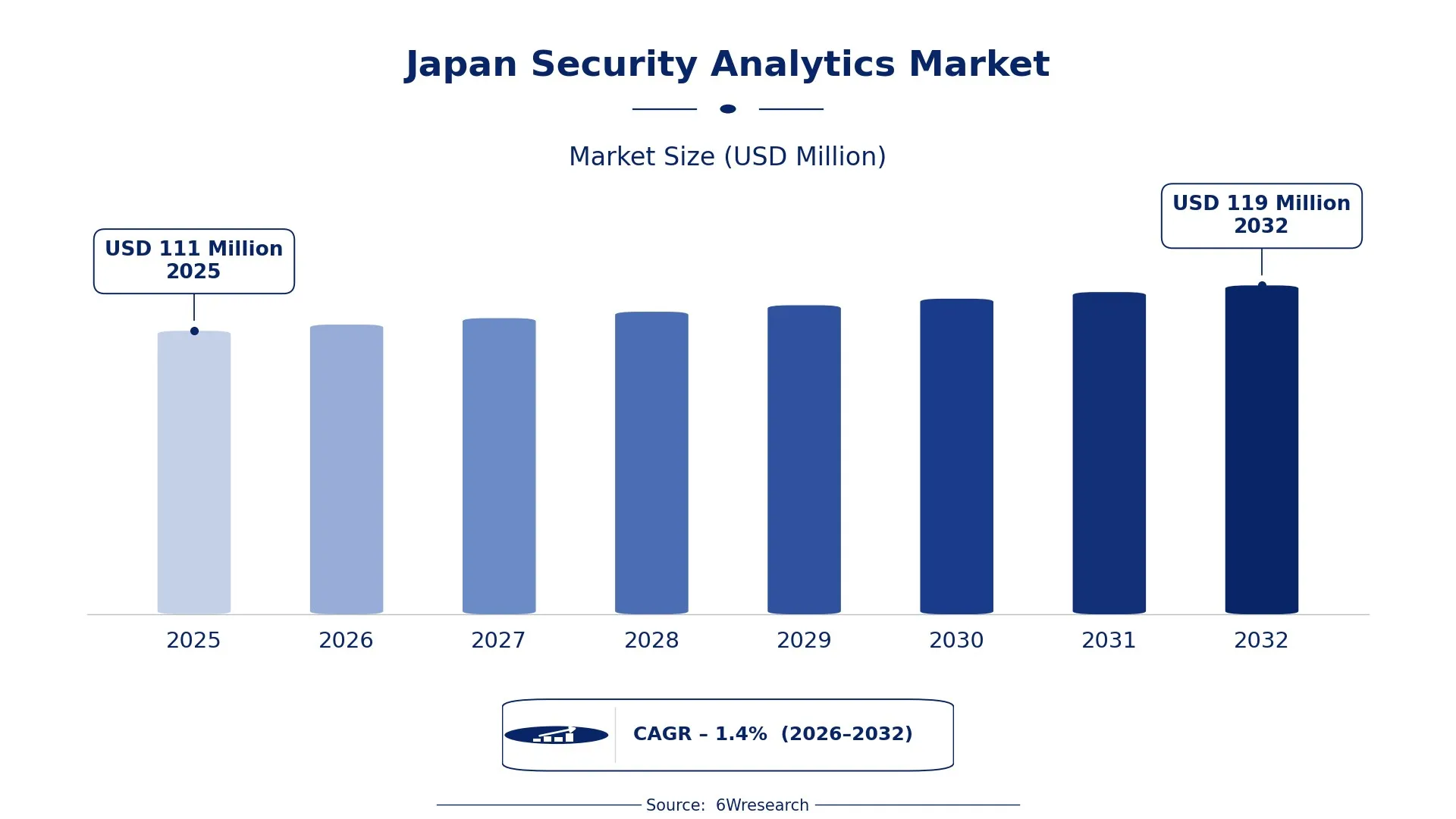
The Japan Security Analytics Market is gaining importance as organizations seek more effective ways to protect digital infrastructure, manage cyber risks, and maintain business continuity. As enterprises adopt cloud computing, connected devices, digital payments, and remote working technologies, the volume of security-related data continues to expand. Security analytics helps organizations interpret this information, identify unusual activity, and investigate potential threats before they cause significant disruption. By combining monitoring technologies with advanced analytical capabilities, Japanese businesses can build more informed and responsive cybersecurity strategies.
Why Is Data-Driven Risk Management Becoming Important?
Traditional cybersecurity approaches often depend on predefined rules and individual security tools. Although these methods remain valuable, they may struggle to identify complex attacks that develop gradually across multiple systems. Security analytics provides a broader view by examining information from networks, endpoints, applications, user accounts, and cloud environments.
This approach can help organizations recognize patterns that would otherwise remain hidden. For example, repeated login failures followed by unusual account access and unexpected data transfers may indicate compromised credentials. An analytics platform can correlate these events and help security professionals investigate the situation more efficiently.
Businesses can use security analytics to:
- Identify emerging risks: Detect unusual activity and investigate suspicious behavior across digital environments.
- Prioritize security incidents: Distinguish potentially serious threats from routine system alerts.
- Improve resource allocation: Direct cybersecurity teams toward vulnerabilities and incidents requiring immediate attention.
- Strengthen operational continuity: Reduce the time needed to investigate and respond to security problems.
- Support strategic planning: Use historical incident data to identify recurring weaknesses and improve security investments.
These capabilities make analytics an important component of modern enterprise risk management.
How Are Japanese Enterprises Managing Complex Threat Environments?
Japan's business environment includes major manufacturers, financial institutions, technology companies, retailers, and service providers. Each sector faces different security challenges, making flexible analytics capabilities particularly valuable.
Manufacturing and industrial operations: Manufacturers increasingly connect production equipment with enterprise networks and digital supply chains. Security analytics can help identify suspicious connections, unexpected communication between systems, and unusual access to operational technology environments.
Financial services: Banks, insurers, and payment providers handle sensitive financial information and support high-volume digital transactions. Analytics can help detect abnormal account activity, investigate potential intrusions, and improve visibility across critical applications.
Retail and digital commerce: Online platforms manage customer profiles, payment information, and transaction histories. Monitoring these environments can help identify suspicious logins, unusual purchasing behavior, and potential attempts to misuse customer accounts.
Telecommunications: Network operators must monitor extensive infrastructure and large volumes of traffic. Analytics can help reveal irregular network behavior and support investigations into possible service disruptions or cyberattacks.
Healthcare and professional services: Organizations handling confidential records can use security monitoring to identify unauthorized access and investigate possible data exposure.
Industry-specific implementation allows organizations to align security analytics with their most important assets and operational priorities.
Can Artificial Intelligence Improve Threat Investigation?
Artificial intelligence and machine learning are becoming important capabilities in advanced security analytics. These technologies can examine large volumes of activity, establish behavioral baselines, and identify deviations that may indicate suspicious behavior.
For example, analytics software may flag an employee account that suddenly accesses unfamiliar systems or downloads significantly more information than usual. When combined with endpoint and network data, this signal can help investigators determine whether the activity is legitimate or potentially malicious.
AI can also support alert correlation, automated investigation workflows, and risk-based prioritization. These functions may reduce repetitive work and allow cybersecurity specialists to focus on complex incidents.
However, organizations should not treat every automated alert as proof of an attack. Models can generate false positives, overlook unfamiliar threats, or produce misleading results when data is incomplete. Human review, reliable data governance, and regular system evaluation remain essential for effective deployment.
What Challenges Must Organizations Overcome?
Although security analytics offers substantial operational benefits, adoption can require careful planning and investment. Organizations must consider both the technology itself and the processes needed to use its findings effectively.
Integration with existing systems: Businesses may operate legacy applications, multiple security products, and infrastructure acquired at different times. Bringing these data sources together can require technical expertise and additional configuration.
Financial considerations: Software licensing, data storage, implementation, and ongoing maintenance can increase total ownership costs. Smaller organizations may find large-scale deployments difficult without managed services or phased implementation.
Cybersecurity talent: Analytics tools require professionals who can interpret alerts, investigate incidents, and understand the business implications of security risks.
Data quality and privacy: Inconsistent information can weaken analytical results. Organizations must also establish appropriate access controls and handle personal or confidential information in accordance with applicable requirements.
Operational complexity: Excessive alerts can overwhelm security teams. Effective configuration and prioritization are necessary to ensure that critical incidents receive attention.
Addressing these challenges early can improve implementation outcomes and support long-term adoption.
How Can Cloud Security Analytics Support Growth?
Cloud computing has changed how enterprises store information, deploy applications, and manage distributed operations. As workloads move between on-premises infrastructure and cloud environments, organizations need visibility across multiple systems.
Cloud-based security analytics can help consolidate monitoring, support remote investigation, and scale analytical capacity as data volumes increase. Hybrid deployments may also allow companies to retain selected workloads internally while using cloud capabilities for other security functions.
Before choosing a solution, businesses should evaluate access permissions, data handling practices, integration options, service availability, and vendor security controls. The most suitable deployment model will depend on organizational requirements, regulatory obligations, and the sensitivity of the information being monitored.
What Should Businesses Prioritize for Future Readiness?
Japanese organizations can strengthen their security analytics strategies by establishing clear objectives before selecting technology. Initial priorities should include identifying critical assets, understanding existing vulnerabilities, and determining which security events require the fastest response.
Companies should also connect analytics with incident-response procedures, employee awareness programs, and regular security assessments. Measuring detection times, investigation efficiency, false-positive rates, and recurring incident patterns can help demonstrate whether a deployment is delivering practical value.
Collaboration between cybersecurity, IT, compliance, and business teams is equally important. Security analytics is most effective when technical findings lead to timely decisions and measurable improvements in risk management.
Conclusion
The Japan Security Analytics Market is positioned to remain relevant as enterprises face increasingly interconnected digital environments and evolving cyber threats. Advanced analytics can improve threat visibility, strengthen incident investigation, and help organizations allocate cybersecurity resources more effectively. While integration challenges, investment requirements, and skills shortages may affect adoption, AI-enabled monitoring, cloud-based capabilities, and risk-focused security operations offer promising opportunities. Businesses that combine suitable analytical tools with strong governance and well-defined response procedures can build a more resilient foundation for Japan's digital economy.
Who We Are
About 6Wresearch: 6Wresearch is a commercial strategy and growth advisory firm founded in 2011 and headquartered in New Delhi, India, with partners across Southeast Asia and the Middle East & Africa. The firm has delivered over 20,000 commercial engagements for over 2,000 organizations, including Fortune 500 companies, government agencies, and multilateral institutions such as the World Bank and the Asian Development Bank. Backed by proprietary market research and advanced analytics, 6Wresearch combines sector expertise with data-driven intelligence to help organizations navigate market complexity and drive sustainable growth. These capabilities explain why organizations trust 6Wresearch Global Market Research & Consulting Firm for reliable commercial insights and confident decision-making.
Our Proprietary Platform: 6W Export GTM
6W Export GTM is 6Wresearch's proprietary trade intelligence and go-to-market platform, built on UN Comtrade data and enhanced with 6Wresearch's in-house analytical and simulation models, including system dynamics-based forecasting. Unlike broad, sector-level market sizing tools, 6W Export GTM operates at the individual product level down to specific HS codes and micro-segments to identify precise, actionable export opportunities by country and product pair, including markets where trade currently does not exist. This granular, simulation-driven approach allows 6W Export GTM to surface opportunities that sector-wide analysis typically misses, positioning it among a small number of platforms globally offering this depth of product-and-country-specific export intelligence.


Sign in to leave a comment.