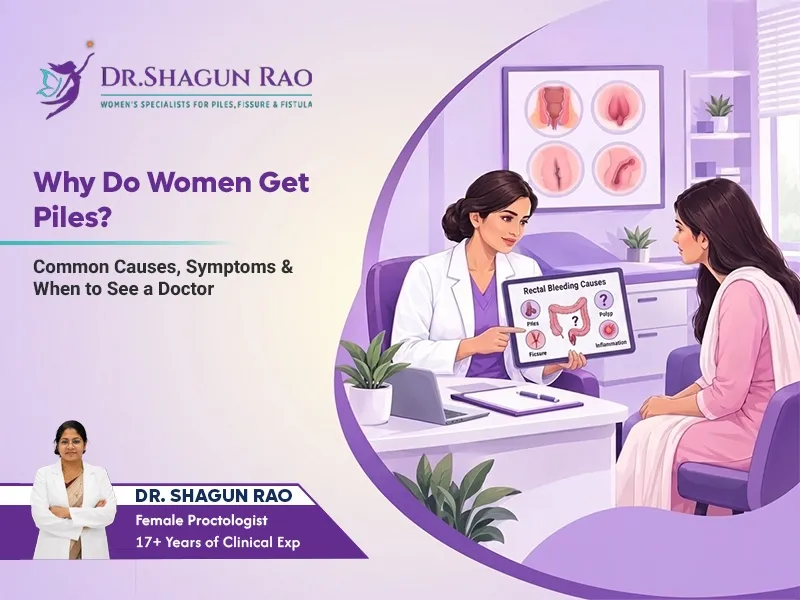

Piles are common, but that does not mean every symptom around the anus should be ignored.
Women may experience hemorrhoids during pregnancy, after childbirth, or during periods of constipation and repeated straining. Mild symptoms may sometimes improve after bowel habits and lifestyle factors are addressed.
The problem is knowing when self-care is no longer enough.
Common Symptoms of Piles in Women
Hemorrhoids can cause different symptoms depending on their location and severity.
Some common symptoms include:
- Bright-red blood during or after bowel movements
- Itching around the anus
- Anal irritation
- Pain or discomfort
- Swelling
- A lump around the anus
- Discomfort while sitting
- Irritation during bowel movements
- Protruding tissue in some cases
Not every woman will experience all of these symptoms.
More importantly, having these symptoms does not automatically prove that piles are the cause.
Why Rectal Bleeding Should Not Be Ignored
Rectal bleeding is one of the symptoms that often causes confusion.
Hemorrhoids can cause bright-red bleeding, particularly during bowel movements. However, other anorectal and gastrointestinal conditions can also cause bleeding.
Repeatedly assuming that every episode of bleeding is piles can delay proper diagnosis.
If bleeding is recurrent, persistent, unexplained, heavy, or associated with other concerning symptoms, medical evaluation is appropriate.
For women who want to understand the common causes of piles, symptoms, pregnancy-related factors, diagnosis, and treatment options, this detailed resource provides a useful overview: Why Do Women Get Piles? Common Causes, Symptoms & When to See a Doctor.
When Piles Symptoms Need Medical Attention
A doctor should be considered when symptoms are persistent, recurrent, severe, or interfering with normal activities.
Some situations that deserve attention include:
Repeated Bleeding
Occasional bleeding should not automatically be dismissed, especially when it keeps returning.
The cause should be identified rather than repeatedly assuming it is hemorrhoids.
Persistent Pain
Pain that continues or becomes severe deserves evaluation.
Hemorrhoids can cause discomfort, but significant or persistent pain may require a closer examination to determine what is causing it.
A Painful Lump
A lump around the anus may occur with hemorrhoids, but a painful or rapidly changing lump should be assessed by a healthcare professional.
Recurrent Piles
If piles keep returning despite attempts to improve diet, hydration, bowel habits, and constipation, it may be worth discussing the problem with a doctor.
Repeated recurrence can indicate that contributing factors have not been addressed or that another treatment approach is required.
Symptoms Affecting Daily Life
Symptoms that interfere with sitting, sleeping, working, exercising, or using the toilet should not simply be tolerated.
The purpose of a medical consultation is to understand the cause and discuss appropriate treatment options.
Pregnancy and Piles
Pregnancy can increase the likelihood of hemorrhoidal symptoms.
The growing uterus can increase pressure in the pelvic region. Hormonal changes may affect bowel movements, while constipation and straining can add further pressure.
Some women develop piles during pregnancy, while others notice symptoms after childbirth.
Persistent symptoms during pregnancy or after delivery should be discussed with the appropriate healthcare professional. Treatment choices during pregnancy should be based on individual circumstances.
Can Lifestyle Changes Help?
For mild hemorrhoid symptoms, improving bowel habits can be useful.
Women can focus on:
- Eating adequate dietary fiber
- Drinking sufficient fluids
- Staying physically active
- Avoiding unnecessary straining
- Avoiding excessive time on the toilet
- Responding to the urge to pass stool
- Managing persistent constipation
- Addressing repeated diarrhea or irregular bowel habits
These habits may reduce factors associated with piles, but they are not a substitute for medical assessment when symptoms persist.
Does Seeing a Piles Doctor Mean Surgery?
No.
A consultation does not automatically mean a surgical procedure.
Treatment depends on the type and severity of hemorrhoids and the individual's symptoms.
Depending on the diagnosis, management may include dietary and lifestyle changes, constipation management, medicines recommended by a doctor, conservative care, office-based procedures, or minimally invasive treatment.
The right treatment should be decided after an appropriate evaluation.
Why Some Women Prefer a Female Proctologist
Anorectal symptoms can be difficult to discuss openly.
Some women may feel more comfortable talking about rectal bleeding, itching, pain, bowel habits, pregnancy-related symptoms, or post-childbirth concerns with a female doctor.
Comfort during a consultation matters because accurate information about symptoms and medical history can help with proper assessment.
The goal should be clear diagnosis and appropriate treatment, not simply finding a quick way to suppress symptoms.
When Not to Wait
Women should seek timely medical evaluation when symptoms are worsening, persistent, recurrent, or significantly affecting everyday life.
Urgent medical attention may be appropriate for heavy or ongoing bleeding, severe pain, dizziness, fainting, or other concerning symptoms.
Piles are common, but "common" does not mean every symptom should be self-diagnosed.
Understanding the difference between occasional mild discomfort and symptoms that require professional assessment can help women make better decisions about their health.
For a complete explanation of why women get piles, common symptoms, pregnancy-related causes, diagnosis, treatment, prevention, and when to consult a doctor, read the full guide on piles in women.

























Sign in to leave a comment.