

Hearing loss does not affect everyone in the same way. Some people manage well with hearing aids, while others continue to struggle with speech understanding and everyday communication even after using them.
For people with severe to profound sensorineural hearing loss, a cochlear implant may be considered when conventional hearing aids are no longer providing enough benefit.
But deciding whether to pursue a cochlear implant is not as simple as looking at a hearing test result. It requires a detailed assessment of hearing, medical factors and communication needs.
What Is a Cochlear Implant?
A cochlear implant is an electronic hearing device designed for selected individuals with significant sensorineural hearing loss.
A conventional hearing aid primarily amplifies sound. A cochlear implant instead converts sound into electrical signals that stimulate the auditory nerve.
The system typically consists of an external sound processor and an implanted internal component.
Importantly, not every person with hearing loss is a candidate. The decision is made after appropriate ENT and audiological evaluation.
When Might an Implant Be Considered?
Cochlear implantation may be considered for selected children and adults who have severe to profound hearing loss and receive inadequate benefit from appropriately fitted hearing aids.
A specialist team may evaluate:
- Severity and type of hearing loss
- Benefit from hearing aids
- Speech perception
- Medical history
- Ear and cochlear anatomy
- Speech and language development in children
- Medical suitability for surgery
- Rehabilitation requirements
This process helps determine whether implantation is appropriate and what outcomes may reasonably be expected.
Why Hearing-Aid Benefit Matters
The presence of significant hearing loss alone does not automatically mean that a cochlear implant is required.
One important consideration is how effectively a person can understand speech while using appropriately fitted hearing aids.
For some individuals, hearing aids may continue to provide useful communication. For others, speech understanding may remain significantly limited despite appropriate amplification.
That distinction is one reason why a comprehensive cochlear implant evaluation is important.
What Happens During the Evaluation?
The exact assessment varies according to the patient, but the process can involve several stages.
ENT Consultation
The specialist reviews the patient's hearing history, previous treatment and current communication difficulties.
Audiological Testing
Detailed hearing tests help determine the degree of hearing loss and assess hearing-aid benefit.
Speech Perception Assessment
Speech understanding may be evaluated to determine how effectively the patient can understand spoken language.
Medical Evaluation
The specialist reviews overall medical suitability and may recommend additional investigations.
Imaging
Imaging may be required to assess the anatomy of the ear and cochlea and support surgical planning.
Treatment Discussion
If the patient appears suitable, the team discusses expected outcomes, implant options, surgery, programming and rehabilitation.
Patients researching cochlear implant treatment in PCMC can also refer to this detailed resource for an overview of candidacy, evaluation, surgery and follow-up.
Cochlear Implants in Children
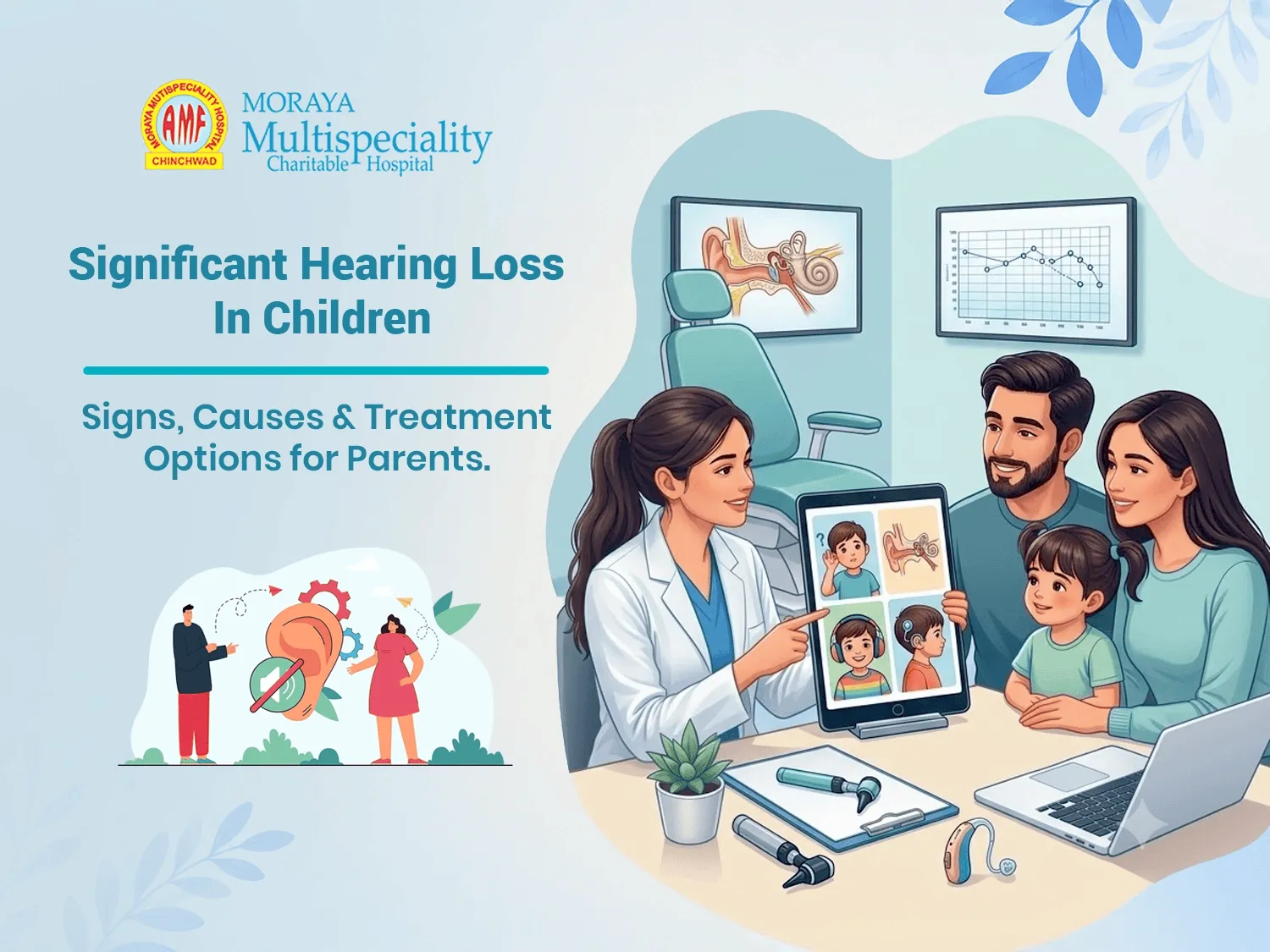
Children require particular attention because hearing plays an important role in speech, language and communication development.
When significant hearing loss is identified, early assessment and appropriate intervention can be important.
If cochlear implantation is recommended, parents should understand that the surgical procedure is only one stage of treatment.
After implantation, the device needs to be activated and programmed. Auditory rehabilitation and regular follow-up may also be required to support hearing and communication development.
Cochlear Implants in Adults
Adults with significant hearing loss may struggle with conversations, telephone calls, meetings or communication in noisy environments.
If appropriately fitted hearing aids no longer provide adequate communication benefit, an adult may be evaluated for cochlear implantation.
The assessment may include hearing tests, speech perception testing, medical evaluation and imaging when required.
After implantation, the individual may need time to adapt to the device. Programming and rehabilitation remain important parts of the process.
What Happens After Surgery?
The treatment does not end when the implant is surgically placed.
After the appropriate healing period, the external sound processor is activated and programmed.
Further appointments may be needed to adjust the device according to the patient's hearing needs and progress.
Auditory rehabilitation can also help patients learn to interpret and make effective use of the sounds provided through the implant.
The amount of time required to adapt varies from person to person.
Choosing a Cochlear Implant Centre
Patients should evaluate more than the availability of surgery when choosing where to seek treatment.
Useful questions include:
- Does the centre provide comprehensive hearing assessment?
- Is there experienced ENT and cochlear implant expertise?
- Are pre-operative investigations available?
- Is device programming available after surgery?
- Is auditory rehabilitation coordinated?
- Is long-term follow-up available?
- Does the team have experience working with children as well as adults?
For families in PCMC, location can also be a practical factor because the treatment pathway may involve repeated appointments.
Patients from Chinchwad, Pimpri, Wakad, Akurdi, Nigdi and Ravet may therefore consider accessibility along with specialist expertise and follow-up services.
Cochlear Implant Consultation in Chinchwad
Moraya Multispeciality Charitable Hospital, Chinchwad provides ENT and cochlear implant consultation for patients from Pimpri-Chinchwad and surrounding areas.
Patients can consult Dr. Akshay Wachasundar, Consultant ENT & Cochlear Implant Surgeon, for evaluation and guidance regarding hearing loss and possible cochlear implantation.
Whether an implant is appropriate depends on individual hearing results, medical history and specialist assessment.
A Decision That Requires Individual Assessment
A cochlear implant can be an important hearing rehabilitation option for appropriately selected patients, but it should not be treated as a universal solution for hearing loss.
The right approach is to understand the available options, undergo appropriate testing and discuss the expected benefits and limitations with a qualified specialist.
For patients exploring cochlear implant care in PCMC, the detailed Moraya resource provides additional information about the evaluation process, surgery, activation, rehabilitation and continuing care.
























Sign in to leave a comment.