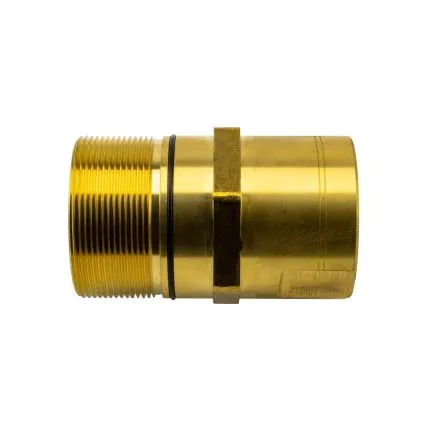

Quick connect couplers see a lot of use, connecting and disconnecting repeatedly throughout their service life. That repeated use eventually takes a toll, and recognizing the warning signs early prevents a small issue from turning into a genuine hydraulic leak at an inconvenient moment.
What Are the Early Signs of Coupler Wear?
A male coupler that's starting to wear often shows visible signs before it fails completely. Difficulty connecting or disconnecting smoothly, where the wings feel stiff or the coupling doesn't seat as easily as it used to, is often one of the first indicators. Visible wear on the sealing surface, sometimes appearing as scoring or pitting, is another sign worth watching for during routine inspection.
- Stiff or difficult connection and disconnection often signals wing mechanism wear.
- Visible scoring on the sealing surface reduces the coupler's ability to hold pressure.
- Fluid seepage during connection, even briefly, points toward a compromised seal.
Catching these signs early gives you the chance to replace the coupler on your own schedule rather than during an unexpected failure.
Why Repeated Use Accelerates Wear
Every connection and disconnection cycle puts mechanical stress on a coupler's sealing surfaces and locking mechanism. Equipment that swaps hydraulic attachments frequently naturally wears couplers faster than equipment with connections that stay in place for extended periods. Understanding your equipment's usage pattern helps set realistic expectations for coupler replacement intervals.
How Do You Confirm a Coupler Is the Actual Problem?
Before replacing a coupler, it's worth confirming the leak or connection issue actually traces back to the coupler itself rather than a related component like a hose fitting or seal. A soap and water check around the connection point during operation can help pinpoint exactly where fluid is escaping.
What Should You Do Once Wear Is Confirmed?
Once coupler wear is confirmed as the source of a leak or connection problem, replacement is the reliable path forward. A correctly specified replacement, such as the male coupler built to match your existing wing style connection through On the Spot Truck Repair, ensures the new component fits and functions exactly as the original did, rather than introducing a new mismatch during the repair.
Why Delaying Replacement Rarely Saves Money
It's tempting to keep using a worn coupler as long as it still technically functions, but that approach usually costs more in the long run. A worn coupler that's still in service risks a sudden leak during operation, potentially causing fluid loss, contamination or unplanned downtime at a far less convenient moment than a planned replacement.
Real World Example: The Coupler That Failed Mid Job
Picture a technician relying on a visibly worn coupler for one more job, hoping to get through without an issue. Partway through, the connection failed to hold pressure properly, causing a hydraulic leak that halted work entirely until a replacement could be sourced. A proactive swap during routine inspection would have avoided that entire disruption.
How Often Should Couplers Be Inspected?
Building a quick visual and functional check of accessible couplers into routine preventive maintenance is a reasonable habit, especially for equipment that connects and disconnects hydraulic attachments frequently. Trucks or equipment in heavy daily use benefit from more frequent checks than those with occasional hydraulic connection needs.
Conclusion
A male coupler wears gradually through repeated use, and catching the early signs, stiffness, visible scoring, seepage during connection, gives you the opportunity to replace it proactively rather than dealing with a failure during actual operation. Building quick coupler checks into your routine maintenance keeps hydraulic connections reliable exactly when you need them.





























Sign in to leave a comment.