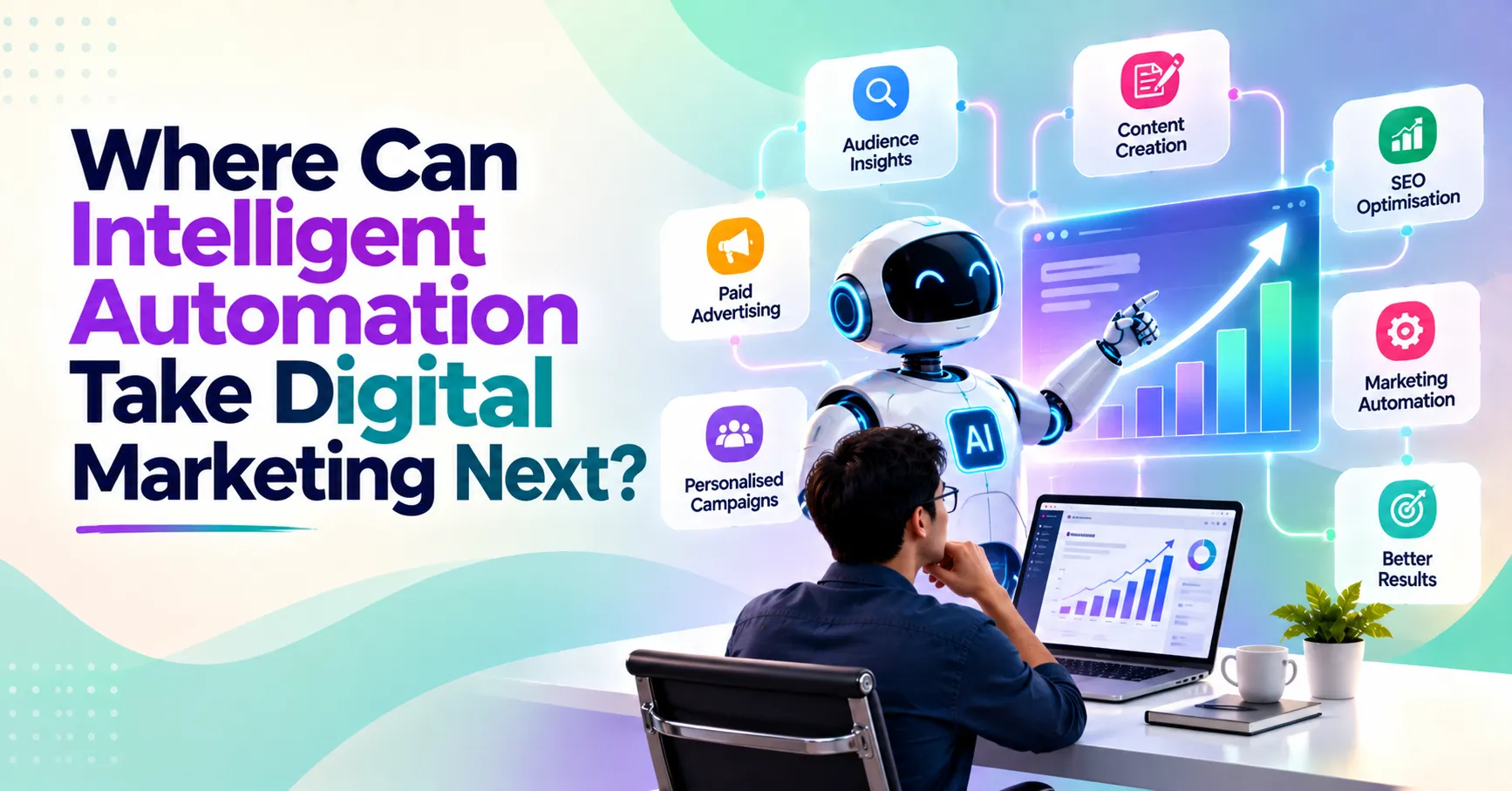

Artificial intelligence is changing the way marketing teams research audiences, analyse campaigns, and create customer experiences. For businesses evaluating the best AI-driven marketing agency in Kolkata, the important consideration is not whether an agency has access to AI tools because that access is now widespread. The more important question is how intelligently those tools are integrated into marketing strategy. AI can process large datasets, identify patterns, automate repetitive work, and support faster decision-making, but its value depends on the quality of the strategy surrounding it. The next stage of marketing will therefore be shaped by the combination of machine-assisted intelligence and human judgement.
Why Is Marketing Data Becoming Difficult to Manage?
Modern businesses collect information from websites, advertising platforms, search engines, social media, customer interactions and sales systems. Reviewing all of this manually can take considerable time, particularly when campaigns involve multiple audiences and channels. AI can help organise and analyse these datasets more efficiently. It can identify changes in customer behaviour, highlight unusual campaign performance and reveal relationships between different data points. This does not mean that marketers should surrender decision-making to algorithms. Instead, AI can reduce the time required to understand information so that professionals can spend more time deciding what action makes commercial sense.
How Can AI Improve Customer Understanding?
Customers rarely behave in the same way. A new visitor may require educational information, while a returning visitor may already understand the product and simply need reassurance before taking action. AI can help marketers identify behavioural patterns and divide audiences into more meaningful segments. These segments can then receive communication that better reflects their needs and stage in the customer journey. When applied correctly, personalisation can make marketing more relevant. However, personalisation should never become excessive or intrusive. The goal is to provide useful experiences rather than demonstrate how much customer data a business possesses.
What Changes Can AI Bring to Content Marketing?
AI can accelerate several parts of the content process, including research, topic discovery, outlining, editing, summarisation and repurposing. This can help marketing teams produce useful material more efficiently. However, speed creates a potential problem when businesses begin treating AI as a content factory. Producing hundreds of generic articles does not automatically create authority or attract qualified customers. Human marketers still need to understand the audience, verify information, establish the brand's perspective, and decide whether a topic deserves attention. AI becomes more valuable when it improves the quality and efficiency of a thoughtful content strategy rather than simply increasing the volume of published material.
How Can AI Support SEO?
Search engine optimisation involves analysing keywords, search intent, competitors, content gaps, and website performance. AI can assist with these activities by processing large datasets and identifying relationships between topics and queries. For example, AI-assisted research can reveal that customers searching for a particular service also ask questions about pricing, alternatives, implementation, and expected results. These insights can help marketers build more comprehensive content strategies. However, AI should not replace SEO expertise. Search intent still needs interpretation, content still requires editorial judgement, and technical recommendations still need to be evaluated within the context of the actual website.
Where Can AI Improve Paid Advertising?
Advertising platforms already provide significant amounts of performance information. AI can help marketing teams analyse audiences, advertisements, keywords, conversion behaviour and campaign trends more quickly. This can support creative testing, audience segmentation and budget decisions. However, automated recommendations should not be accepted without examination. A campaign may generate inexpensive leads that have poor commercial value, while another campaign may generate fewer leads but significantly better customers. AI can identify patterns, but marketers need business context to determine which patterns actually matter.
Can AI Improve Lead Management?
AI can also support what happens after someone interacts with a campaign. Automated systems can classify enquiries, identify potential leads, provide basic responses, and route conversations to appropriate teams. This can reduce response times and prevent simple enquiries from being overlooked. However, automation should have limits. Customers dealing with complex problems may require human communication rather than an automated sequence. A strong AI-driven marketing system therefore knows when to automate and when to transfer the interaction to a person.
What Separates AI Use From an AI-Driven Strategy?
There is a major difference between using AI occasionally and building an AI-supported marketing workflow. An organisation may use AI to create social captions, but that alone does not make its marketing strategy AI-driven. A more meaningful approach integrates AI into research, analysis, execution and optimisation. Data can be collected, AI can help identify patterns, marketers can interpret those patterns, campaigns can be implemented, and performance can then be analysed again. This creates a feedback loop in which each marketing cycle provides information that can improve the next one.
Why Is Human Expertise Still Necessary?
AI can generate convincing information that is incomplete or incorrect. It can misunderstand context, overlook commercial factors, or make recommendations based on limited data. Human oversight is therefore essential, particularly when marketing decisions affect brand reputation and customer relationships. Experienced marketers bring strategic thinking, creativity, industry understanding, and judgement that cannot simply be replaced by automated outputs. The strongest model is not AI replacing marketing professionals. It is AI giving marketing professionals better information and greater efficiency.
How Should Businesses Measure AI Marketing?
The number of AI-generated articles, advertisements, or reports is not a meaningful measure of success. Businesses should focus on outcomes such as lead quality, conversion rates, customer acquisition cost, campaign efficiency, organic visibility, and revenue contribution. If AI allows a marketing team to produce twice as much content but that content generates no useful business activity, productivity has increased without creating meaningful value. AI should therefore be evaluated according to whether it improves decisions and outcomes rather than simply increasing output.
What Could the Future of AI Marketing Look Like?
AI is likely to become increasingly integrated into everyday marketing rather than remaining a separate specialist function. Customer research, campaign analysis, personalisation, content planning, SEO and automation can all become more intelligent as systems improve. At the same time, strategic thinking may become more valuable because access to AI technology is becoming widespread. When many businesses can use similar tools, the competitive difference will come from how effectively those tools are applied to specific customers and business problems.
Conclusion
AI has the potential to make digital marketing faster, more analytical, and more personalised, but technology alone does not create a successful marketing strategy. Businesses searching for the best AI-driven marketing agency in Kolkata should examine how AI is connected to research, strategy, execution, measurement, and optimisation. The strongest approach combines machine-assisted analysis with human judgement and focuses on measurable business outcomes. The future of marketing isn't about replacing marketers with artificial intelligence; it is about giving skilled marketers better intelligence with which to make better decisions.






















Sign in to leave a comment.