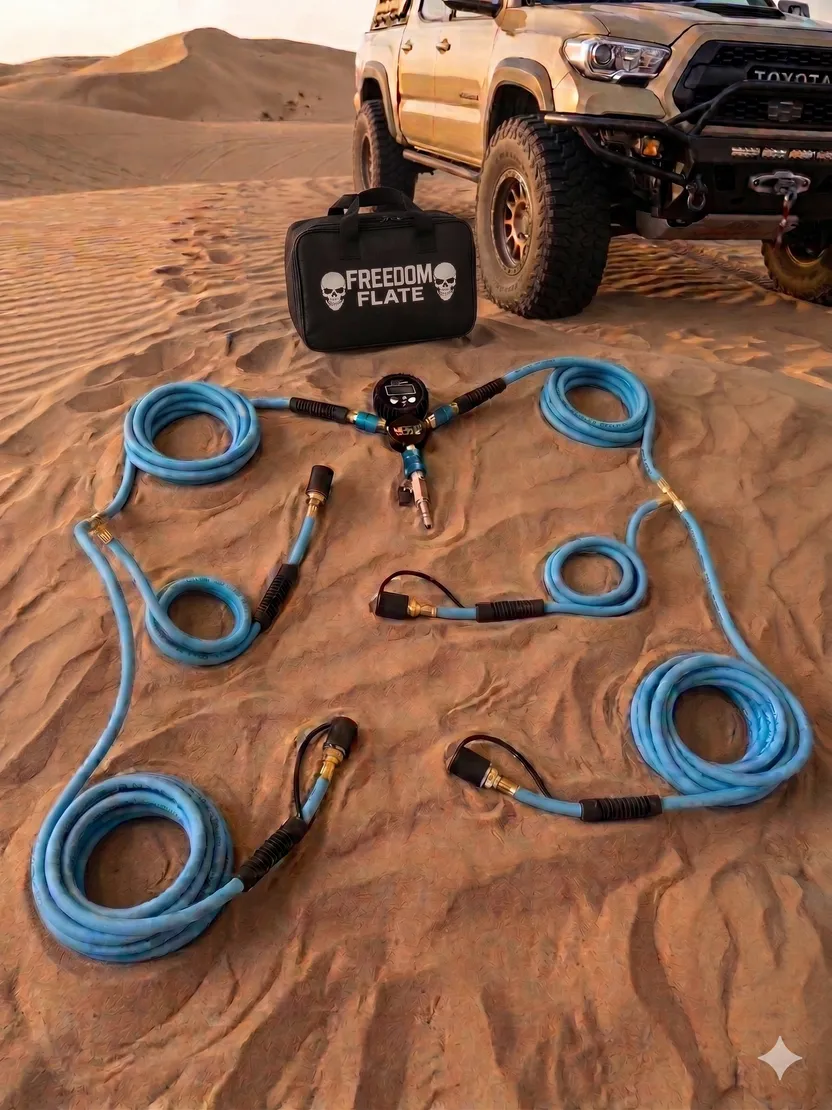

Off-roading rewards preparation. Before you drop into sand, mud, or rock, your tires need to match the terrain, and that starts with knowing your exact PSI. A reliable gauge takes the guesswork out of airing down, so you get better traction and fewer close calls on the trail.
This guide walks through why tire pressure matters off-road, what to look for in a gauge and air down kit, and where drivers across the United States are sourcing their gear from a trusted USA-based air pressure gauge and air down kit store.
Why Does Tire Pressure Matter So Much Off-Road?
On pavement, tire pressure is mostly about fuel economy and even wear. Off-road, it becomes a safety and performance issue.
Lower pressure lets the tire's contact patch widen, spreading the vehicle's weight over more surface area. That's what helps a rig float over sand instead of digging in, or lets a tire wrap around rocks for better grip on a climb.
Too much air and you lose traction and bounce over obstacles. Too little air and you risk a bead unseating from the rim, especially at speed or on side-hill terrain.
The only way to land in the right range is to measure it, not guess it. That's where off road recovery gear like a quality gauge and deflator earns its place in every glove box or trail bag.
What Should You Look for in an Air Pressure Gauge?
Not every gauge on the market holds up to trail use. A few things separate a gauge worth keeping from one you'll replace after a season.
Accuracy comes first. A gauge that reads a few PSI off can throw your whole setup out of balance.
Build quality matters just as much. Dust, mud, and drops are part of the job, so a housing that can take some abuse is worth paying for.
Readability counts too. A digital display with clear numbers beats squinting at a small analog dial in low light.
Range should match your tires. Standard off-road setups sit well under 50 PSI, but a gauge rated up to 150 or even 200 PSI gives you room for larger tires without buying a second tool.
How Does an Air Down Kit Work?
An air down kit, sometimes called a tire deflator, lets you drop tire pressure quickly and consistently across all four tires. Instead of pressing a valve stem and checking pressure over and over, a deflator is set to a target PSI and does the work while you handle other prep.
Multi-valve systems can deflate all four tires at once, cutting a task that used to take fifteen minutes down to two or three, which matters when a group is waiting on you at the trailhead.
Pairing a deflator with an accurate gauge means you hit your target number instead of estimating it. Guessing might get you close, but close isn't good enough when tire safety is on the line.
Why Choose a USA-Based Air Pressure Gauge and Air Down Kit Store?
Buying from a USA-based air pressure gauge and air down kit store has practical advantages beyond supporting domestic business.
Shipping times tend to be shorter, which matters when you're prepping for a weekend trip and don't want gear stuck at customs. Customer support is easier to reach during normal business hours, and returns or warranty claims move faster without cross-border shipping involved.
A domestic seller is also more likely to understand American terrain, from desert washes in Arizona to muddy logging roads in the Pacific Northwest. That context shows up in the product lineup and in the advice you get.
What Gear Belongs in a Complete Tire Management Setup?
A gauge alone gets you partway there. A complete setup for airing down and re-inflating usually includes a few pieces working together.
- A digital air pressure gauge for precise readings before and after the trail
- A tire deflator for fast, even pressure drops across all four tires
- A 12-volt air compressor for re-inflating once you're back on pavement
- A carrying case to keep everything together and protected from dirt
Buying these as a kit, rather than piecing them together separately, usually means the components are matched for compatible fittings and consistent readings.
How Do You Choose the Right PSI for Different Terrain?
There's no single number that works everywhere. Terrain, tire size, vehicle weight, and load all play a role, but a few general starting points help.
Sand usually calls for the lowest pressure, often in the 12 to 18 PSI range, to maximize flotation over loose ground. Mud tends to sit a bit higher, since you still want the tire to bite rather than sink. Rock crawling often lands in between, prioritizing a wider footprint and a softer sidewall for grip.
These are starting points, not rules. Vehicle weight and trail conditions shift the ideal number, which is exactly why a precise gauge matters more than a rough guess.
Where Can You Buy Trail-Ready Air Gauges and Deflators in the United States?
Drivers across the country, from weekend trail riders to full-time overlanders, are turning to a dedicated air pressure gauge and air down kit store for gear built specifically for off-road use rather than general automotive shelves.
A focused off-road retailer typically stocks digital gauges rated for a wide PSI range, rapid four-way deflate systems, and paired compressor and deflator kits designed to work together. That kind of lineup saves time compared to hunting across multiple stores for compatible pieces.
Freedom Ropes carries a lineup built around this need, including a Digital Air Gauge rated for 0 to 150 PSI, a Digital Tire Deflator rated for 0 to 200 PSI, and combination kits that pair a 12V compressor with a four-way inflate and deflate system. The full range sits alongside other off road recovery gear, so tire management tools and recovery equipment can be sourced from one place.
Top Reasons to Pair a Gauge with a Compressor and Deflator Kit
Buying a matched kit rather than separate tools has a few clear advantages.
Compatibility between fittings and hoses removes a common frustration when mixing brands. Consistency in PSI readings across your gauge and deflator means the numbers actually line up. Convenience matters too, since one case to grab before a trip beats digging through a toolbox for scattered parts.
For most off-road drivers, a bundled setup ends up being both simpler and more cost-effective than assembling one piece at a time.
Frequently Asked Questions
1. Where can I find a reliable air pressure gauge store for off-roading in the United States? Look for a dedicated off-road retailer rather than a general auto parts chain. Specialty stores stock gauges and deflators rated for trail use.
2. What PSI should I run for sand dunes in states like Utah or Colorado? Sand-heavy terrain generally calls for lower pressure, often in the 12 to 18 PSI range, though the right number depends on tire size and vehicle weight.
3. Do off-road shops in the USA sell digital tire deflators for four tires at once? Yes. Many off-road retailers, including Freedom Ropes, carry four-way rapid inflate and deflate systems built to handle all four tires at once.
4. Is it worth buying a gauge and compressor kit together for desert trails? Yes, a matched kit keeps fittings compatible and readings consistent, which helps on desert routes where you'll air down and re-inflate more than once per trip.
5. How accurate should a digital air pressure gauge be for off-roading? Look for a gauge with consistent, repeatable readings within a PSI or two, especially when targeting a specific number for a given terrain type.
6. Where do overlanders in the Pacific Northwest buy tire deflators? Many overlanders in wet, muddy regions like the Pacific Northwest source deflators from specialty off-road stores rated for frequent use.
7. Can I use the same air pressure gauge for my truck and my ATV? Yes, as long as the gauge's PSI range covers both. A gauge rated for 0 to 150 or 0 to 200 PSI typically covers trucks, SUVs, and most ATVs.
8. What's the fastest way to air down four tires before hitting a trailhead in Arizona? A four-way rapid deflate system lets you set a target PSI and deflate all four tires at once, faster than pressing each valve stem by hand.
9. Do I need a 12V compressor if I already own a tire deflator? Yes. A deflator only lowers pressure. You'll need a compressor to re-inflate your tires once you're back on pavement.
10. Where can I shop for a complete off-road tire management kit online in the USA? Freedom Ropes offers gauges, deflators, and compressor kits built for American trail conditions, with domestic shipping through their online store.
Final Thoughts
Airing down correctly isn't a small detail. It's one of the simplest ways to improve traction, protect your tires, and make a trail run safer from start to finish. A dependable gauge and a matched deflator kit take the guesswork out of that process.
For drivers who want gear built around American terrain and backed by domestic support, a trusted USA-based air pressure gauge and air down kit store remains one of the most practical places to start.




























Sign in to leave a comment.