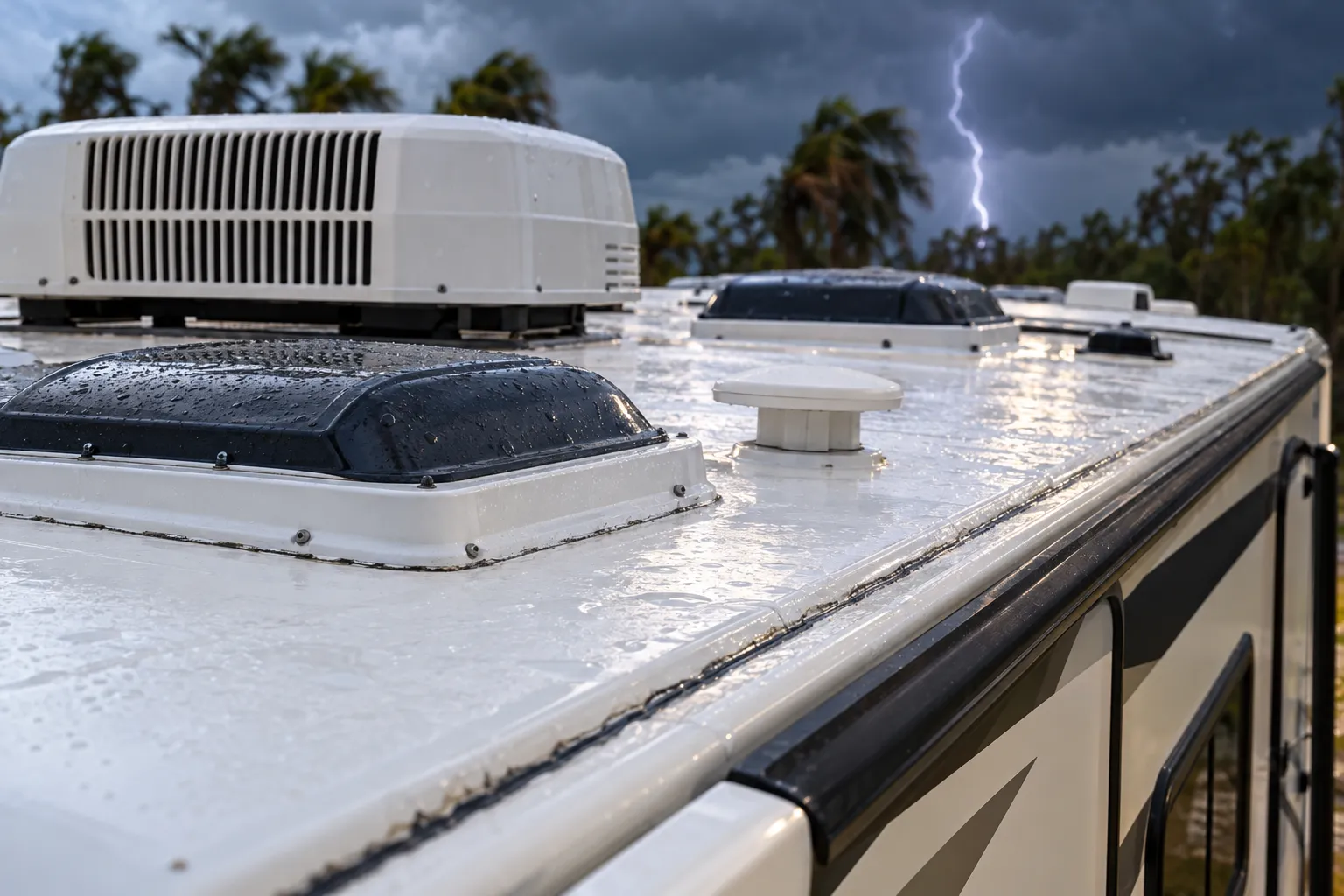

Major storms can cause serious problems for recreational vehicles, especially when strong winds, heavy rainfall, and flying debris affect the roof. Unlike traditional residential roofs, RV roofs contain multiple openings, seams, and mounted equipment that require regular attention.
Understanding which RV Roof Areas are most vulnerable helps owners recognize potential damage before water enters the vehicle. In Florida, where thunderstorms, tropical storms, and hurricanes are common, inspecting these areas is particularly important.
Knowing what to check before and after severe weather can help prevent expensive repairs and protect an RV's interior.
Why RV Roofs Are Vulnerable During Storms
RV roofs experience constant exposure to sunlight, moisture, temperature changes, and movement during travel. Over time, these conditions can weaken sealants and create small openings around rooftop components.
During major storms, heavy rain may enter through damaged seams, while strong winds can loosen exterior equipment or lift poorly secured materials.
Even when damage is not immediately visible, moisture can reach insulation, ceiling panels, and structural components.
Regular inspections and professional mobile rv service can help identify weaknesses before they become major problems.
1. Roof Seams and Edge Seals
Roof seams are among the most vulnerable locations on an RV because they connect different roofing materials and structural sections.
These areas depend on compatible sealants and properly secured components to prevent water intrusion.
Before a Storm
Inspect seams for:
- Cracked or separated sealant
- Loose roof edges
- Gaps around trim
- Peeling or deteriorating sealing materials
Older sealants may lose flexibility after prolonged exposure to Florida's heat and ultraviolet radiation.
After a Storm
Look for separated joints, displaced trim, and new openings along roof edges.
Wind-driven rain can enter small gaps that might remain dry during ordinary rainfall.
Addressing damaged seals promptly can help prevent moisture from spreading into walls and ceiling cavities.
2. Rooftop Air Conditioning Units
Rooftop air conditioners create large openings in RV roofs and rely on properly installed gaskets to maintain a watertight connection.
During severe storms, wind pressure, falling branches, and flying debris can affect the exterior housing and mounting components.
Before a Storm
Check whether the exterior AC cover appears secure and free from visible cracks. Look for signs of existing leaks inside the RV near the ceiling assembly.
After a Storm
Inspect from a safe position for damaged covers, displaced equipment, or water stains around the interior ceiling opening.
If the unit begins leaking, cooling poorly, or making unusual noises, professional rv ac repair may be necessary.
Avoid overtightening mounting hardware because excessive compression can damage the roof gasket.
3. Roof Vents and Skylights
Roof vents and skylights allow natural light and ventilation, but they also introduce additional openings.
Plastic vent covers can become brittle after years of sunlight exposure. Strong winds and flying debris may crack or break these components.
Before storms, check that vent covers close properly and that surrounding seals remain intact.
After storms, examine the interior for moisture, dripping water, or discoloration around the openings.
Broken vent covers should be addressed promptly to reduce the risk of additional water damage.
4. Front and Rear Roof Cap Connections
The connections between the roof and the front or rear caps are particularly important because they experience movement and weather exposure.
These joints often contain sealant beneath exterior trim.
When the RV travels, vibration and structural movement can place additional stress on these connections.
During major storms, wind-driven rain may reach weakened joints.
Check for loose molding, gaps, cracked sealant, and interior stains near the front and rear ceiling areas.
A professional inspection can determine whether resealing or additional repairs are required.
5. Antennas, Solar Panels, and Roof Accessories
Antennas, solar panels, satellite equipment, and other roof accessories may have brackets or mounting points attached to the roofing structure.
These connections can become vulnerable when fasteners loosen or sealants deteriorate.
Strong winds may also damage exposed equipment.
Before severe weather, inspect accessible components for visible movement or damaged mounting hardware without attempting unsafe rooftop work.
After the storm, look for displaced accessories, broken brackets, loose wiring, and damaged sealing points.
Never touch exposed electrical wiring or damaged solar equipment until it has been made safe.
What to Do Before and After a Major Storm
A simple maintenance routine can significantly reduce the risk of unnoticed roof damage.
| Before the Storm | After the Storm |
|---|---|
| Inspect visible roof seams | Check for separated or damaged seals |
| Secure loose exterior accessories | Look for displaced rooftop equipment |
| Examine vent covers | Check vents for cracks or breakage |
| Identify existing water stains | Look for new interior moisture |
| Schedule preventive inspections | Arrange professional damage assessment |
Never climb onto an RV roof during severe weather, when surfaces are wet, or when the manufacturer does not permit roof access.
If significant storm damage is suspected, a qualified technician should inspect the vehicle before temporary repairs conceal the source of a leak.
Why Other RV Systems Also Need Attention
Storm preparation involves more than protecting the roof.
Heavy rain, debris, and flooding can affect ventilation openings, electrical connections, and exterior appliances.
A professional rv propane service can help assess propane system components when storm debris or other damage raises concerns about their condition.
Similarly, scheduling a furnace annual service can help identify issues involving the burner, blower, and heating system before seasonal use.
Owners should never operate propane appliances when a gas leak is suspected.
Protect Your RV With Professional Storm Inspections
Identifying vulnerable RV roof areas before and after major storms is essential for preventing hidden moisture damage and maintaining the vehicle's condition.
Roof seams, AC mounting points, skylights, ventilation openings, and accessory connections deserve particular attention.
Florida Mobile RV Repairman LLC provides RV repair and maintenance services in St. Johns County and surrounding areas of Northeast Florida. Its services include roof seal inspections, leak repairs, air conditioning work, and other maintenance solutions.
Scheduling a professional inspection can help identify storm-related damage before minor leaks become costly structural problems.
Frequently Asked Questions
1. Which RV roof areas are most likely to leak during storms?
Roof seams, vents, skylights, AC mounting openings, and front or rear cap connections are common locations where damaged seals can allow water intrusion.
2. Should I inspect my RV roof after every major storm?
Yes. A visual inspection after severe weather can help identify damaged sealants, displaced components, and new signs of moisture.
3. Can strong winds damage an RV roof without causing visible leaks?
Yes. Wind may loosen attachments or damage seals without immediately producing noticeable interior water stains.
4. How often should RV roof seals be inspected?
Follow the RV and roofing manufacturer's inspection schedule, and perform additional checks after major storms or suspected damage.
5. Can mobile RV technicians inspect storm-related roof damage?
Yes. Depending on the provider and accessibility of the vehicle, mobile RV technicians can inspect roof seals, diagnose leaks, and recommend appropriate repairs.




















Sign in to leave a comment.