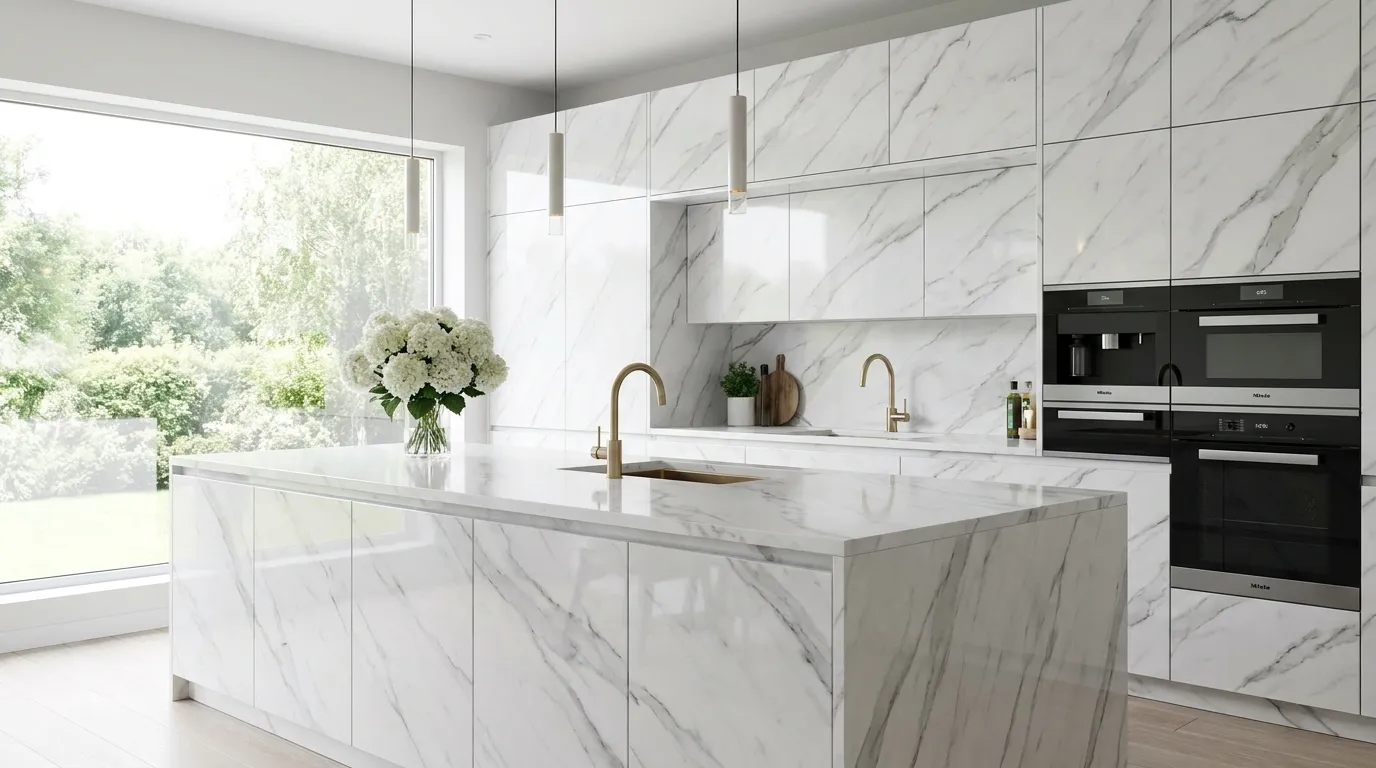

White marble has remained a popular architectural material for centuries, and its appeal comes from more than its bright appearance. The natural stone combines a clean background with distinctive mineral veining, allowing it to work in both traditional and contemporary interiors.
From kitchen islands and bathroom walls to flooring, fireplaces, staircases, and decorative features, white marble can create a strong visual focal point without relying on artificial patterns. Because every slab develops its own markings, no two installations look exactly alike.
However, choosing white marble requires more than selecting the whitest slab available. Different varieties have different patterns, finishes, characteristics, and maintenance requirements. Understanding those differences can help homeowners, architects, and designers select a stone that suits the space and its intended use.
What Is White Marble?
White marble is a natural metamorphic stone that forms when limestone undergoes heat and pressure over geological time. During this process, the calcite within the original limestone recrystallizes, creating the crystalline structure associated with marble.
The purity of the original limestone influences the final color. Marble formed from limestone containing relatively few impurities can develop a bright white appearance, while minerals such as iron oxides, graphite, clay, or other materials can introduce gray, yellow, pink, or darker markings.
This mineral composition also explains an important characteristic of marble: it is relatively soft compared with many stones commonly used for countertops. Calcite has a Mohs hardness of about 3, which means marble can scratch and react with acids more easily than harder materials such as quartzite.
Popular Types of White Marble
Not every white marble looks the same. Differences in background color, veining, crystal structure, and origin can dramatically change the appearance of a finished room.
Bianco Carrara
Bianco Carrara is one of the best-known white and gray marbles. It generally features a soft white to gray background with subtle gray veining. Its relatively restrained appearance makes it suitable for flooring, bathrooms, wall applications, fireplaces, and kitchen projects.
Calacatta Marble
Calacatta marble is recognized for stronger and more dramatic veining. Depending on the particular variety, veins can range from gray to warm gold tones. Designers often use it when they want the stone itself to become a prominent feature.
Statuario Marble
Statuario is another well-known Italian marble associated with a light background and distinctive gray veining. It has been used in significant architectural projects and decorative applications. Large slabs can highlight the natural movement of the stone particularly well.
The Natural Stone Institute documents projects using varieties including Bianco Carrara, Calacatta Borghini, Calacatta Vagli Oro, and Statuario Michelangelo, demonstrating how different marble varieties can be combined according to architectural requirements.
Where Can White Marble Be Used?
White marble can serve both decorative and functional purposes throughout a property.
Kitchens
White marble countertops and islands can create a bright, refined kitchen surface. However, kitchens require careful consideration because acidic ingredients such as lemon, vinegar, tomatoes, and some beverages can react with calcite-based stone and create dull etch marks.
For homeowners who appreciate the natural aging of stone, those changes may become part of the material's character. Others may prefer a honed finish because minor etching can be less noticeable than it is on highly polished surfaces.
Bathrooms
White marble works particularly well in bathrooms because its light appearance can make a room feel clean and spacious. It can be used for shower walls, vanity tops, floors, backsplashes, and feature walls.
The material can also create continuity when the same marble appears across several surfaces rather than being limited to a small decorative section.
Flooring and Wall Cladding
Large white marble tiles can create a seamless appearance across floors and walls. Natural veining adds visual movement without requiring a separate decorative pattern.
Marble has also been used extensively in major architectural interiors. For example, the Kennedy Center for the Performing Arts used large quantities of Carrara White marble, illustrating the material's longstanding role in monumental architecture.
Fireplaces and Decorative Features
A white marble fireplace can act as a central architectural feature. Smaller applications can include shelves, niches, tables, thresholds, stair components, and accent walls.
Benefits and Limitations of White Marble
The main attraction of white marble is its natural appearance. Each slab contains its own mineral patterns, so the finished surface has depth that printed or manufactured patterns may not reproduce in exactly the same way.
Other advantages include:
- Natural variation and unique veining
- Wide range of finishes and slab patterns
- Long history in architecture and sculpture
- Suitable for many interior applications
- Can complement wood, metal, glass, and painted cabinetry
- Can be refinished when the surface becomes worn
However, marble also has limitations. It can scratch, stain, and etch, particularly when used in demanding areas. The Natural Stone Institute notes that marble can be affected by acidic substances and recommends preventive measures such as cutting boards, trivets, coasters, prompt spill cleanup, and appropriate cleaning products.
The key distinction is between staining and etching. A stain involves material entering or remaining in the stone, while etching occurs when acid reacts with calcite and alters the surface. Sealing can help reduce staining but does not prevent acid etching.
How to Choose the Right White Marble
Choosing a slab should start with the intended application rather than color alone.
First, consider how the surface will be used. A decorative bathroom wall has different requirements from a heavily used kitchen countertop. Then examine the actual slab under the lighting conditions of the project.
Pay attention to:
- Background shade: pure white, warm white, cream, or gray
- Vein direction and intensity
- Slab thickness and available sizes
- Surface finish
- Expected maintenance
- Fabrication requirements
- Installation conditions
It is also worth inspecting a physical sample because photographs cannot always communicate the depth, movement, and variation found in natural stone.
The Natural Stone Institute recommends working with experienced stone professionals, particularly when selecting and installing natural stone for specific applications. Its professional network includes accredited fabricators and installers that undergo documented review and inspection processes.
White Marble Finishes: Polished vs. Honed
A polished finish produces a reflective surface that emphasizes the stone's color and veining. It can create a luxurious appearance, but surface marks and etching may be more visible.
A honed finish has a softer, matte appearance. It can provide a more understated look and may make minor etching less noticeable. The Natural Stone Institute specifically notes honed or textured finishes as an option for people concerned about the visual impact of etching.
The choice ultimately depends on the desired appearance, location, and willingness to maintain the surface.
How to Clean and Maintain White Marble
Routine care does not need to be complicated, but consistency matters.
Use a soft cloth and a cleaner specifically designed for natural stone. Avoid harsh or acidic cleaning products because they can damage calcite-based marble. Wipe spills promptly, particularly substances containing acids, oils, or strong pigments.
Sealing can help reduce the risk of staining, but the appropriate frequency depends on the stone and sealer. Natural Stone Institute guidance notes that sealing products can have very different service lives, so homeowners should follow the manufacturer's recommendations rather than relying on one universal schedule.
For surfaces that develop noticeable wear, professional honing, polishing, or restoration can renew the appearance. Marble can often be refinished rather than completely replaced, depending on the condition and application.
White Marble Design Ideas
White marble pairs naturally with many interior materials. In a contemporary kitchen, a heavily veined slab can contrast with simple cabinetry and understated hardware. In a bathroom, matching marble across the vanity, shower, and wall can create visual continuity.
For a quieter appearance, subtle Carrara-style veining works well with natural wood and neutral finishes. More dramatic Calacatta or Statuario patterns can serve as a statement surface where the rest of the room remains visually restrained.
Designers can also use bookmatching, where adjoining slabs are positioned to mirror their veining. This technique can turn naturally occurring patterns into a deliberate architectural feature.
Frequently Asked Questions
Is white marble suitable for kitchen countertops?
Yes, white marble can be used for kitchen countertops, but it requires more care than some harder alternatives. Acidic foods and drinks can cause etching, while proper cleaning and preventive habits can help protect the surface.
What is the whitest type of marble?
The appearance varies considerably between individual varieties and slabs. Some white marbles have very pure backgrounds, while others contain visible gray or gold veining. The best approach is to inspect the actual slab rather than relying only on a variety name.
Does white marble stain easily?
Marble can stain, but staining and etching are different problems. Sealing can reduce the risk of staining, while it does not stop acid-related etching. Promptly cleaning spills also helps protect the surface.
Is polished or honed marble better?
Neither finish is universally suitable for every project. Polished marble has a reflective appearance, while honed marble provides a softer matte surface. Honed finishes can make some etching less visually noticeable.
Can white marble be used in bathrooms?
Yes. White marble is widely used for bathroom floors, walls, shower surfaces, vanities, and decorative features. Proper material selection and maintenance remain important.
How should white marble be cleaned?
Use a soft cloth and a suitable natural-stone cleaner. Avoid acidic or abrasive products, and clean spills promptly.
Is white marble a natural stone?
Yes. Marble is a metamorphic rock that forms when limestone undergoes heat and pressure, causing its calcite crystals to recrystallize.



























Sign in to leave a comment.