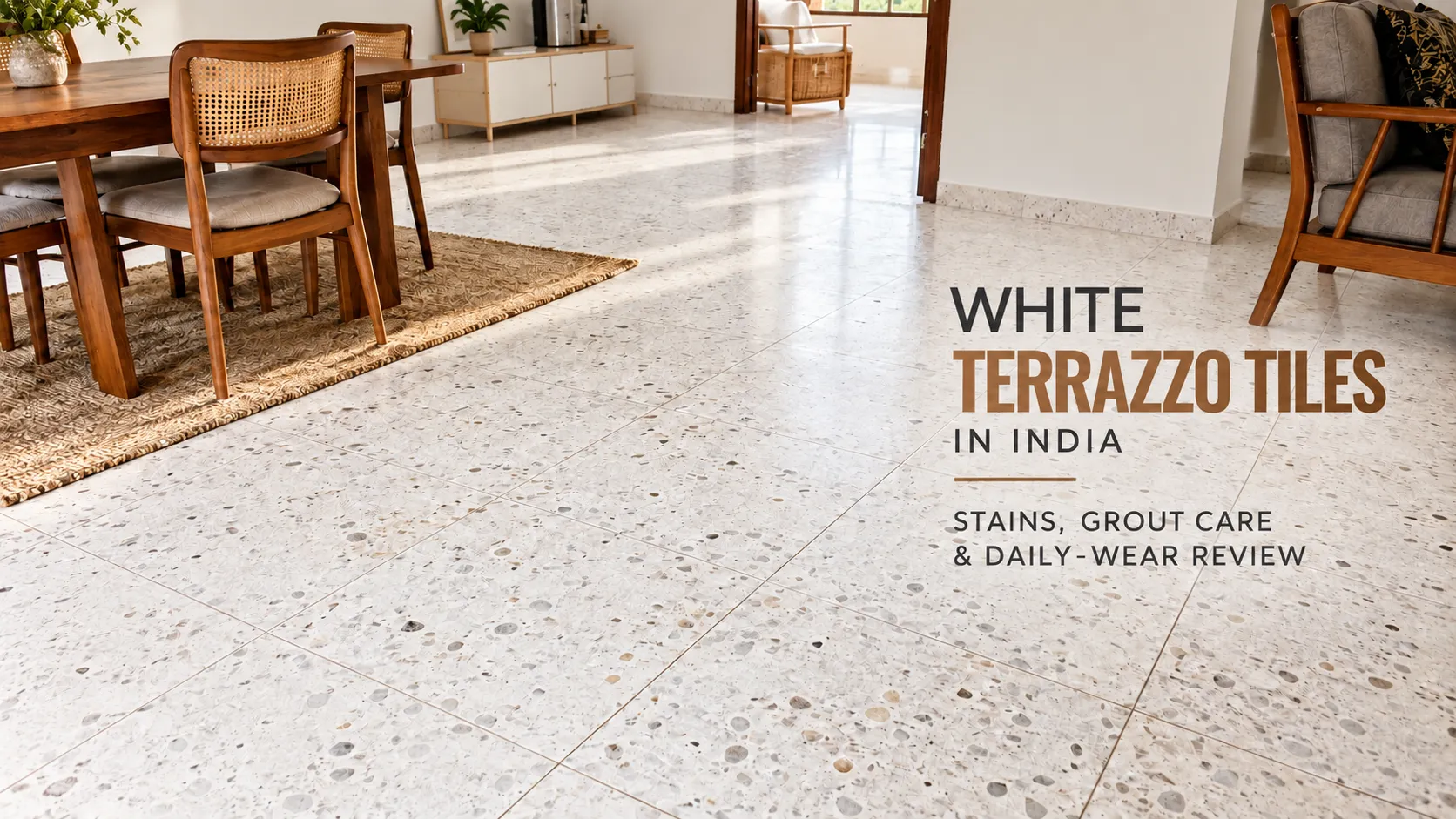

White terrazzo has a clean, bright appearance that works well with modern Indian interiors. But the buying decision should go beyond looks. Daily spills, cooking activity, grout joints, grit and cleaning products can all affect how the floor looks over time. Before choosing white terrazzo tiles, it is important to understand the material, its maintenance needs and the room where it will be installed.
First Check What Type of Terrazzo You Are Buying

The word “terrazzo” can refer to different products. Genuine cementitious terrazzo uses aggregate in a cement-based binder. Resin or epoxy terrazzo uses a resin binder, while terrazzo-look GVT is a vitrified tile printed to create a terrazzo appearance.
These materials should not be treated as identical. Their absorption, cleaning requirements, repair options and surface behaviour can differ. If you are comparing genuine terrazzo with a printed tile, check the exact product specification before making a decision.
For Indian buyers, IS 1237 provides the technical framework for cement-concrete flooring tiles, including terrazzo. It covers factors such as classification, water absorption and wear requirements. However, compliance with the standard should not be treated as proof that a floor is stain-proof.
White Terrazzo Tiles Review India: Does It Actually Stain More?
There is no controlled evidence in the supplied research proving that white colour alone makes terrazzo intrinsically more stain-absorbent than darker colours. However, marks can be easier to notice against a pale background.
This difference matters in busy homes. An active kitchen may see oil, tea, food pigments and other spills, while an entrance may receive more dust and grit. White terrazzo can still work in these areas, but the homeowner should be comfortable with visible maintenance.
The key point is to separate appearance from material performance. Colour may affect how easily a mark is noticed, while the actual behaviour of the surface also depends on its binder, sealing, use conditions and cleaning routine.
Stains, Etching and Grout Are Different Problems

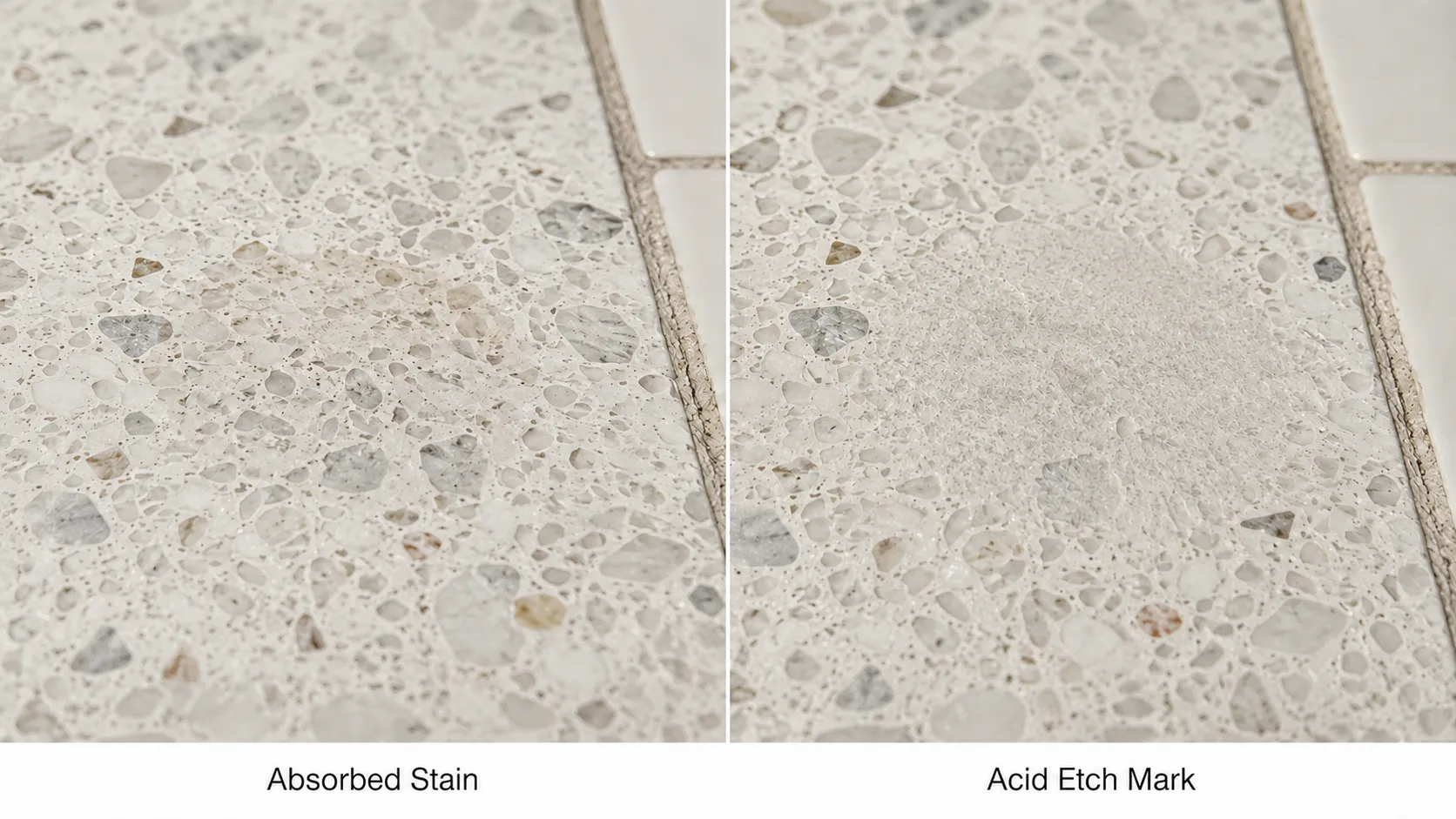
A mark on terrazzo is not always a stain. A pigment stain means colour has entered or remained on the surface. An acid etch is different: acidic substances can physically alter acid-sensitive components of terrazzo and leave a dull patch.
This is why vinegar, lemon juice and unsuitable acidic cleaners should not be used as routine cleaning solutions. A stronger cleaner is not automatically a better cleaner. Neutral cleaning is the safer general maintenance approach.
Grout also deserves attention. Light grout can make a white floor look very clean when new, but dirt in the joints can become visually prominent. Cementitious grout and reaction-resin grout have different maintenance characteristics, so the choice should consider the project, installer skill and compatibility with the terrazzo system.
Sealing Helps, But It Is Not a Guarantee
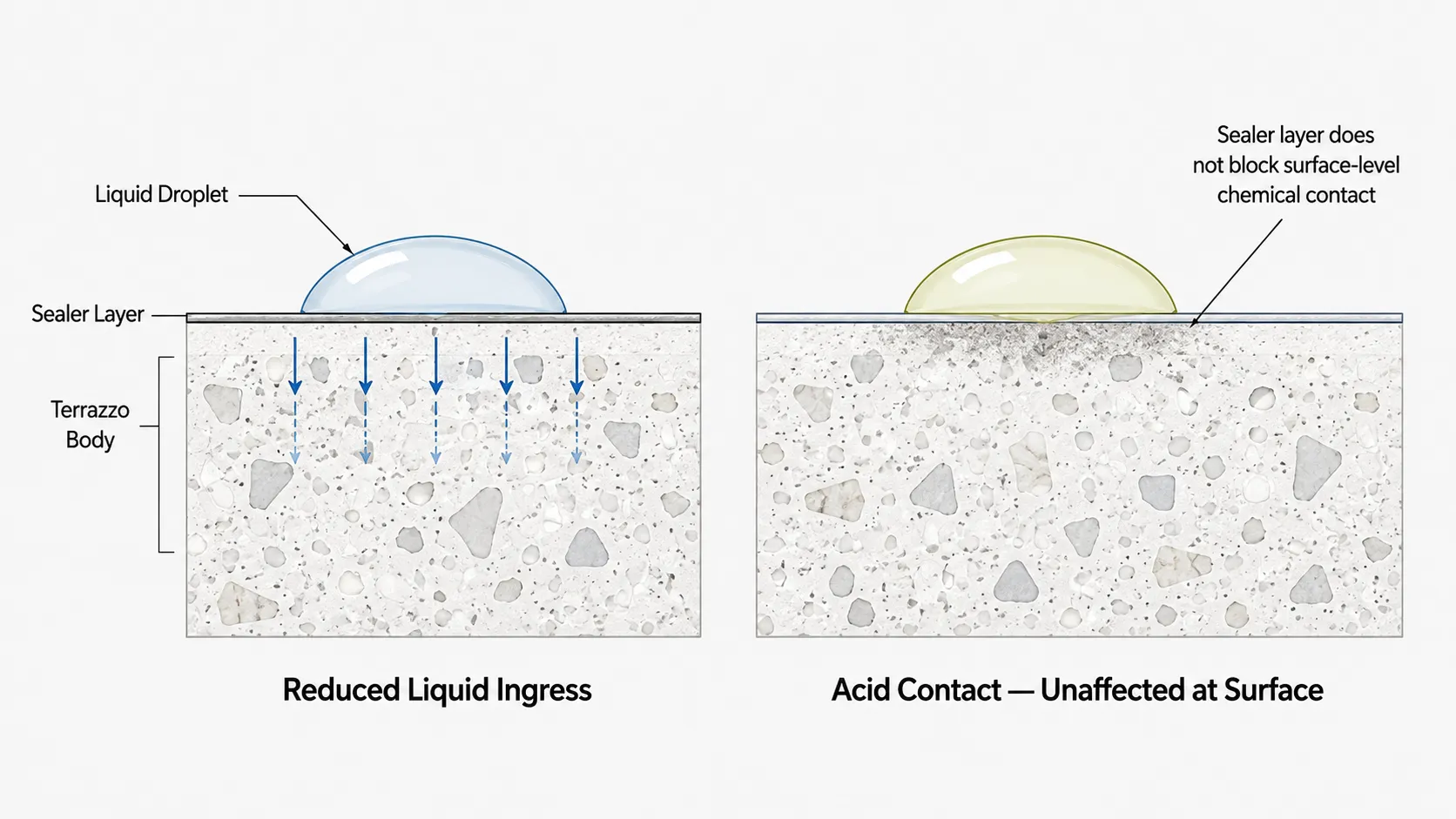
An appropriate impregnating sealer can reduce liquid absorption and improve resistance to staining. It does not make terrazzo completely stain-proof or acid-proof.
Resealing should also not be based on a fixed internet rule such as every two or three years. Traffic, cleaning chemicals, sealer condition and the manufacturer's instructions are more useful factors.
For bathrooms, do not assume that a “matte” or “honed” finish automatically proves wet-area suitability. Check the exact product and its intended-use or test information before installation.
For additional practical guidance on this material, see this white terrazzo review for Indian homes.
Think About Daily Wear and Future Repairs
Grit and sand carried into entrances can gradually dull or scratch a surface. Regular sweeping and sensible entrance protection can help reduce this type of abrasive wear.
Genuine terrazzo may also offer mechanical restoration options when suitable, depending on the product and depth of damage. A terrazzo-look GVT does not offer restoration in the same way because its appearance comes from the tile surface.
Future replacement is another point worth planning. Shade differences between production batches can make later matching difficult. Keeping some same-batch spare material can therefore be useful for future repairs.

What to Check Before Ordering
Before placing a bulk or project order, confirm the exact product category, applicable standard, water-absorption information, finish and intended use. If the tiles are for a bathroom, ask for relevant wet-use information.
Also confirm the recommended grout, compatible sealer and cleaning instructions. Avoid assuming that every terrazzo product behaves in the same way.
White terrazzo can be a practical flooring choice when its maintenance demands match the room and the homeowner's expectations. The better buying decision is not simply about choosing white or another colour. It is about selecting the correct material, understanding exposure and planning for everyday care.























Sign in to leave a comment.