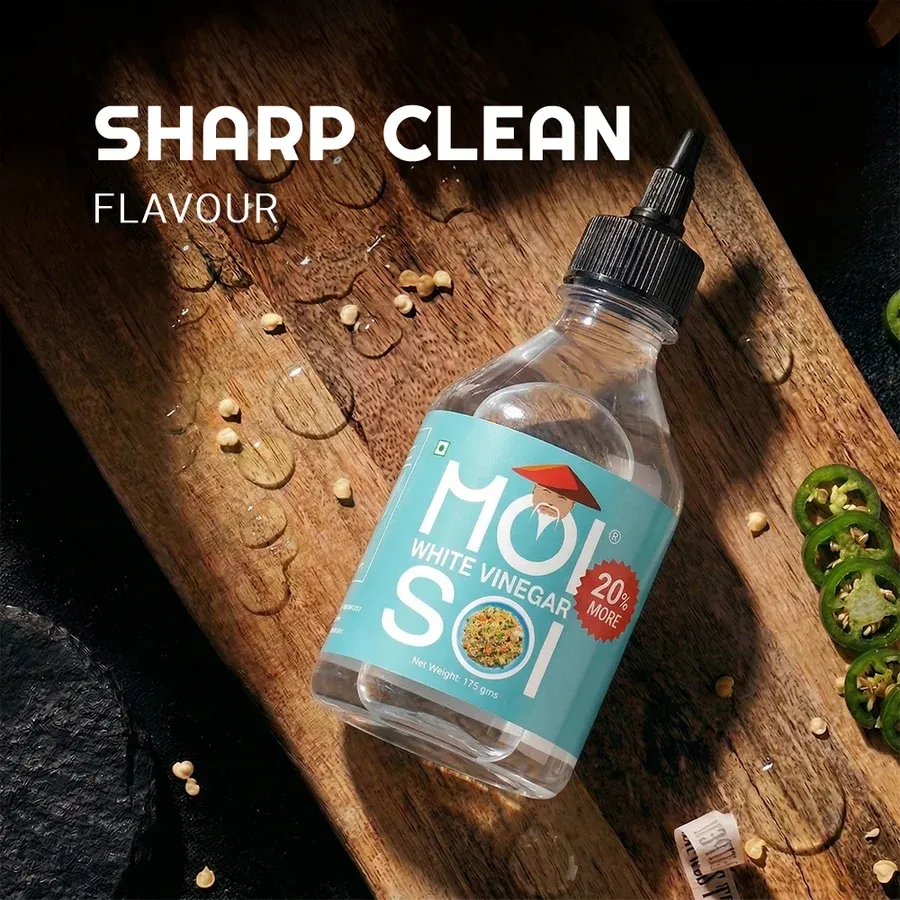

When you think of white vinegar, pickling may be one of the first uses that comes to mind. But this simple pantry ingredient has a much wider role in Asian cooking. Its clean acidity can brighten sauces, balance rich flavours, sharpen marinades, enhance stir-fries, and add freshness to noodles, salads, soups, and snacks.

In many Asian-inspired dishes, flavour comes from balancing different elements such as salty, sweet, spicy, savoury, and sour. White vinegar helps bring that balance together without overpowering the other ingredients.
Moi Soi White Vinegar is a versatile kitchen essential designed to add brightness and balanced acidity to everyday cooking. The product contains water, 5% acetic acid, wheat, and acidity regulator INS 260, and is positioned for uses including pickling, dressings, marinades, dipping sauces, stir-fries, rice bowls, noodles, soups, and Asian-style dishes.
What Is White Vinegar?
White vinegar is a clear vinegar with a clean, sharp acidic taste. In cooking, it is commonly used when you want acidity without adding much colour or a strong additional flavour.
This makes white vinegar particularly useful in Asian cooking. A small amount can make a sauce taste brighter, cut through richness, and help spicy, salty, or sweet flavours feel more balanced.
It is also easy to combine with other pantry staples. Soy sauce, chilli sauces, sesame oil, garlic, ginger, and a little sugar can all work with vinegar to create quick sauces and dressings.
1. Make Quick Asian Pickles
Pickling is one of the most familiar uses for white vinegar, and it is an easy way to add acidity and crunch to a meal.
Try making quick pickled cucumber, carrot, onion, cabbage, or radish. Combine white vinegar with a little sugar and salt, then add thinly sliced vegetables. Let them sit for a short period before serving.
These quick pickles work especially well alongside noodles, rice bowls, dumplings, sandwiches, and spicy dishes.
2. Balance Stir-Fry Sauces
A stir-fry can sometimes taste heavy when it contains salty sauces, oil, or rich seasonings. A small splash of white vinegar can provide the acidity needed to balance those flavours.
Add it toward the end of cooking rather than using a large quantity. Start with a small amount, taste, and adjust.
For an easy sauce, combine white vinegar with soy sauce, garlic, chilli sauce, and a touch of sugar. Toss it with vegetables, tofu, paneer, or noodles.
3. Create a Fast Dipping Sauce
One of the easiest ways to use white vinegar is in a dipping sauce.
Mix vinegar with soy sauce and chilli sauce for dumplings, momos, spring rolls, or crispy snacks. You can also add chopped garlic, spring onion, sesame seeds, or a little sesame oil for extra flavour.
Moi Soi specifically suggests mixing its White Vinegar with its chilli sauces to create a tangy dip.
For a quick option, try combining:
- 1 tablespoon white vinegar
- 1 tablespoon soy sauce
- 1 teaspoon chilli sauce
- A little minced garlic
Adjust the quantities according to your preferred balance of sour, salty, and spicy flavours.
4. Brighten Noodle Dishes
Noodles can benefit from acidity, particularly when paired with rich sauces.
Add a small splash of white vinegar to chow mein, stir-fried noodles, or noodle bowls just before serving. The acidity can lift the overall flavour and prevent the dish from tasting too heavy.
You can also combine white vinegar with soy sauce and chilli oil for a quick noodle dressing.
For a simple weeknight meal, toss cooked noodles with sautéed vegetables, your favourite Asian sauce, and a small amount of vinegar. Taste before adding more, as a little can go a long way.
5. Add Freshness to Asian Salads
White vinegar works particularly well in crisp salads because its acidity complements fresh vegetables.
Create a simple dressing using white vinegar, soy sauce, sesame oil, and a touch of sweetness. Pour it over cucumber, cabbage, carrots, greens, or noodles.
For a spicy version, add chilli oil or chilli sauce. For a sweeter dressing, add a small amount of sugar or honey.
The result is a quick dressing that can transform simple vegetables into a more flavourful side dish.
6. Improve Marinades
Acidic ingredients are commonly used in marinades to add flavour and balance.
Use white vinegar as part of a marinade for vegetables, tofu, paneer, or other ingredients. Combine it with soy sauce, garlic, ginger, chilli, and a little sweetness.
The key is moderation. Vinegar has a strong acidic taste, so it should complement the other ingredients rather than dominate them.
For grilled or pan-fried dishes, a balanced marinade can add a bright contrast to smoky, savoury, and spicy flavours.
7. Enhance Soups and Broths
A bowl of soup can sometimes benefit from a little acidity, especially when the broth contains rich or savoury ingredients.
Add a small splash of white vinegar near the end of cooking and taste before adding more. This can give the broth a brighter finish without changing its overall character too much.
It can work particularly well in Asian-style vegetable soups, noodle soups, and spicy broths.
Moi Soi also recommends using its White Vinegar to enhance soups and Asian-style dishes.
8. Balance Spicy Foods
Spicy dishes often become more rounded when heat is balanced with acidity.
If you are making a chilli-heavy sauce, spicy noodles, or a Schezwan-style dish, a little white vinegar can add a sharp counterpoint to the heat.
Try mixing it with chilli sauce, garlic, soy sauce, and a small amount of sugar. This creates a balanced condiment that can be served with noodles, fried rice, dumplings, or snacks.
9. Give Rice Bowls More Flavour
Rice bowls are another easy place to experiment with white vinegar.
Drizzle a small amount over a bowl containing rice, stir-fried vegetables, tofu, egg, or your favourite Asian-inspired toppings. Alternatively, turn it into a dressing with soy sauce and sesame oil.
The acidity can help bring the different components together, particularly when the bowl includes rich sauces or fried ingredients.
10. Pair It With Other Asian Condiments
White vinegar does not have to work alone. It can be used alongside the sauces and condiments already in your pantry.
For example, combine it with Moi Soi Hot Garlic Sauce or Schezwan Sauce to add tanginess and another layer of flavour. Moi Soi describes its White Vinegar as a pairing condiment for products such as Hot Garlic and Schezwan sauces.
You can explore more Asian sauces and condiments in the Moi Soi Asian Sauces & Condiments collection.
How Much White Vinegar Should You Use?
The amount depends on the dish, but it is generally best to start small. White vinegar has a distinct acidity, so adding too much at once can make a dish overly sharp.
A useful approach is to add a small splash, mix thoroughly, taste, and then adjust. This is particularly important for sauces, soups, dressings, and noodle dishes.
Think of vinegar as a balancing ingredient rather than the main flavour.
White Vinegar Beyond Pickling
From quick pickles and dipping sauces to noodle dishes, stir-fries, marinades, soups, and salads, white vinegar can do much more than preserve vegetables.
Its clean acidity makes it a practical ingredient for balancing bold Asian flavours at home. Whether you are cooking a quick weeknight stir-fry or putting together a dipping sauce for snacks, keeping a bottle in your pantry gives you an easy way to add brightness whenever a dish needs it.
You can explore Moi Soi White Vinegar for an easy addition to your Asian cooking pantry.
Frequently Asked Questions
1. What is white vinegar used for in Asian cooking?
White vinegar can be used for pickling, dipping sauces, marinades, dressings, stir-fries, noodle dishes, soups, rice bowls, and snacks. It adds clean acidity and helps balance rich, salty, sweet, and spicy flavours.
2. Can I use white vinegar in stir-fry?
Yes. Add a small amount toward the end of cooking to brighten the flavours. It works particularly well with soy sauce, chilli sauces, garlic, and other stir-fry seasonings.
3. Can white vinegar be used for noodles?
Yes. A small splash can add brightness to stir-fried noodles and noodle bowls. You can also combine it with soy sauce and chilli oil to make a quick noodle dressing.
4. Can I use white vinegar to make a dipping sauce?
Yes. Mix it with soy sauce and chilli sauce for a simple tangy dip. You can add garlic, spring onion, sesame oil, or other seasonings depending on the dish.
5. Does white vinegar make food spicy?
No. White vinegar adds acidity rather than heat. However, it can help balance and highlight spicy flavours when combined with chilli sauces or chilli oil.
6. How should I use white vinegar without making food too sour?
Start with a small amount, mix it into the dish, and taste before adding more. Vinegar is concentrated, so a little can be enough to brighten a dish without making it overly acidic.




























Sign in to leave a comment.