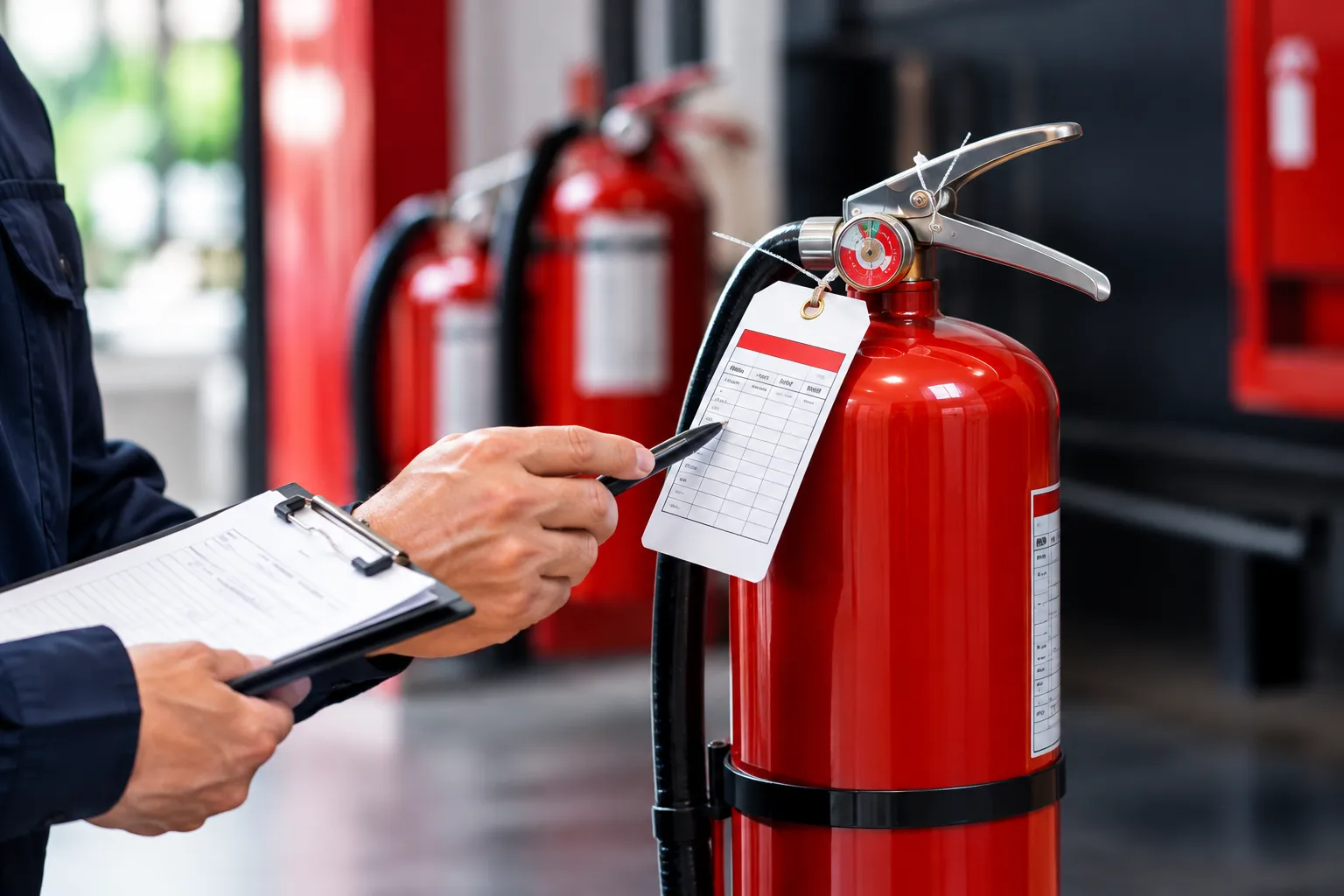

Many business owners assume that anyone with a bit of common sense can sign off on a fire extinguisher. That is only partly true. Some checks are fine for your own team to handle, while others must be done by a trained professional. Working with an experienced local fire extinguisher inspection team takes the guesswork out of it, but it also helps to understand exactly where the line falls between what you can do yourself and what you cannot.

Two Levels of Checking, Two Different People
Fire protection standards separate the work into two categories. One is a simple visual check, and the other is a full inspection and maintenance service. Each has its own rules about who may perform it.
The monthly check can be done by you or your staff. This is a quick look to confirm the extinguisher is where it should be and looks ready to use. No special license is needed. A responsible employee, a facility manager, or the business owner can handle it.
The yearly service must be done by a trained person. This is the detailed work that involves examining mechanical parts, checking internal condition, and applying a new service tag. It calls for training, the right tools, and in many areas, a certification.
What Your Own Team Can Do
A staff member can safely take care of the basics each month. That includes making sure the extinguisher is visible and unblocked, the gauge is in the green zone, the pin and tamper seal are in place, and the body shows no obvious damage. It also helps to jot down the date and initials on the tag or in a log.
This routine is valuable because it catches issues between professional visits. It does not replace the yearly service, though, and it should never be treated as one.
What Only a Qualified Technician Should Do
Several tasks belong strictly to trained professionals. Attempting them without the proper knowledge can create safety risks and leave you with records that do not hold up.
- Annual maintenance and detailed inspection of each extinguisher.
- Internal examination and servicing of the unit on its required schedule.
- Recharging extinguishers after use or pressure loss.
- Pressure testing where it is required.
- Repairs and part replacement involving valves, seals, and cylinders.
- Updating official service tags and keeping the related records.
Extinguishers hold contents under pressure, and some repairs can be dangerous if done incorrectly. A mistake may also leave you with a unit that looks fine but fails in an emergency.
Why Certification and Training Matter
A qualified technician has been trained on the specific brands, models, and extinguisher types they service, along with the standards that govern them. In many states and cities, technicians must also hold certifications or licenses issued by local authorities, and requirements can vary from one place to another.
This matters for more than safety. Fire marshals and insurance companies want to see that your service was done by a recognized professional. A tag signed by an unqualified person can be treated as no service at all.
Questions to Ask Before You Hire a Provider
Not every service company is the same. Before you commit, ask a few simple questions.
- Are your technicians certified or licensed for this work?
- Do you service all the brands and extinguisher types I own?
- Will I receive written reports and updated tags after every visit?
- Can you track my due dates and remind me in advance?
- How long have you been serving local businesses?
- Can you provide a replacement if one of my units is taken offline?
A company that answers these clearly and confidently is usually a good sign. Local providers also tend to understand regional fire codes and the expectations of area fire officials.
Who Should Not Be Doing the Work
A few shortcuts are common but risky. Avoid the following.
- Untrained staff performing yearly service. Good intentions do not make the work valid.
- Unlicensed contractors or handymen. They may lack the tools and certification.
- Self-applied tags without proper service. This can be seen as falsifying records.
- Anyone refilling or repairing extinguishers without the correct equipment. This can be unsafe and may void the manufacturer’s rating.
Training Your Team Is Still Worth It
Even though the yearly work belongs to professionals, your employees play a big role in fire safety. Teaching them how to spot problems, who to call, and how to use an extinguisher properly can make a real difference during an actual emergency. Many businesses pair regular service with hands-on staff training so everyone knows what to do.
The Bottom Line
You and your team can handle the monthly visual check. A certified technician should perform the yearly inspection, maintenance, recharging, and testing. Knowing the difference protects your people, keeps your records valid, and helps you pass any review without stress. If you are unsure whether your last service was done by a qualified provider, check your tags and paperwork today, and schedule a proper visit if anything looks questionable.

















Sign in to leave a comment.