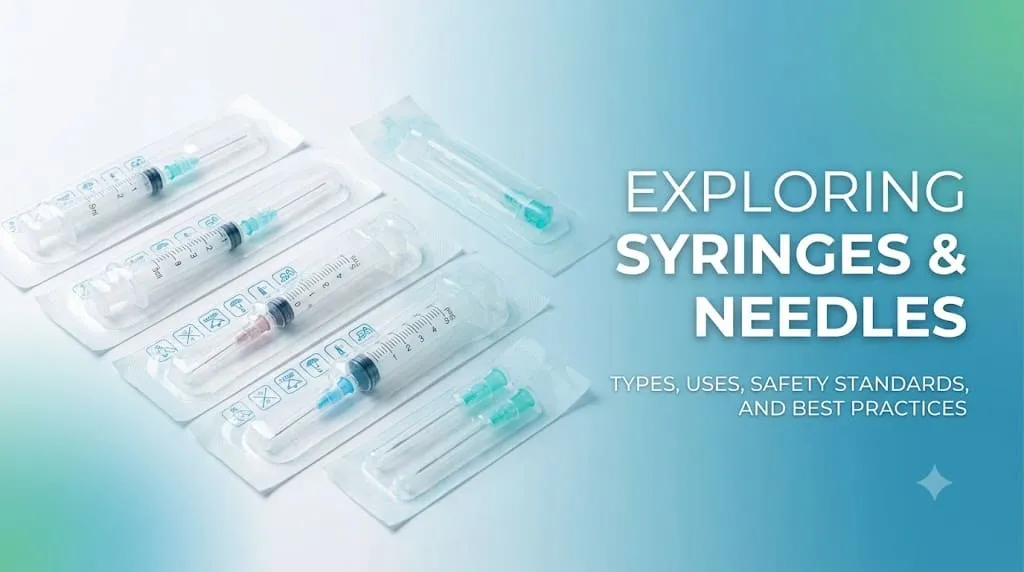

Syringes and needles are essential supplies across hospitals, clinics, vaccination centres, laboratories and other healthcare environments. Healthcare organisations often purchase these products in larger quantities because regular procedures can require a consistent supply of suitable injection equipment. Wholesale purchasing requires more than comparing prices. Buyers need to consider product specifications, intended use, sterility, packaging, sizing, storage and supply reliability.
For professional healthcare buyers, selecting suitable syringes and needles starts with understanding how different designs serve different clinical requirements. A syringe used for vaccination may have different specifications from one used for medication administration or other procedures. Needle gauge, length, syringe capacity and connection type can all influence suitability. This guide explains the main factors healthcare organisations should consider when purchasing injection supplies in larger quantities.
What Are Syringes and Needles?
A syringe is a medical device used to draw up, measure and administer liquids. It normally consists of a barrel, plunger and tip designed to connect with a suitable needle or other compatible component. Needles are available in different lengths and gauges, allowing healthcare professionals to select equipment according to the intended procedure. The combination of syringe and needle must be appropriate for the medicine, route of administration and patient.
Different healthcare settings have different requirements. Hospitals may need several syringe capacities and needle sizes across multiple departments. Clinics may require more specialised quantities based on their procedures. Understanding these differences helps procurement teams avoid buying products which are unsuitable for their intended application.
Why Buy Syringes and Needles in Wholesale Quantities?
Wholesale purchasing can help healthcare organisations manage regular consumption more effectively. Hospitals, clinics and distributors may use large quantities of injection supplies during routine patient care, vaccination programmes and other clinical activities. Maintaining an appropriate stock level can help prevent interruptions caused by unexpected shortages.
However, purchasing larger quantities requires careful planning. Excessive stock can create storage challenges and may lead to unnecessary waste if products reach their expiry dates before use. Procurement teams should therefore review historical consumption, expected demand, available storage space and stock rotation procedures before placing a large order.
Types of Syringes
Syringes are available in different capacities and configurations to meet various clinical needs. Smaller capacity syringes can support procedures where precise measurement of a relatively small volume is required. Larger syringes may be appropriate for applications involving greater volumes. The choice should always reflect the intended procedure and the volume of liquid being administered.
Syringes can also differ in their connection design. Some use a threaded connection designed to provide a secure attachment with compatible components, while others use a simpler tip configuration. Healthcare professionals should select a design compatible with the needle and procedure. Product specifications should be checked carefully before purchasing in bulk.
Understanding Needle Gauge and Length
Needle gauge refers to the thickness of a needle. The gauge number and physical diameter have an inverse relationship, so a higher gauge number generally represents a thinner needle. Needle length is another important consideration because different injection sites and patient characteristics may require different lengths.
Healthcare professionals should select needle specifications according to the medicine, route of administration, injection site and patient characteristics. Equipment suitable for one procedure may not be appropriate for another. Procurement teams should therefore avoid treating all needles as interchangeable. Clear product specifications are essential when creating purchasing requirements.
Choosing the Right Syringe Capacity
Syringe capacity should correspond with the volume required for the intended procedure. Using a suitable capacity can support accurate measurement and practical handling. A syringe which is considerably larger than the required volume may not provide the same level of practical control as a more appropriately sized option.
Healthcare buyers should consider the procedures performed within their organisation before deciding which capacities to stock. A hospital with several clinical departments may require a broader range than a small clinic. Reviewing actual usage can help create a more efficient purchasing plan while reducing unnecessary stock.
Sterility and Packaging
Sterility is a critical consideration for injection equipment intended for clinical use. Products supplied for sterile applications should remain protected within their original packaging until required. Packaging should be inspected before use to ensure it remains intact and suitable for the intended procedure.
Bulk buyers should also consider how individual products are packaged within larger cartons. Packaging can influence storage, stock control and distribution across different departments. Clear labelling can make it easier for healthcare staff to identify the correct product, size and specification. Procurement teams should review available packaging information before selecting products for regular use.
Safety and Single Use Considerations
Many injection products are intended for single use. Reusing needles or syringes can create serious infection risks and is not appropriate when products are designated for single use. Healthcare organisations should establish clear procedures for handling, using and disposing of injection equipment.
Safe disposal is also an important part of procurement planning. Used needles must be placed into suitable sharps containers immediately after use according to local procedures. Facilities should ensure staff have access to appropriate disposal equipment in areas where injections are administered. Good safety procedures protect patients and healthcare workers while supporting effective infection prevention.
Syringes for Different Clinical Applications
The appropriate syringe and needle combination depends on the clinical application. Vaccination programmes, medication administration, laboratory procedures and other healthcare activities can have different equipment requirements. The route of administration also influences equipment selection because intramuscular, subcutaneous and other injection methods may require different needle specifications.
Procurement teams should work with clinical staff when defining purchasing requirements. Clinical users can provide practical insight into the sizes and configurations needed in everyday practice. This collaboration can help ensure purchasing decisions reflect actual healthcare needs rather than relying only on general product categories.
Factors to Consider When Buying Wholesale
Price is naturally important when purchasing healthcare supplies in larger quantities, but it should not be the only consideration. Product specifications, sterility, packaging, quality information, intended use and availability are equally relevant. A lower purchase price may not provide good value if the product does not meet the requirements of the clinical environment.
Buyers should also consider order quantities and supply continuity. Large organisations may require regular deliveries, while smaller facilities may prefer purchasing quantities which fit their available storage capacity. A well planned procurement process should balance demand, stock levels, product suitability and overall purchasing efficiency.
Working With Wholesale Medical Suppliers
Choosing a suitable supply partner is an important part of healthcare procurement. wholesale medical suppliers can provide access to a broad range of healthcare products for hospitals, clinics, pharmacies and professional distributors. Buyers should assess the clarity of product information, communication, availability and documentation before establishing regular purchasing arrangements.
A good procurement relationship should support informed purchasing rather than focus only on transaction speed or price. Healthcare buyers may need information about dimensions, packaging, storage conditions, intended applications and other specifications. Clear communication can help reduce purchasing errors and make stock planning more predictable.
Storage of Syringes and Needles
Correct storage is essential for maintaining the condition of sterile injection equipment. Products should remain in their original packaging until they are required for use. Storage areas should be clean, dry and suitable for the conditions specified in the product documentation.
Healthcare organisations should also avoid placing heavy items on cartons containing delicate sterile supplies. Stock should be organised so older suitable products can be used according to the facility's stock rotation procedures. Regular inspection can help identify damaged packaging or other issues before products reach clinical use.
Managing Wholesale Stock
Effective stock management is especially important when purchasing injection supplies in larger quantities. Procurement teams should monitor usage patterns and compare them with current inventory. This can help organisations identify periods of increased demand and plan future orders more accurately.
Stock control should also take expiry dates and storage capacity into account. Ordering substantially more than an organisation can reasonably use may increase waste and create unnecessary storage pressure. A demand based approach can provide a better balance between availability and efficient inventory management.
Quality and Documentation
Healthcare procurement teams should review relevant product information before purchasing injection equipment. Specifications should clearly identify dimensions, capacity, gauge, length, packaging and intended use where applicable. Documentation can help clinical and procurement teams determine whether a product meets their requirements.
Clear documentation is also useful when products are distributed across different departments. Staff can refer to product information when checking whether a particular syringe or needle is appropriate for a procedure. Procurement teams should retain relevant documentation according to their organisation's quality management practices.
Sustainability in Healthcare Procurement
Healthcare organisations are increasingly considering resource efficiency when purchasing disposable clinical supplies. Responsible procurement can involve accurate demand forecasting, appropriate stock levels and careful management of packaging. Avoiding unnecessary overstock can reduce waste while also improving storage efficiency.
Sustainability should still be balanced with clinical safety and product requirements. Injection equipment must remain suitable for its intended use, and healthcare organisations should never compromise essential safety requirements in an effort to reduce purchasing costs. A thoughtful procurement strategy considers clinical needs alongside responsible resource management.
Conclusion
Wholesale purchasing of syringes and needles requires careful consideration of clinical requirements, product specifications, sterility, packaging, storage and stock management. Healthcare organisations should select products according to their intended application rather than relying solely on price or general product categories.
A well planned procurement strategy can help hospitals, clinics, pharmacies and healthcare distributors maintain suitable stock while reducing unnecessary waste. Collaboration between procurement teams and clinical users is particularly valuable because it ensures purchasing decisions reflect practical healthcare needs.
By reviewing product specifications, maintaining appropriate storage conditions and using effective stock control procedures, healthcare organisations can create a more reliable supply process. The priority should always remain patient safety, product suitability and responsible healthcare procurement.
Frequently Asked Questions
What should I consider when buying syringes and needles wholesale?
Healthcare buyers should consider syringe capacity, needle gauge, needle length, connection type, intended application, sterility, packaging, storage requirements and supply availability. The correct specifications depend on the procedures for which the products will be used.
Why are different needle gauges available?
Different needle gauges provide different needle diameters. The appropriate gauge depends on the intended procedure, medicine and patient requirements. Healthcare professionals should follow relevant clinical guidance when selecting the correct specification.
Can one syringe size be used for every procedure?
No. Different procedures may require different syringe capacities and configurations. Healthcare organisations should stock products according to their actual clinical requirements and the guidance relevant to each application.
Why is sterile packaging important?
Sterile packaging helps protect the product before use. Packaging should remain intact until the product is required. Damaged or compromised packaging should be managed according to the healthcare organisation's established procedures.
Should syringes and needles be reused?
Products intended for single use should not be reused. Reusing injection equipment can create infection risks and compromise patient safety. Used needles and syringes should be disposed of using appropriate clinical waste procedures.
How should wholesale injection supplies be stored?
Injection supplies should generally remain in their original packaging and be stored according to the product documentation. Storage areas should be clean, dry and suitable for the specified environmental conditions.
How can healthcare organisations avoid overstocking?
Procurement teams can review historical consumption, current inventory, expected demand and storage capacity before placing orders. Regular stock monitoring and appropriate stock rotation can also help reduce unnecessary waste.























Sign in to leave a comment.