Why a Custom Exhibition Booth Should Be Designed Around Visitor Movement

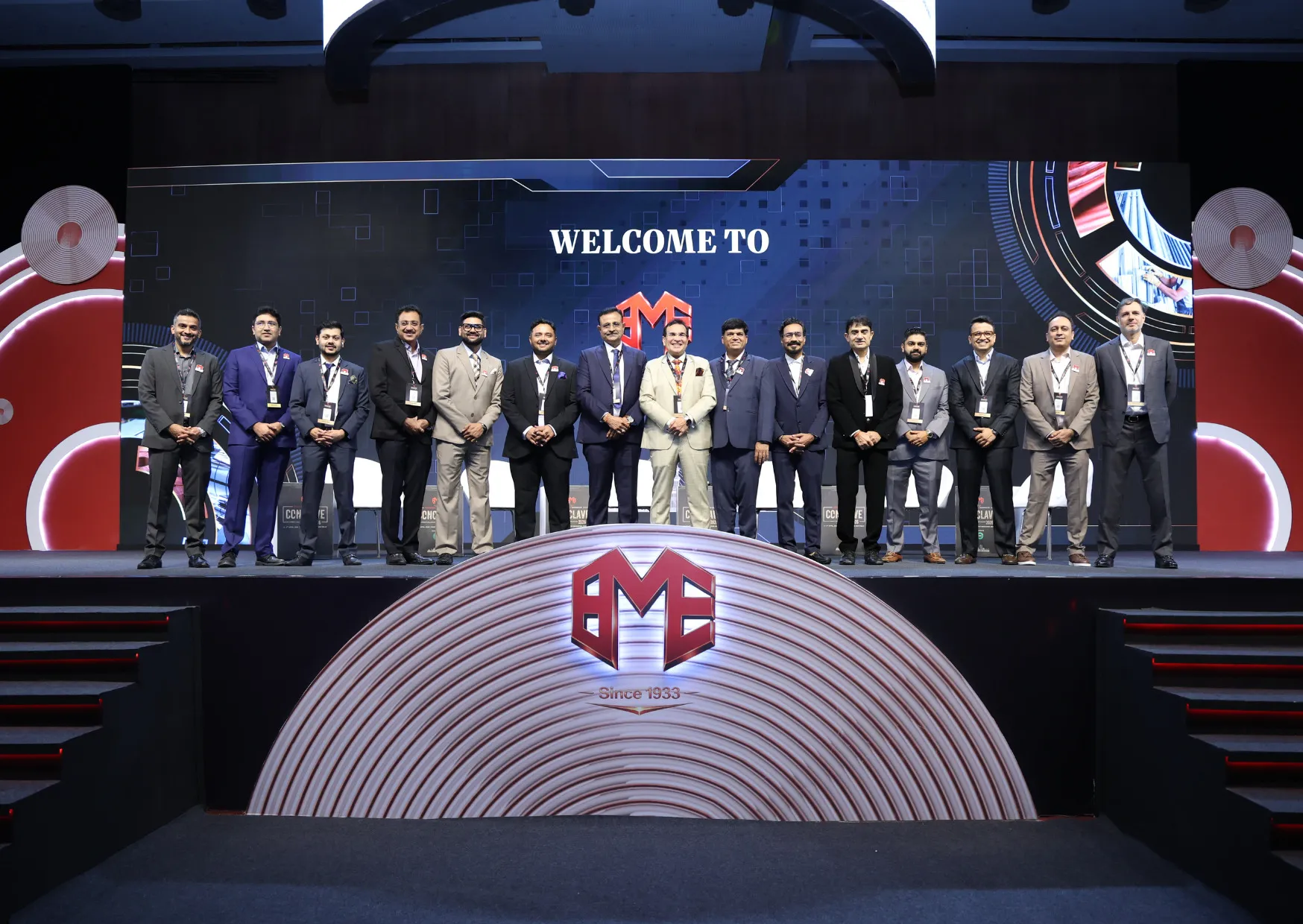
Ask a visitor to describe your stand afterwards. They rarely mention the logo wall. They talk about where they walked, where they got stuck, and where they felt watched.
That's why a custom exhibition booth should be designed around visitor movement first and appearance second. A custom exhibition booth is a route as much as a structure, and the route decides what visitors actually experience.
Why a Custom Exhibition Booth Should Be Designed Around Visitor Movement
Think of a visit as five stages:
- Approach: the visitor sees the booth from a distance and decides whether to slow down
- Pause: they stop and take in what it is
- Enter: they cross the threshold
- Engage: they talk, try, watch or sit
- Exit: they leave, ideally with a next step
Most booths are designed for the second and fourth stages. The first, third and fifth are where the losses happen.
Remember how long visitors are on their feet: CEIR data shows attendees have averaged more than eight hours on the exhibit floor per show, every year since 1996 except 2005. People arrive tired. Don't make them solve a puzzle at your stand.
Exhibition Booth Design as a Flow Plan
Good exhibition booth design begins with a movement map: where traffic comes from, where it slows, where people naturally stand. Entrances go where the flow already points. Demo areas sit away from the entrance, so a crowd at one doesn't block the other. The exit needs its own path, or the booth becomes a one-way trap.
Case Study: A Sweet Spot That Directed Traffic
The challenge. A building-technology brand had a good crowd, and the crowd was the problem. People stopped in the main flow to look at the stand, blocking those behind them. The demo zone at the back was a dead end, so visitors who went in had to push back out.
The approach. The team designed a "pause pocket," a recess just off the main aisle where an anamorphic LED illusion could be viewed. This content works best for a still viewer, because anamorphic content is easier to optimise for a fixed viewing position than for a moving one.
So the sweet spot became a traffic tool:
- People stepped out of the flow to get the effect, which cleared the aisle
- The pocket opened into the demo zone, so pausing led naturally to engaging
- A separate exit path returned visitors to the aisle without backtracking
The lesson. The illusion gave people a reason to move where the plan needed them. Movement design isn't decoration. It's choreography.
Exhibition Management and Trade Show Management: Rehearse the Flow
On paper, every flow works. Good exhibition management tests it with real people before opening. Walk the route with staff, then with someone who has never seen the plan. Watch where they hesitate.
Strong trade show management also adjusts after day one. Look at what the floor is telling you and move a chair, a sign or a host.
Examples of Experiential Marketing That Helped B2B Brands
Google Cloud Next had to bring a "New Way to Cloud" to life. The team built a three-step journey of imagine, learn and build, with touchpoints and engagement types that ran through every programme, so design, messaging and engagement all moved attendees along it.
That's visitor movement at conference scale: a journey with a beginning, middle and end. A booth can use the same logic on a smaller footprint.
Tips for Brands to Create Memorable Interactive Installations
- Place the experience where people can stop without blocking others
- Give each installation a clear start and finish, so queues move
- Offer a next step at the end, not only an effect
- Leave room for groups, because colleagues visit in pairs and threes
- Watch real behaviour on day one and adjust
What Retail Brands Gain From Immersive Marketing Activation
Retail has already moved from counting people to watching how they move. In Asia, Coach stores shifted away from measuring sales per square foot toward dwell time per customer.
For Exhibition Design teams, the parallel is plain. Footfall tells you who passed. Time spent and route taken tell you who was interested.
Draw the Route Before You Draw the Walls
Mark the approach, pause, entry, engagement and exit on your floor plan. If any stage has no designed answer, the booth has a gap.
Want a booth planned around how people actually move? StepOn Experience designs stands from the visitor's route outward. Share your floor plan and we'll map the flow with you.





Sign in to leave a comment.