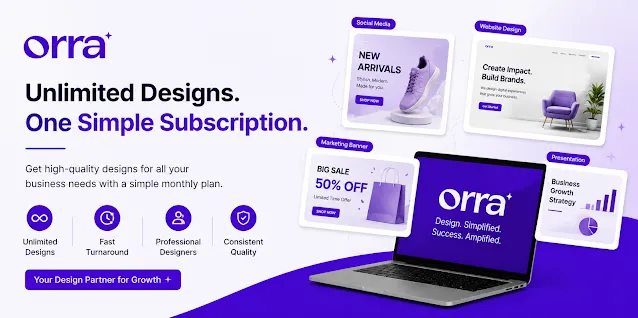

Great design is no longer something businesses need only for a new website or major rebranding project. Today, companies need fresh visuals almost every week. Social media posts, digital advertisements, sales presentations, landing pages, email graphics, product visuals, and marketing campaigns all depend on consistent creative work.
For many businesses, managing these requirements through freelancers or hiring a full-time designer is not always practical. This is where a design subscription can offer a more flexible way to manage ongoing creative requirements.
Instead of treating every design request as a separate project, businesses can establish an ongoing creative workflow that adapts to changing priorities. For startups, marketing teams, agencies, and growing companies, this approach can make design more accessible and easier to manage.
What Is a Design Subscription?
A design subscription is an ongoing creative service model where a business receives design support on a recurring basis. Rather than negotiating a new project every time a visual asset is required, the company works with a design partner through a structured subscription arrangement.
Depending on the provider and plan, creative requirements may include:
- Social media graphics
- Website and landing page designs
- Digital advertising creatives
- Presentation designs
- Marketing collateral
- Brand assets
- Email graphics
- Illustrations and visual content
- Product and promotional graphics
The exact scope depends on the service arrangement, but the central idea remains simple: businesses get access to ongoing design support without maintaining a traditional in-house design team for every requirement.
Why Businesses Are Moving Toward Subscription-Based Design
Creative requirements can be unpredictable. A company may need ten social media designs one month and several campaign assets the next. Traditional project-based hiring can make these fluctuations difficult to manage.
A subscription model provides greater continuity.
1. More predictable creative support
Recurring design requirements become easier to organise when there is an established creative workflow. Marketing teams can plan upcoming requests instead of repeatedly searching for available designers.
2. Less time spent on hiring
Finding a suitable designer for every individual project can take considerable time. A continuing relationship reduces the need to start the selection process again and again.
3. Better brand consistency
When the same design team becomes familiar with a company's visual identity, maintaining consistency across different assets becomes easier.
4. Support that can adapt
Business priorities change quickly. A subscription-based creative service can be useful when design requirements shift between campaigns, content, presentations, and other marketing activities.
Who Can Benefit From a Design Subscription?
A recurring design model can work for businesses at different stages.
Startups
Startups often need strong branding and marketing materials while operating with limited internal resources. Instead of immediately building a large creative department, founders can explore flexible external design support.
Marketing Teams
Marketing professionals frequently manage multiple campaigns at the same time. Having ongoing creative assistance can help them move from campaign planning to execution more efficiently.
Agencies
Digital marketing, advertising, and development agencies may need additional design capacity when their internal teams become busy. A recurring design partner can provide supplementary creative support.
Growing Businesses
As a company expands, its need for visual communication usually increases. New campaigns, products, social channels, and sales initiatives can all create additional design requirements.
How Does Subscription-Based Design Work?
The process can vary between providers, but a simple workflow usually involves several stages.
- Identify your recurring needs: Determine which types of design work your business requires most frequently.
- Select an appropriate service arrangement: Consider the volume, complexity, and turnaround expectations of your projects.
- Submit creative requests: Provide the relevant information, references, brand guidelines, and project objectives.
- Review the design: Give feedback and request appropriate revisions.
- Approve and use the asset: Once completed, the design can be used across the intended marketing channel.
A clear briefing process is particularly important. A designer needs to understand the purpose of the asset, target audience, preferred format, messaging, and brand requirements.
Practical Example: A Growing E-commerce Brand
Consider an e-commerce company preparing for a seasonal sales campaign.
The business may require:
- Homepage promotional graphics
- Instagram posts
- Paid advertising creatives
- Email banners
- Product promotional visuals
- Website banners
Hiring separate designers for each requirement could create unnecessary coordination. With recurring creative support, the marketing team can submit these requirements through an organised workflow and maintain a consistent visual direction throughout the campaign.
What Should You Look For in a Design Partner?
Choosing a creative service should involve more than comparing prices.
Consider these factors:
- Portfolio quality: Does the provider demonstrate work across relevant industries?
- Communication: Is the request and feedback process clear?
- Design range: Can the service handle different types of creative assets?
- Brand understanding: Can the team follow established guidelines?
- Scalability: Can the service accommodate changing requirements?
- Process: Is there a structured way to submit and manage requests?
Orra Design can be considered by businesses looking for an ongoing approach to creative production rather than relying entirely on one-off design projects.
Design Subscription vs Traditional Freelance Hiring
Both models can be useful, depending on the situation.
Freelancers may work well when a business has a highly specialised or one-time project. However, businesses with continuous creative requirements may prefer an ongoing relationship that eliminates repeated sourcing and onboarding.
The right option depends on factors such as project frequency, internal resources, budget structure, and creative complexity.
Frequently Asked Questions
Is a design subscription suitable for startups?
Yes. Startups often have recurring branding and marketing requirements without needing a full-time creative department. A subscription model can provide flexible external support.
Can businesses use subscription design for marketing?
Yes. Marketing teams can use recurring design services for social media content, advertising creatives, presentations, campaign assets, email graphics, and other visual materials.
Does a design subscription replace an in-house designer?
Not necessarily. It can complement an internal designer or provide external creative capacity when a company does not have a dedicated design team.
How should businesses prepare design requests?
A useful brief should explain the objective, audience, dimensions, copy, references, brand guidelines, and deadline. Clear information generally helps designers produce more relevant work.
Build a More Consistent Creative Workflow
Modern businesses need design continuously, not occasionally. From everyday social content to major campaign launches, visual communication has become an essential part of how brands present themselves.
A design subscription offers a practical way to approach recurring creative work with greater structure and flexibility. Instead of treating every requirement as an isolated task, businesses can build an ongoing design workflow around their changing needs.
With the right process and creative partner, businesses can spend less time coordinating design work and more time focusing on marketing, customers, and growth. Explore how Orra Design can support your ongoing creative requirements and create a more streamlined approach to design.

























Sign in to leave a comment.