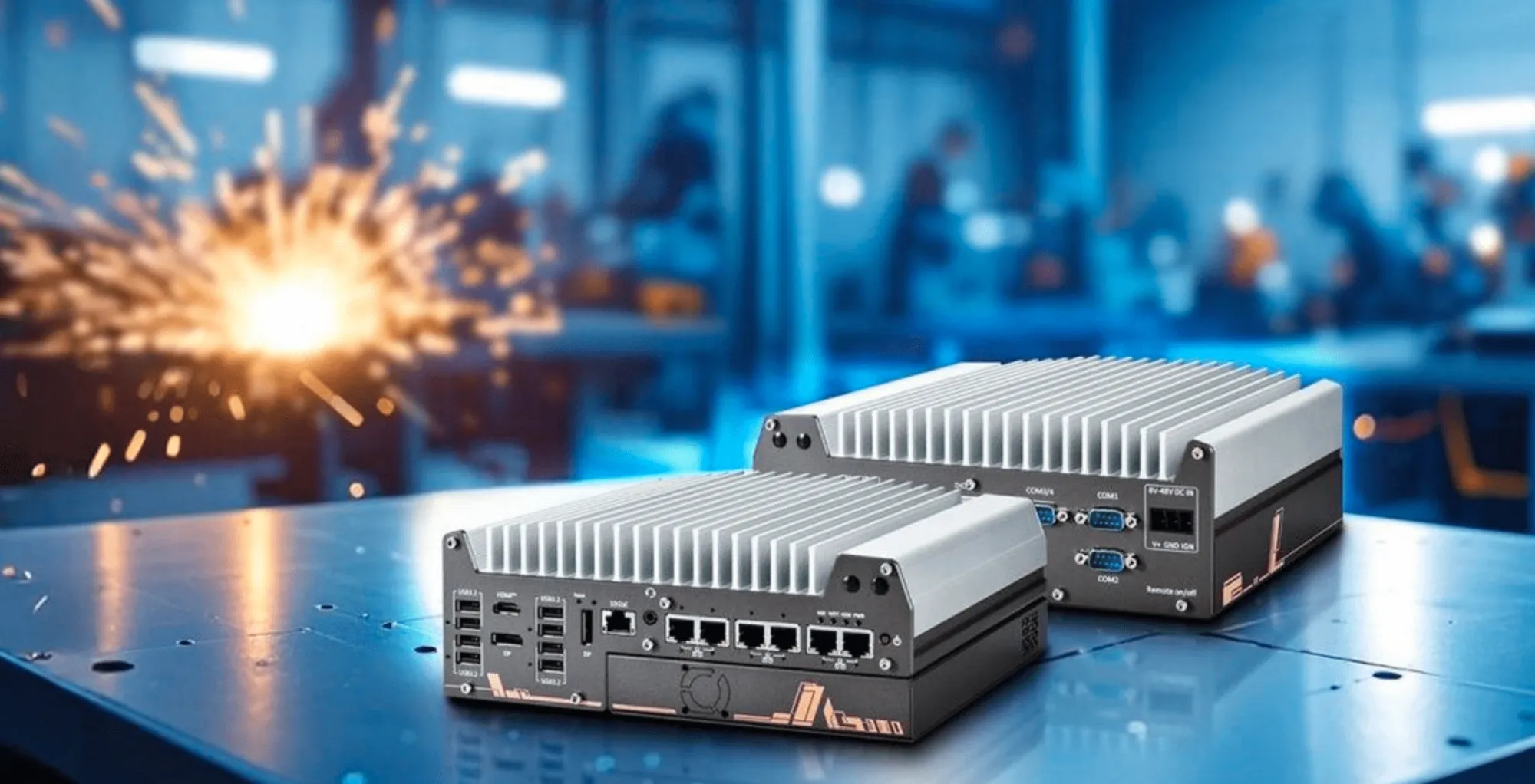


The pace and demands of today’s industrial world have never been more intense. Manufacturing plants, transportation hubs, oil refineries, and energy operations now run 24/7—and downtime can carry staggering consequences. In these rugged environments, where equipment faces constant vibration, airborne dust, moisture, fluctuating temperatures, and even corrosive chemicals, standard computing solutions simply don't survive. This challenging landscape calls for a new generation of technology designed from the ground up to endure: the fanless embedded pc.
At ValanoIPC, we understand that reliability and efficiency are more than industry buzzwords—they’re survival essentials. Over the years, we've seen every type of industrial environment, each with unique obstacles but sharing one unyielding rule: you can’t afford equipment failure. That’s precisely why the fanless embedded pc has risen as the backbone of mission-critical systems for forward-thinking organizations.
Unlike traditional computers, a fanless embedded pc is built without moving parts, employing advanced passive cooling and a rugged design for seamless performance in unforgiving settings. While conventional industrial or desktop computers rely on fans to dissipate heat, every fan introduces weakness—a point of failure, dust entry, and maintenance burden that jeopardizes uptime. The fanless approach eliminates these risks entirely.
A. Understanding Rugged Environments
Rugged environments can’t be defined just by a single harsh factor—they pose a combination of stressors:
- Dust and Debris: Concrete plants, mining sites, sawmills, and recycling facilities have airborne particulates that jam fans and coat sensitive electronics.
- Vibration and Shock: Trains, trucks, automated carts, and factory robots subject hardware to relentless shaking and impact.
- Extreme Temperatures: Outdoor kiosks, foundries, or freezer warehouses can swing from subzero to scorching.
- Humidity and Corrosive Agents: Food and chemical processing plants expose technology to daily wash down, water jets, or chemical fumes.
- Unstable Power: Fluctuating supplies, surges, or battery operation require resilience.
The result? Hardware that isn’t rugged by design quickly fails. That’s where fanless embedded pc technology thrives.
B. What is a Fanless Embedded PC?
A fanless embedded pc is a compact, self-contained computer designed to run reliably for years in harsh or mobile environments. It is “embedded” because it’s built for permanent installation inside equipment, kiosks, vehicles, or control systems rather than as a desktop PC.
Key Features:
- Passive Cooling: Heat is dissipated via metal heat sinks and clever chassis design. There are no fans—and thus no moving parts.
- Solid State Internals: SSD (solid state drive) storage and soldered components further reduce failure rates.
- Rugged Chassis: Usually machined from aluminum or sealed plastic, often with IP rating against dust and liquids.
- Industrial-Grade Components: Every chip, capacitor, and connector is selected for long life at temperature extremes.
- Flexible I/O: Extensive serial, Ethernet, USB, digital/analog I/O for device integration.
- Tiny Form Factors: From credit-card size to small boxes, fanless embedded pcs can fit in tight spaces
By design, these units are the workhorses of the Industrial Internet of Things (IIoT), data logging, real-time control, and edge computing in environments where nothing less than the toughest will do.
C. The Drawbacks of Conventional and Fan-Cooled Systems
Commercial computers and even some legacy industrial machines still rely on internal fans or active cooling. While appropriate for offices or controlled spaces, this “old-school” approach has important drawbacks for rugged environments:
- Fan Failure: Fans wear out—and failure leads to rapid overheating, shutdowns, and possible hardware damage.
- Contaminant Ingress: Fans draw in dust, oil, moisture, and caustics, leading to clogged airflow and ruined circuitry.
- Maintenance Downtime: Cleaning or replacing fans requires scheduled downtime, labor, and added cost.
- Noise Pollution: Even a quiet fan adds perceptible noise, interfering in sensitive labs, test rooms, or public installations.
- Shortened Lifespan: Moving parts accelerate wear, and the entry of grime compromises longevity.
In short, fans create vulnerabilities that simply aren’t compatible with the reliability needs of modern industrial customers. That’s why forward-looking leaders now specify fanless embedded pc devices instead.
D. Fanless Design: The Technical Advantage
A fanless embedded pc overcomes all of the above by adopting a design philosophy based on simplicity and robustness.
Passive Cooling
- Thermal Pathways: Internal components are thermally coupled to the chassis, efficiently exporting heat to the environment.
- Heatsink Structures: Fins increase surface area, boosting natural convection without forced air.
- Component Layout: Hot chips (like CPUs) are placed for maximum heat flow and minimum thermal resistance.
Sealed Construction
- No Intake Grilles: Enclosures are sealed—often to IP65 or higher—blocking all particulate ingress.
- Corrosion Protection: Materials and coatings are selected to resist chemicals or salty atmospheres.
Solid State Resilience
- No Spinning Parts: Hard drives are replaced by shock-proof SSD or eMMC storage.
- Soldered RAM and components: These remain stable even under sustained vibration.
Fanless embedded pcs are also smaller, lighter, and more reliable for mobile applications—making them ideal for vehicles, control cabinets, remote sites, and hostile factory locations.
Read More: Fanless Embedded PC: The Silent Workhorse for Industrial and Edge Applications!
E. How a Fanless Embedded PC Thrives in Harsh Conditions
Let’s break down where the fanless embedded pc really shines:
a. Dusty and Dirty Workspaces
Whether in a concrete batching plant or a bakery, airborne particles are inevitable. Traditional PCs clog, overheat, and die. But a high-quality fanless embedded pc from ValanoIPC remains impervious—sealed tight, no airflow means no entry points for dust or crumbs.
b. Extreme Temperatures
Standard computers slow or fail when subject to heatwaves or frosty conditions. Fanless embedded pcs are engineered to boot and operate reliably from -40°C to +85°C (depending on the model), making them perfect for both polar and equatorial deployments.
c. High Vibration and Shock
On moving vehicles, transportation lines, or mounted to heavy machinery, vibration is the enemy. Fans, HDDs, and loose connectors all fail rapidly. Fanless embedded pcs use rugged soldered boards, SSDs, and secure fasteners to provide continual uptime even in the most punishing mobile scenarios.
d. Humidity and Moisture
Environments with frequent washdowns, splashing, or condensation—such as food processing plants—require sealed computers. An IP67-rated fanless embedded pc can be power-washed, sprayed, or installed in outdoor kiosks without risk.
e. Chemical and Oil Resistance
Paint shops, metal plating, oil refineries, or marine applications expose electronics to aggressive agents. With the right encasing and coated boards, fanless embedded pcs are protected against these corrosive attacks.
F. Mission-Critical Applications
The versatility and resilience of the fanless embedded pc make it suitable for a wide range of applications, often forming the heart of systems where failure is not an option:
- Automated Factory Controls: Machine vision, PLC communication, and robotic arms.
- Edge Data Logging: Monitoring energy usage, equipment health, and environmental sensors in real time.
- Transportation & Vehicle Management: GPS, dispatch, surveillance, and control in trains, trucks, commercial fleets.
- Oil & Gas Operations: Remote pipeline monitoring, rig management, SCADA.
- Digital Signage: Outdoor advertising, drive-thru menus, wayfinding kiosks.
- Medical Devices: Lab analyzers, patient monitoring, and sterilization-critical uses.
- Military and Aerospace: Command & control in armored vehicles, unmanned systems, aircraft.
G. How to Select the Right Fanless Embedded PC
Choosing the ideal fanless embedded pc depends on:
- Environmental Certification: IP65/67/69K for water/dust; ATEX for explosive atmospheres; EMC shielding for high interference locations.
- Performance Requirements: Appropriate CPU (Intel/ARM), RAM, and storage to meet the application’s needs.
- I/O and Expansion: Enough serial, Ethernet, CAN, USB, or digital I/O ports for your sensors, robots, PLCs, etc.
- Operating Temperature Range: Confirm operating temperatures for both ambient extremes and potential enclosure heating.
- Size & Mounting: Designed form factors to fit inside cabinets, panels, or tight vehicle spaces.
- Vendor Support & Service: Select a supplier (like ValanoIPC) offering lifecycle management, quick-turn support, and customization.
H. Deployment Tips and Maintenance
To maximize the reward from your fanless embedded pc investment:
- Correct Installation: Secure mounting protects against shock and vibration; plan thermal paths for efficient heat dissipation.
- Environmental Sealing: Confirm gland seals/cable entry are as robust as the computer itself.
- Remote Monitoring: Use remote health checks and software updates to manage large fleets with minimal on-site visits.
- Periodic Inspection: Although maintenance is vastly reduced, annual inspections to check connectors and seals are wise.
Thanks to the passive and sealed design, ongoing user intervention is virtually nil—translating to vastly higher long-term operational efficiency.
The era of tolerating preventable system failures in rugged environments is over. The fanless embedded pc stands as a beacon of reliable performance, extraordinary durability, and seamless efficiency for industrial operators determined to rise above harsh conditions and unplanned interruptions.
Compared to legacy computers—plagued by cooling fans, dust ingress, and frequent maintenance—fanless embedded pcs all but eliminate downtime and set a new standard for operational continuity. In an industrial world where every second counts, this technology is not just wise—it’s essential.
Frequently Asked Questions (FAQ)
Q1: What main advantage does a fanless embedded pc offer over conventional industrial computers?
A: The biggest advantage is reliability—no moving parts means drastically reduced failure points, no dust or humidity ingress, less maintenance, and a longer lifespan.
Q2: Isn’t a fan required for high-performance computers?
A: Advances in CPU efficiency and thermal engineering allow modern fanless embedded pcs to tackle demanding industrial workloads, from PLC orchestration to edge analytics.
Q3: Can a fanless embedded pc operate continuously in a hot environment (like a steel mill)?
A: Absolutely. Models like those from ValanoIPC are rated for wide temperature extremes; the only usual limitation is environmental heat removal, not device endurance.
Q4: Are these computers hard to install and configure?
A: Not at all. Most fanless embedded pcs run standard operating systems, accept familiar peripherals, and include remote management tools.
Q5: What’s the typical lifespan?
A: Five to ten years is common in rough service, far exceeding commercial computer lifetimes in the same role.
Q6: Do fanless embedded pcs support wireless and remote connectivity?
A: Yes! Most support Wi-Fi, 4G/5G, and Bluetooth as options, plus remote management for updates and diagnostics.
Q7: Are there limitations to the applications or software I can run?
A: Generally, if the workload is suitable for embedded/industrial form factors, there are few limitations—compatibility with Windows, Linux, or RTOS is typical.
Q8: Can they be customized? What about size?
A: One of the strengths of ValanoIPC is configuration: sizes, I/O layouts, special certifications, and branding can be tailored for your needs.
Q9: Are fanless embedded pcs more expensive upfront than traditional PCs?
A: Upfront cost might be higher, but dramatically reduced maintenance, downtime, and replacement frequency provide a far lower total cost of ownership.
Q10: Are fanless embedded pcs future-proof as industrial standards evolve?
A: They’re designed with flexibility in mind—modular I/O, software upgrades, and support for modern protocols ensure long-term viability.


























Sign in to leave a comment.