

Few instruments in medicine carry the symbolic weight of the stethoscope. It has represented clinical practice for over two hundred years, and yet the device itself is finally catching up with the rest of modern healthcare technology. A stethoscope with amplifier isn't a reinvention of auscultation—it's a refinement of it, giving physicians a level of acoustic clarity that a purely mechanical device was never built to deliver.
Healthcare today looks very different from the setting the original stethoscope was designed for. Telemedicine consultations, home visits, overcrowded hospital wards, and a wide range of patient body types have all exposed the acoustic limits of traditional devices. A murmur that goes unheard or a breath sound too faint to register can quietly turn an early diagnosis into a delayed one. Amplified auscultation exists specifically to close that gap.
Where the Traditional Stethoscope Struggles
A conventional stethoscope works by transmitting sound mechanically through tubing directly into the listener's ears. That's fine in an ideal, silent environment—but clinical practice rarely offers one. Emergency rooms, general wards, and rural outreach camps are consistently loud. Add in natural physiological differences between patients—larger body frames, pediatric anatomy, elderly patients with weaker cardiac output—and even a highly experienced clinician can miss a subtle but important sound.

This isn't a matter of skill. It's simply a hardware limitation. A digital stethoscope gets around this by converting acoustic sound into an electronic signal, one that can be amplified, filtered, or displayed as a waveform, effectively turning passive listening into active, assisted diagnosis.
What Actually Makes an Amplified Stethoscope Different
An amplified stethoscope relies on internal sound sensors that electronically boost what's captured, rather than depending solely on how well vibrations travel through tubing. The result is a far cleaner, stronger signal—heartbeats and lung sounds that would otherwise be borderline inaudible become clearly distinguishable.
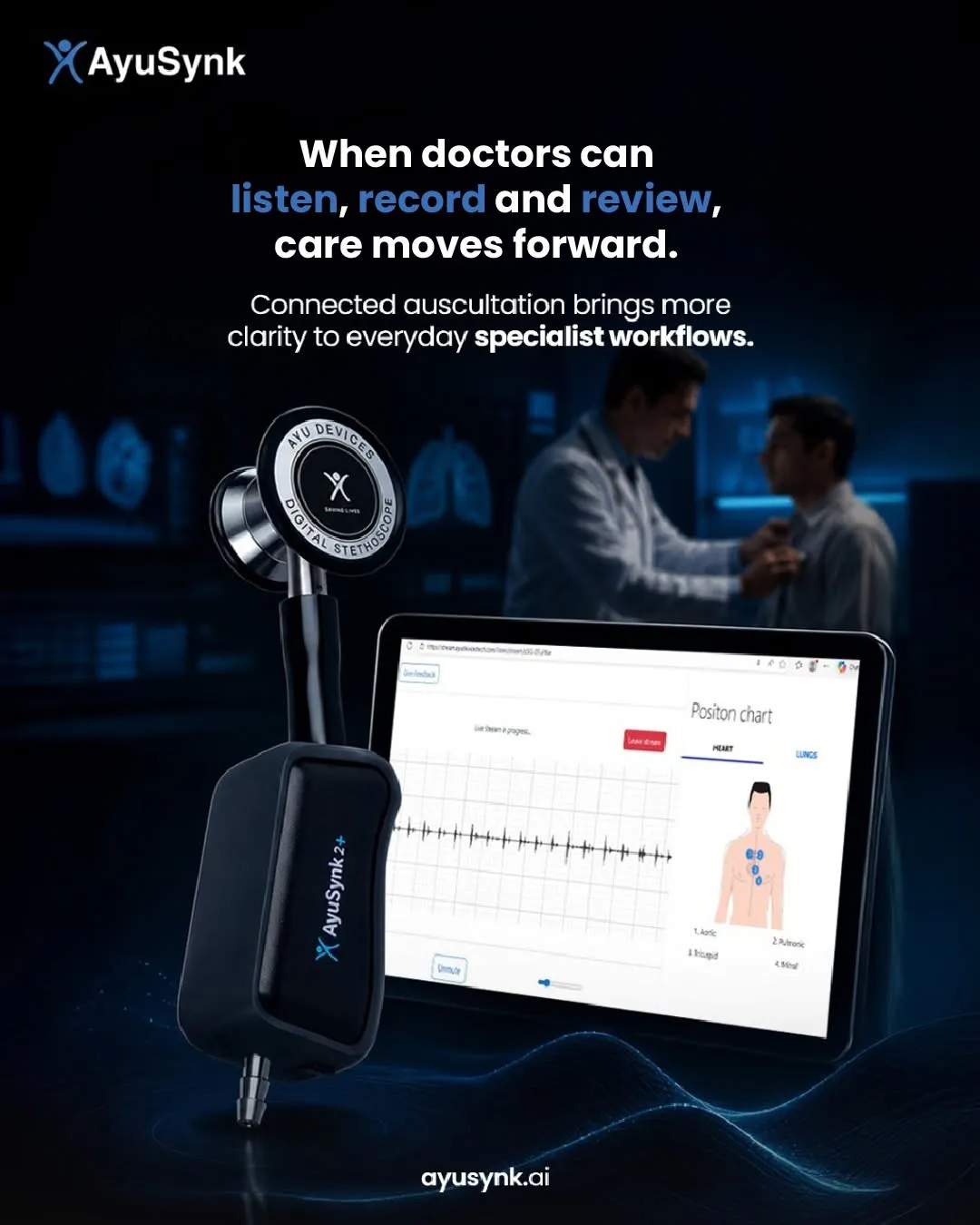
Many amplified models also add Bluetooth connectivity, on-screen waveform displays, and recording functionality, turning a simple listening device into a connected diagnostic tool that fits naturally into a telemedicine or digital-hospital workflow. It helps to know the difference between a general digital electronic stethoscope and one specifically built around amplification—the terms are often used interchangeably, but amplification is the feature that most directly improves diagnostic accuracy.
Why Amplification Actually Matters in Practice
Clearer Cardiac and Respiratory Sounds
Detecting a heart murmur in a patient with a larger body frame, or catching a faint wheeze in a newborn, has always challenged even seasoned clinicians. Amplification substantially narrows that challenge. Sounds that would normally blend into background noise stand out clearly, giving doctors more confidence both in what they hear and in what they can rule out.
Fewer Missed or Delayed Diagnoses
In high-pressure environments like ICUs and emergency departments, decisions often need to be made within minutes. A weak or unclear auscultation finding can trigger unnecessary delays or repeat testing just to confirm something that should have been obvious the first time. Amplification reduces that ambiguity considerably, letting clinicians trust what they're actually hearing.
A Practical Solution for Clinicians with Hearing Loss
This is a benefit that rarely gets discussed but genuinely matters. Doctors with mild hearing loss—a more common reality than most people realize—often struggle with standard stethoscopes despite years of clinical experience. Adjustable amplification and customizable loudness let these clinicians perform auscultation just as accurately as anyone else.
Dependable Performance in Noisy Settings
Rural medical camps, crowded outpatient clinics, and busy general wards are almost never quiet. Many amplified stethoscopes now include active noise cancellation, filtering out background interference so the clinician can focus entirely on the patient's sounds. This single feature often determines whether a diagnosis is confident or uncertain.
Clinical Areas Where Amplified Stethoscopes Excel
Pediatric cardiology is one of the strongest use cases. An infant's heartbeat is naturally faster and quieter, making early detection of congenital murmurs genuinely difficult. A dedicated pediatric stethoscope with amplification gives pediatricians a meaningfully better chance of identifying these issues at the very first checkup.
Critical care and triage benefit just as much. When decisions have to be made quickly, amplified auscultation helps physicians confirm or rule out findings with greater certainty, without relying on guesswork around a faint sound.
Telemedicine is arguably where this technology has the most impact. A physician conducting a remote consultation can now hear a patient's heart and lungs with a clarity close to an in-person exam—and in some cases, share recorded sounds with a specialist for a second opinion. This addresses a long-standing gap in remote physical examination.
Medical education is a growing use case too. Students can replay recorded heart and lung sounds, correlate them against visual waveforms, and build diagnostic pattern recognition far faster than depending purely on live patient encounters.
How to Choose the Right Amplified Stethoscope
Not every amplified stethoscope is designed for the same clinical setting, so it helps to ask a few practical questions first:
- What environment will you use it in most? A busy hospital ward demands different noise handling than a rural clinic or a home-based telemedicine setup.
- Do you need digital integration? If recording, sharing, or reviewing sounds later is important to you, prioritize app connectivity and cloud storage.
- Is noise cancellation essential? For clinicians regularly working in loud settings, this feature alone can justify the upgrade.
- Do you need wireless functionality? This matters most for doctors focused on telemedicine and remote care.
- What's the long-term value? Price matters, but so do build durability, ongoing software support, and manufacturer reliability.
Doctors exploring a wireless digital stethoscope should also compare a stethoscope with a digital display against a fully app-integrated option like the AyuSynk 2 Pro Advance, which combines amplification, Bluetooth connectivity, and waveform visualization into one device. For cardiology-focused practice, an ECG-integrated digital stethoscope adds an additional layer of diagnostic capability beyond amplified sound alone.
An Upgrade That's Becoming a Necessity
It's easy to dismiss amplified stethoscopes as a premium extra rather than a practical requirement. But given how much diagnostic accuracy depends on catching subtle, easily missed sounds, amplification is steadily shifting from optional to expected—particularly for clinicians working in telemedicine, pediatric care, or consistently loud environments.
As healthcare across India continues to modernize, tools like the stethoscope with amplifier are helping bridge the distance between traditional clinical skill and the practical demands of contemporary medicine. For any physician weighing this upgrade, the most useful starting point is identifying the specific problem you're trying to solve—ambient noise, hearing sensitivity, remote consultations, or medical training—and choosing a device built around that need.























Sign in to leave a comment.