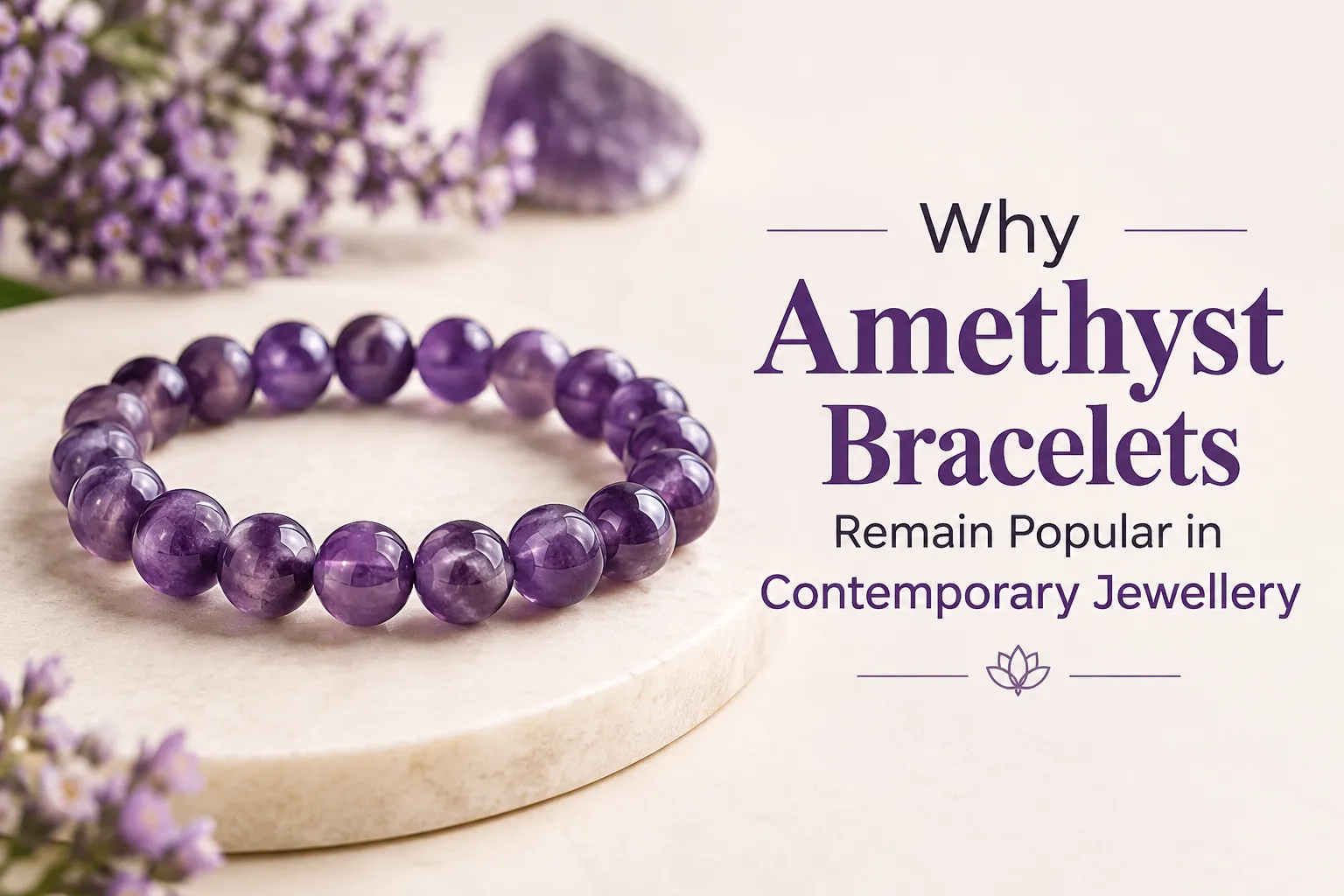

Some jewellery trends come and go within a season. Others seem to stay around because they offer something beyond a fashionable appearance. Amethyst jewellery belongs to the second category. Its rich purple color, natural variations, and long association with symbolism have helped it remain a familiar choice for jewellery lovers.
Today, the amethyst bracelet is available in everything from delicate minimalist designs to bold crystal bead styles. But what keeps this particular stone relevant when jewellery trends are constantly changing?
The Appeal of Amethyst’s Purple Colour
The first thing most people notice about amethyst is its color. Shades can range from very pale lavender to deep purple, with some stones showing different tones across the same piece.
Purple has traditionally been associated with qualities such as elegance, creativity, and luxury. That gives amethyst an advantage in jewellery because it can feel both distinctive and sophisticated.
A lighter shade can create a soft, understated look, while darker purple stones can make a bracelet feel richer and more dramatic.
A Natural Stone With Individual Character
One reason people enjoy gemstone jewellery is that natural stones rarely look completely identical. Small differences in color, clarity, patterns, and texture can give each piece its own character.
This is especially noticeable in beaded bracelets. Two amethyst bracelets may use the same type of stone but still look slightly different when placed side by side.
For people who appreciate jewellery that feels less mass-produced, these natural variations can be part of the attraction.
Amethyst Has a Long Cultural History
Amethyst is not a recent addition to jewellery. The gemstone has been used in ornaments and decorative objects for centuries, and various cultures have attached symbolic meanings to it.
Historically, purple itself was sometimes connected with royalty and status because certain purple dyes were difficult to produce. As a result, purple gemstones could naturally take on an association with luxury and prestige.
Modern jewellery does not need to follow those historical meanings literally, but the connection helps explain why amethyst continues to feel distinctive.
Why Amethyst Works Well in Bracelets
Bracelets give gemstones plenty of room to be visible without making the accessory feel overly formal. An amethyst bracelet can be worn alone or combined with other pieces, depending on its design.
A simple strand of polished beads can work with everyday clothing, while a bracelet featuring faceted stones and metal details can feel more refined.
Because amethyst has a recognizable color, it can also become a small focal point when paired with neutral outfits.
From Traditional to Contemporary Designs
Modern jewellery designers have found plenty of ways to reinterpret amethyst. Instead of using the stone only in traditional settings, they may combine it with stainless steel, silver-toned elements, gold finishes, charms, or other gemstones.
Minimalist designs may use a few carefully placed stones, while contemporary bracelets can feature irregular shapes or mixed textures.
This flexibility allows amethyst to fit different fashion preferences. Someone who prefers clean jewellery can choose a subtle design, while another person can go for something more expressive.
The Symbolic Side of Amethyst
Beyond appearance, amethyst is often associated with qualities such as calmness, clarity, balance, and spiritual reflection in various crystal and jewellery traditions.
These are symbolic or traditional associations rather than scientifically established effects. Still, they can influence why someone chooses the stone.
For one person, an amethyst bracelet may simply be a beautiful accessory. For another, it may represent a personal intention, a meaningful phase of life, or an interest in crystal traditions.
The same piece can therefore have different meanings for different people.
Why Minimalism Has Helped Its Popularity
Contemporary jewellery often favors pieces that are easy to wear and style. Amethyst fits comfortably into that trend because the stone can make an impression without requiring an elaborate design.
A small bracelet with evenly sized beads can look polished with workwear, casual clothing, or festive outfits. Smaller stones can also be paired with a watch or layered with other bracelets.
That versatility makes amethyst less dependent on one particular fashion trend.
Choosing an Amethyst Bracelet Today
If you are thinking about buying an amethyst bracelet, consider more than the color alone. Look at the stone's finish, bead size, overall design, clasp or elastic construction, and how comfortably it sits on your wrist.
You may also want to decide whether you prefer a natural, slightly varied appearance or a more uniform polished style.
Most importantly, choose a piece that works with your wardrobe and feels comfortable enough for the way you plan to wear it.
Why It Continues to Stand Out
Amethyst has managed to stay relevant because it brings several qualities together. It has a distinctive color, a long history in jewellery, natural variation, and enough versatility to work with both classic and contemporary designs.
It does not need an elaborate setting to attract attention. Sometimes, a string of beautifully finished purple stones is enough.
Final Thoughts
The popularity of the amethyst bracelet comes from more than a passing fashion trend. Its recognizable purple color, natural character, historical associations, and adaptability make it easy to incorporate into modern jewellery collections.
Whether you choose amethyst for its appearance, traditional symbolism, or simply because purple happens to be your color, it can add personality without feeling difficult to style. That balance between meaning and everyday wearability is what keeps this gemstone relevant in contemporary jewellery.





















Sign in to leave a comment.