Why Are Closing Wheels for Planter Useful for Better Furrow Closure?


Planting success depends on what happens in the seconds after a seed enters the furrow. The trench must close around the seed without leaving large air spaces or hard, compacted walls that can restrict early root growth. Well-designed closing wheels for a planter can help manage this final stage by moving soil back around the seed and improving contact with the surrounding soil.
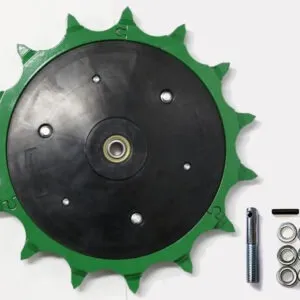
The Germinator closing wheel uses a steel design intended to close the seed “V,” reduce air pockets, and support consistent seed emergence. What makes this part of the planter so important for better furrow closure?
How Do Closing Wheels for Planter Support Better Furrow Closure?
The Germinator is designed as an alternative to traditional rubber closing wheels. Its steel construction helps move soil toward the seed trench while requiring less downforce, according to the product information. Effective closure requires the furrow sidewalls to break down so soil can settle around the seed rather than leaving a narrow channel beneath the surface.
The wheel design is also intended to properly cover the seed “V”, reducing open spaces around the seed and creating closer seed-to-soil contact. That contact matters because a seed depends on moisture from the surrounding soil during germination.
Better Seed-to-Soil Contact Starts in the Furrow
A seed may be placed at the correct depth and spacing, yet poor closure can still affect the surrounding environment. If loose soil remains only at the surface while the lower part of the trench stays open, moisture movement toward the seed may be less consistent.
This is where closing wheels for a planter can influence the final condition of the seed trench. By helping soil move inward from the sides, the closing system can reduce air pockets and place more soil directly around the seed. The Germinator is designed to support this type of contact for row crops such as corn, soybeans, sunflowers, sugar beets, and dry beans.
Good contact does not mean packing soil as tightly as possible. The aim is to create firm contact for moisture transfer while keeping the soil suitable for emergence and early root development.
Sidewall Compaction Can Interfere With Closure
One challenge during planting is sidewall compaction. When opener discs form the furrow, especially in certain moisture conditions, the trench sides may become smooth and compressed. If closing wheels simply press those walls together, the furrow may look closed at the surface while remaining poorly structured below.
The Germinator’s steel design is intended to reduce the risk of sidewall compaction while lowering the required downforce. Its action helps work the furrow walls so that soil can return toward the seed rather than remain a hardened boundary.
This matters because visible surface closure does not always indicate good closure around the seed. Checking the trench after the planter passes can provide a clearer view of actual seed coverage.
Soil and Tillage Conditions Change the Closing Job
Field conditions can vary throughout a planting season. Soil texture, residue, moisture, planting speed, and tillage practices all affect how easily a furrow closes. A setting that works in loose, worked soil may react differently in heavier ground or no-till residue.
The Germinator is described as suitable for different soil and tillage conditions, including heavy soil and no-till situations. That versatility can be useful when planting across fields with changing conditions. A closing system that continues to move soil toward the trench without excessive packing can help maintain a more consistent seed environment.
Operators should still inspect furrow closure during the day because moisture and soil behavior can change.
Compatibility Makes Upgrading More Practical
Improved furrow closure does not always require replacing an entire planter. The Germinator closing wheels are designed for use with many common planter systems, including selected John Deere, Kinze, AGCO White, Massey Ferguson, Great Plains, Monosem, Precision Planting Ready Row Unit, and Harvest International equipment.
This compatibility allows growers to focus on the closing stage while continuing to use an existing planter platform. The product is offered as a replacement for traditional closing wheels and does not require the rubber ring insert used with some factory-issued wheel designs.
Before making a change, growers should confirm that it is compatible with their specific planter model and consider how field conditions and row-unit settings affect performance.
Why Furrow Closure Deserves Attention
Furrow closure may seem like a small part of planting, but it affects the environment surrounding each seed. A trench that closes evenly can support better soil contact, more consistent access to moisture, and a clearer path for early root growth.
Closing performance should be evaluated within the complete planting system. Seed depth, opener condition, soil moisture, row-unit settings, and closing-wheel action all work together. Looking at only one part may miss the reason behind uneven emergence.
Conclusion
Better furrow closure starts with placing soil back around the seed without creating unnecessary compaction. Well-matched closing wheels for the planter can help reduce air pockets, improve seed-to-soil contact, and close the seed trench more effectively across changing field conditions.
For growers reviewing their planter setup, the Germinator provides a steel closing-wheel option designed for common row crops, multiple planter platforms, and a range of tillage conditions. Consider checking compatibility and reviewing the product details before the next planting season. Explore the closing-wheel options and choose a setup suited to your planter and field conditions.



Sign in to leave a comment.