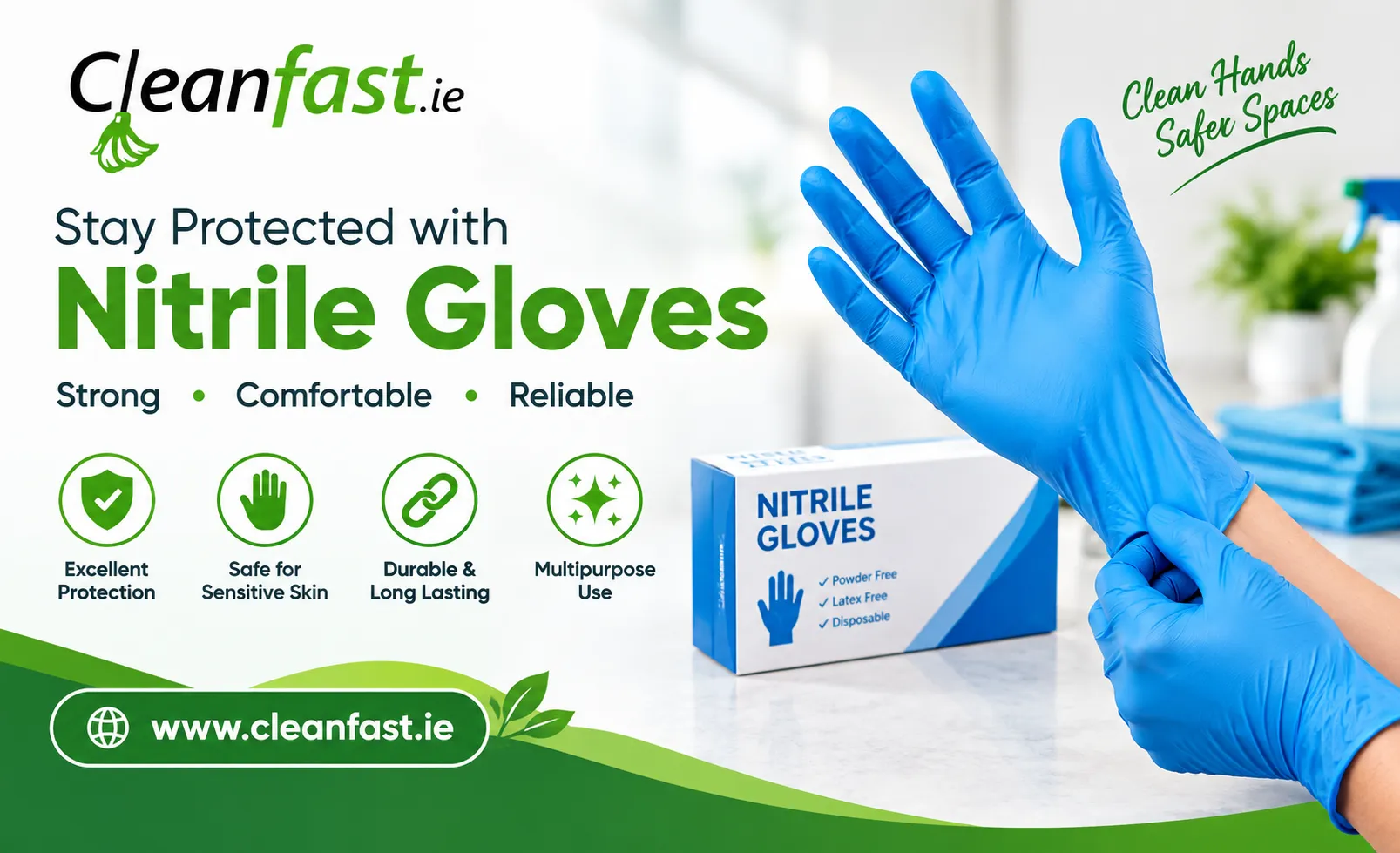

Food preparation in an Irish catering business involves several small hygiene decisions throughout a shift. Clean hands, suitable protective clothing and sensible glove use have a part to play. Nitrile gloves can provide an extra barrier for selected tasks. However, they never replace proper hand washing. Change gloves between tasks and after handling raw food or money. Product suitability for food contact matters, too.
What Irish Food Safety Rules Say
Irish food businesses operate under EU hygiene requirements, including Regulation 852/2004. The rules require people working in food-handling areas to maintain high personal cleanliness and wear suitable protective clothing where needed.
FSAI guidance makes another point clear: disposable gloves are permitted, but food handlers do not have to wear them. Proper hand washing remains the main hygiene measure.
The Suitability of Nitrile Gloves for Catering
Nitrile offers proper resistance to wear and tear. This makes it an ideal option for food preparation. Your staff may handle ingredients or serve food during a busy shift. A suitable glove can reduce direct contact between hands and food during those tasks.
Food Contact Approval Needs Checking
A glove intended for food preparation should have suitable food-contact documentation. EU food-contact rules require materials and articles intended to touch food to meet safety requirements.
Catering operators should check manufacturer information before purchasing gloves for direct food handling. A disposable glove sold for cleaning work should not be assumed suitable for preparing food.
How Gloves Help With Food Hygiene
Nitrile gloves can reduce direct hand contact during selected preparation and serving jobs when used properly. FSAI guidance states that disposable gloves can help prevent food-poisoning microorganisms from reaching food.
The benefit depends heavily on staff behaviour. A glove that has touched cash or a cleaning cloth should not then touch ready-to-eat food. The pair needs replacing before the next task.
When Should Gloves Be Changed?
There is little sense in keeping one pair on through an entire shift. FSAI advises changing disposable gloves between tasks. This is particularly true after handling raw meat or kitchen utensils. Gloves should come off before staff undertake another task.
Situations That Call for Fresh Gloves
Here are the situations that need fresh gloves.
- Change gloves after handling raw meat or eggs
- Put on a fresh pair before handling ready-to-eat food
- Replace gloves after emptying bins or carrying out cleaning duties
- Change gloves after handling money
- Discard damaged gloves without delay
Hand Washing is Always Important
A fresh pair of gloves does not make unwashed hands suitable for food handling. FSAI says hands should be washed before putting gloves on, between glove changes and after gloves come off. Hand washing should happen after raw food and other activities that can contaminate hands.
Why Powder-Free Gloves are Popular?
Powder-free disposable gloves avoid loose powder becoming an unnecessary issue in food preparation areas. The powder-free gloves should be suitable for food preparation. Glove boxes should remain clean and dry. A tidy storage point makes it easier for staff to take a fresh pair without touching unused gloves.
Simple Habits for Busy Kitchens
Catering teams can keep the process straightforward by linking glove changes to these specific activities.
- You should keep fresh gloves near approved preparation areas
- Restaurants should teach their staff which tasks require a glove change
- It is important to store the unopened boxes away from contaminants
- You should always provide suitable glove sizes to your staff
Gloves Do Not Eliminate Other Risks
Disposable gloves protect you from direct contact with food residues. However, they cannot protect you from all kitchen hazards. There are safety precautions with knives and cleaning chemicals. Nitrile gloves may offer greater resistance to punctures. Personnel should not, however, regard them as a substitute for proper handling of equipment.
Good Glove Practice Starts With Clear Routines
Disposable gloves can support food hygiene when staff use them alongside proper hand washing. Irish guidance does not require food handlers to wear disposable gloves. Therefore, businesses should use them wisely. Food-contact suitability should be checked before purchase. A clear routine for changing gloves can help prevent contamination during food preparation.
CleanFast supplies professional cleaning products and gloves in Ireland. Our Dublin team can help you choose suitable products and reduce unnecessary waste.






















Sign in to leave a comment.